Death penalty to a men who raped his daughter for 11 years

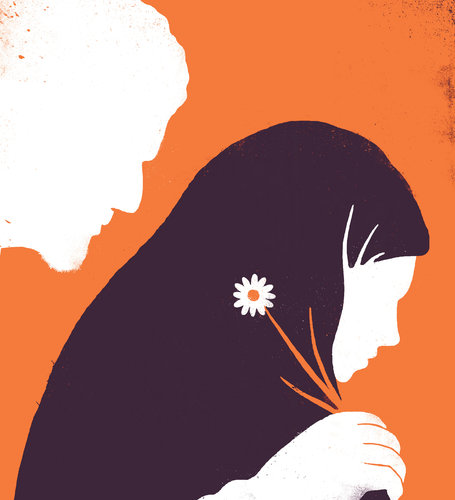
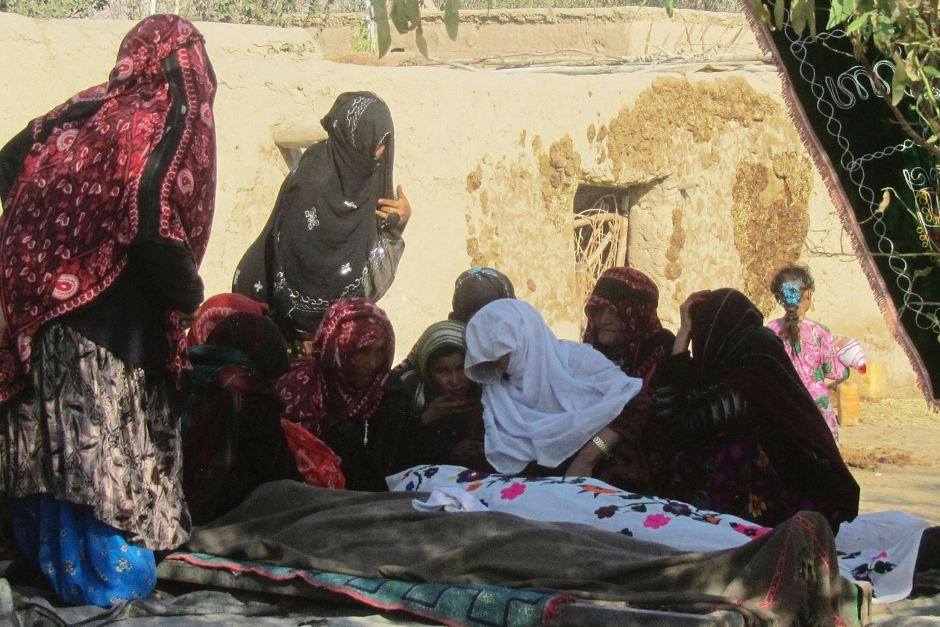
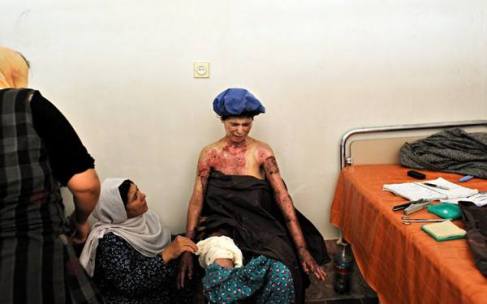
FDeathpanltyA Father who has nine children raped his own daughter for 11 years. Last year this father was arrested in urban area around Kabul city and his rape story was amplified in social media. The primary court sentenced him to death while he has 2 children from his raped daughter.

The primary court announced that all documents and evidences about the convict prove the mass of father.

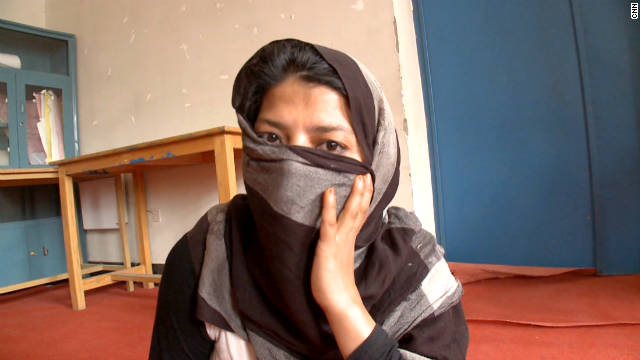
Khatera, the daughter claims five-six time abortions.

“Many times he raped my in front of my other sisters. The family knew about father raping and arrest him with police assistance.

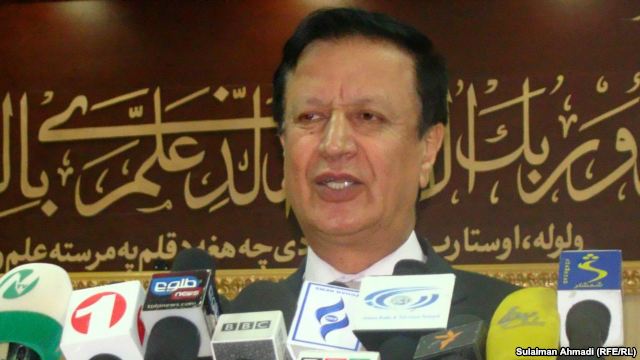
“According to evidences and documents and the 17th article of violence against women, the father was handled to a death penalty,” Sayed Ahmad, head of Kabul’s primary court said.

“I am happy of the court’s verdict, but I want the verdict to be implemented because if the court release him free, my live will be in danger,” Khatera said.

The civil society members who were present at the trial praised the primary court decision and called for his prosecution.

However, the suspected man who was arrested seven months ago due to his wife complaint denies all charges against him and insists that it is a conspiracy against him.

before several man received death penalty after they raped their own daughters.

Civil society is worried about this kind of violence against women inside the families and says if the government do not act seriously the number of violence will raise and it will change to a serious social problem.

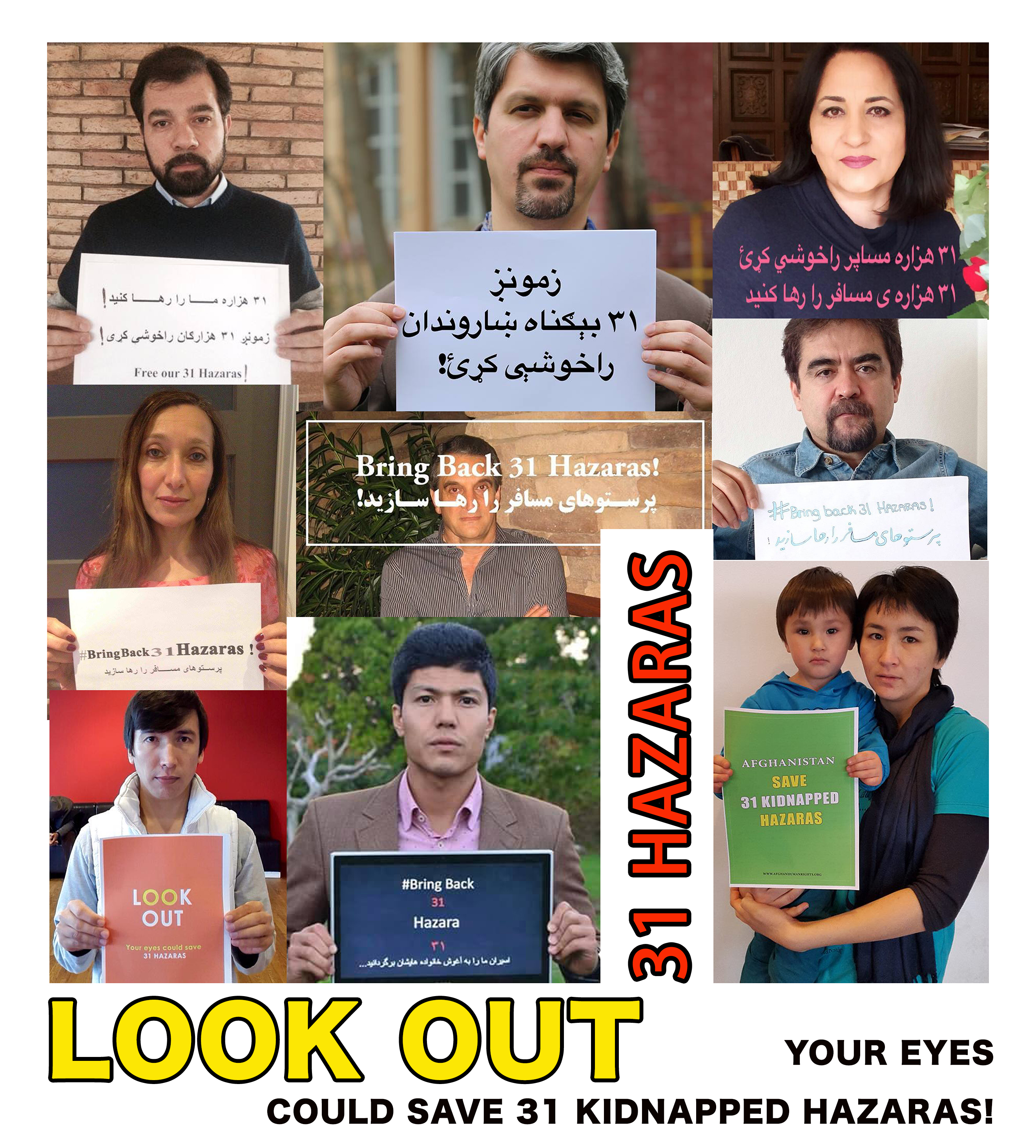
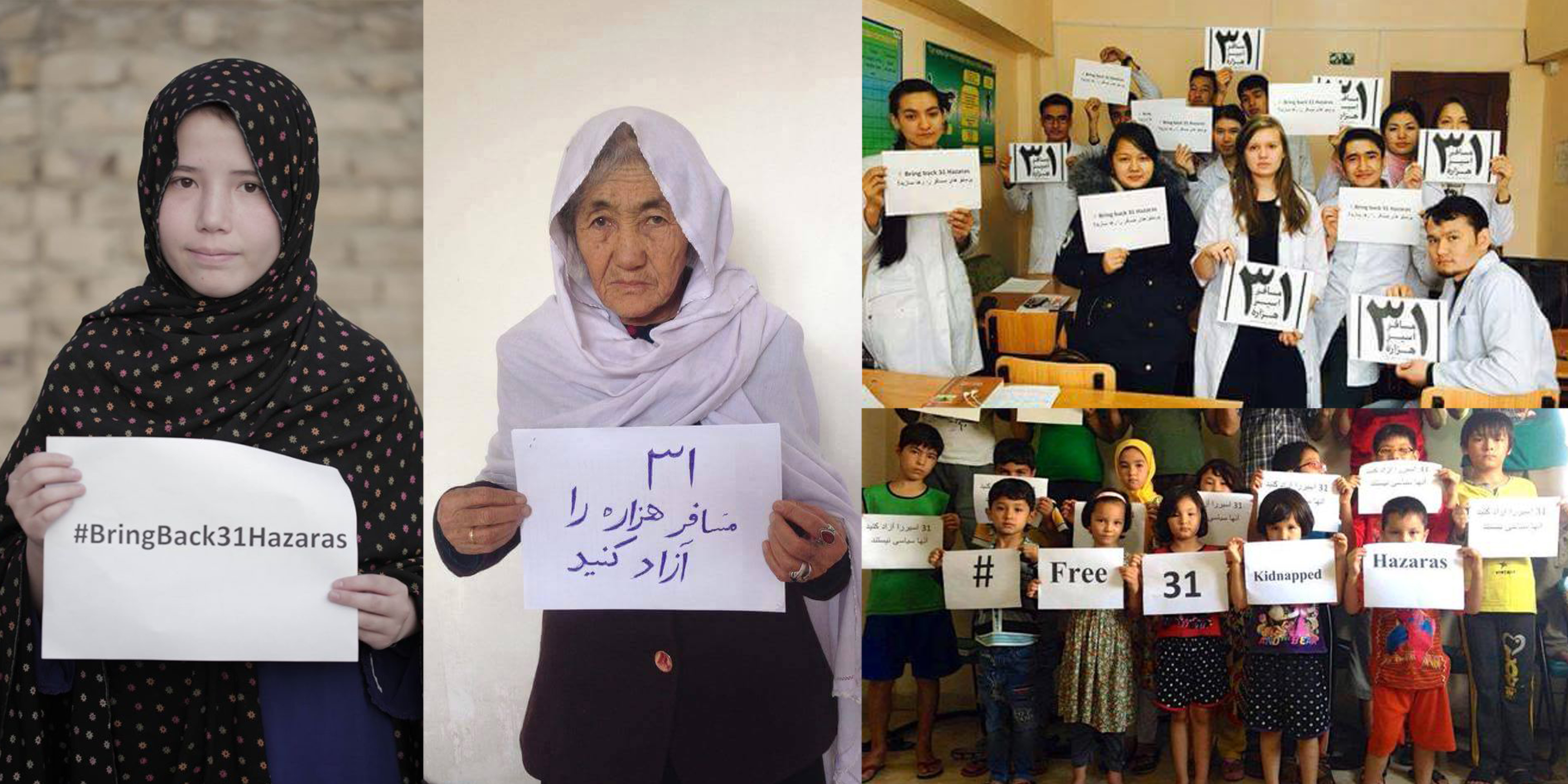
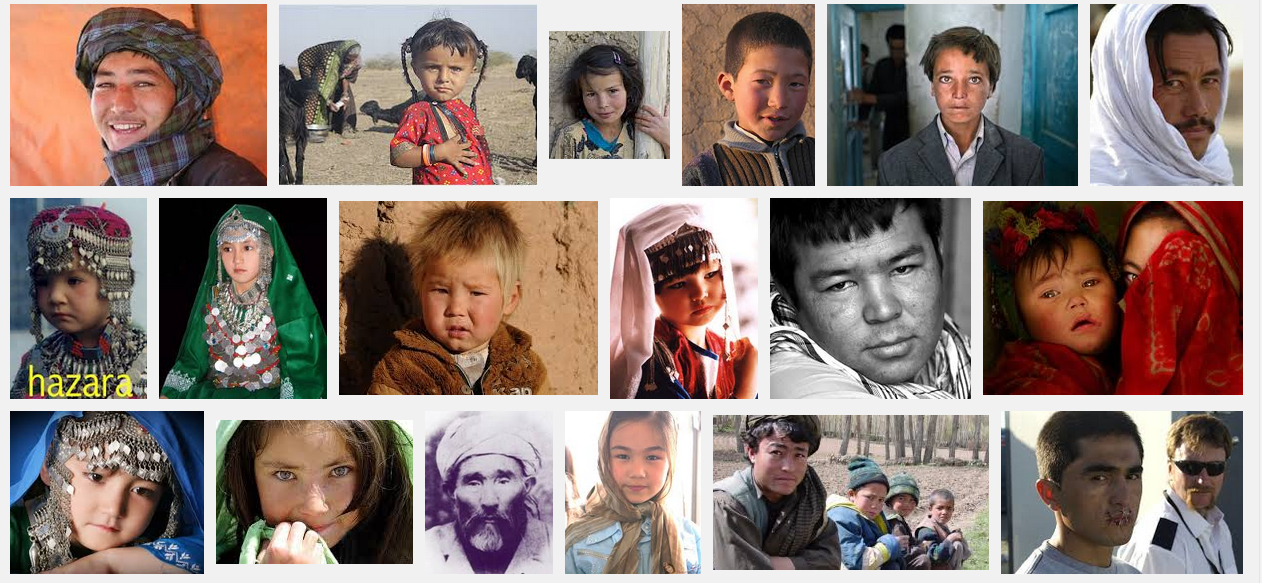
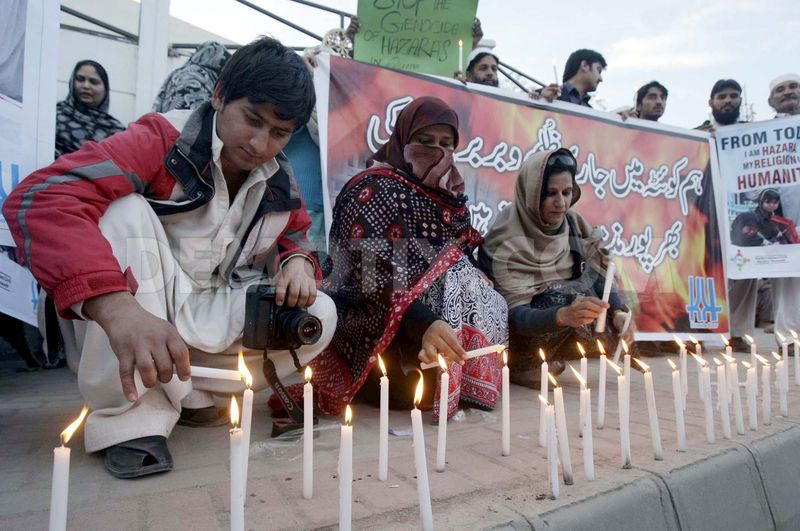
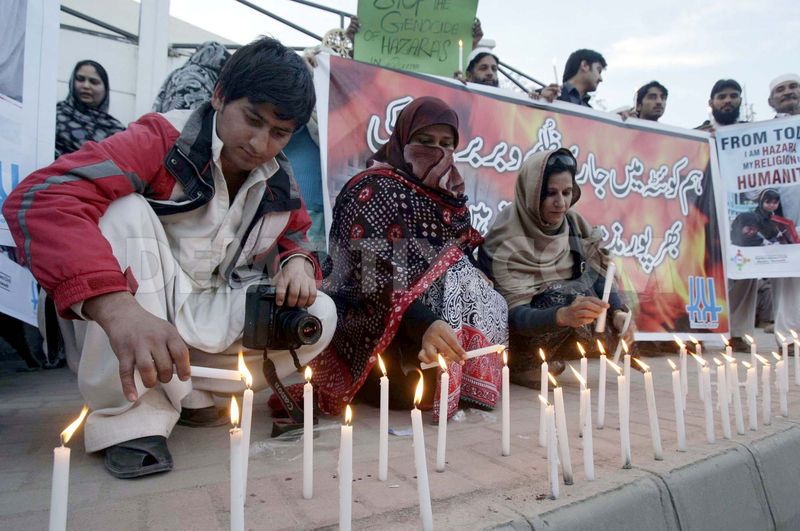
Universal portests for rescuing #31kiddnapped Hazaras !

LookoutThirty eight days past when gunmen kidnapped 31 Hazaras in Zabul, Afghanistan. Where there no serious reaction by Afghan Government.
38 days before, the men were traveling by bus from Herat when they were seized in Zabul province, on the road to Kabul.
No group has said it’s carried out the abductions. Kidnappings for ransom are common in Afghanistan, especially by Afghan Taliban.
“The gunmen took money and phones from the Hazara men before driving them away. Their faces were covered and they were wearing military clothes.” One bus passenger told BBC Persian.
He said he and another man had been left behind because the gunmen had no room for them in their vehicles.

Afghan government reaction:

While Interior ministry spokesman Sediq Sediqi said police were “doing everything to ensure their safe release”, eyewitnesses, internal medias and internationals confirm that “police arrived very soon after there and they could see [the kidnappers]. people showed them to the police. Police said they would find them but didn’t chase them.”
District Governor Abdul Khaliq Ayoubi blamed the Taliban for the attack, Afghanistan’s Tolo News reported.

Although security officials have not spoken about the incident, local leaders such as Atta Jan Haqbayan, the head of the Zabul Provincial Council, have confirmed the incident.

The Afghan military forces launched a rescue operation in southern Zabul province t to free the 30 Hazara passengers who were kidnapped by unknown masked men, but the operation failed and they could not rescue the passengers yet.

The operation was launched in Khak-e-Afghan district of Zabul. So far, 36 insurgents have been killed and 50 others injured. Leading the operation was Kandahar Police Chief Gen. Abdul Raziq, Military Commander of Atal 205th Corps Maj. Gen. Abdul Hamid Hamid, and Zabul security officials. Tolo News reported.

Also Zabul acting Governor Mohammad Ashraf Nasiri had warned that if negotiations between the tribal elders and the armed masked men did not triumph that military action will be taken. and recently Mohammad Sarwar Danesh, second vice president in a meeting with Social Activists told in Parliament: “Government will use any possible way to rescue the passengers”

And this speech was all the government did.

Social Activists :

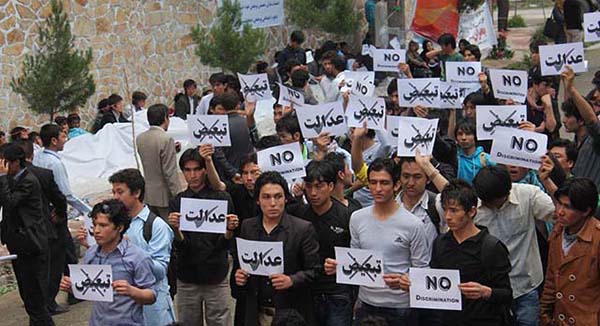
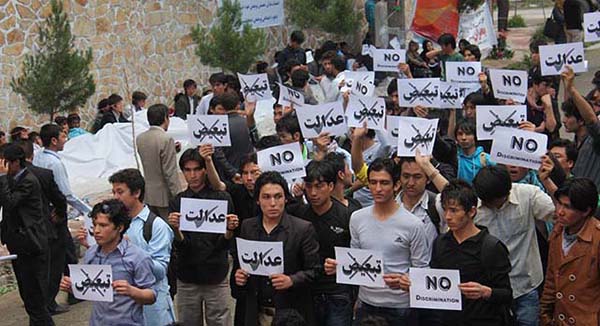
After the day when this case accident, happened people start holding Facebook campaigns, street protests, gatherings in different cities inside Afghanistan and all over the world and asked the government to take a serious step toward 30 kidnapped passengers and it still continues.

Social activists, students and Afghan migrants in foreign countries in their street gathering asks the international community that use their influence and force the Afghan government to take action for Afghans lives safety.

People believes that government is not following seriously such cases to rescue this citizens of Afghanistan. this activists  says that government must explain to the people about why they could not rescues this passengers after about 2 months.

Activist says: …Hazaras are peaceful, friendly people who are civil activists and eager to bring changes in good ways, and they are always willing to pursue their goals through education in order to be useful in society. regretfully the Hazara Afghans have always been targeted by other tribes and nationalities inside Afghanistan, Pakistan and Iran only because they are Afghan, Hazara and Shi Muslim . instance: 62% of them were killed in 1890s, by king Abdulrahman, thousands were murdered in 1992 at Kabul Afshar, thousands in Mazarisharif in 1998… We as humans should not watch and sit Apathetically! It’s our duty, specially the International Communities such as UN agencies and the Afghan government to investigate and handle the issue of 31 Hazara passengers who have been abducted for several days.

Bring Back

People and the families of the abducted Hazaras are still waiting on news about the fate of their beloved ones, keeping eyes at their doors for the past days.

“I want my dad back home,” said a little daughter of one of the abducted passenger who was returning from Herat to Kabul after taking her sister to a hospital.
His family called on the government to help their beloved ones return home safe and sound.

LOOK UP ! Your eyes could save 31 #kidnapped Hazaras, Ask for justice, supports and encouragements for rescuing them A Live !

Read more:

http://www.tolonews.com/en/afghanistan/18349-masked-men-abduct-30-hazara-passengers-in-zabul

http://www.kabulpress.org/my/spip.php?article227965

http://www.rferl.mobi/a/afghanistan-hazaras-mass-abduction-islamic-state/26869255.html

http://edition.cnn.com/2015/02/24/asia/afghanistan-kidnapping/

http://www.aljazeera.com/news/southasia/2015/02/shia-muslims-kidnapped-afghanistan-150224081251654.html

Relations between law and violence against women, need for an action!

Farkhunda

Farkhonda was killed in the capital, Kabul, the event once again Showed that women still do not have security in Afghanistan. Government is obliged to prevent these disorders of legal, cultural, Social and religious causes and do not let such similar events happen in the future.

No doubt that attack on Farkhonda is not the first attack, nor will be the last of this kind, and it is clear to everyone such incidents occurring daily in the country, mostly because the beliefs and traditions of the tribes is not realistic.

All responses about Farkhonda murder were questionable and society even government reacts to the supporters and defenders of her death. In this article I will try to give an answer to these questions and that these events needs to get a new check.

Alarm for all

Afghanistan’s Independent Human Rights Commission said that the last seven months of the year 1393 Hijri, the violence against women in Afghanistan is reached 2950 figure shows that violence against women has increased 25 times compared to previous years. The figure recorded in the office of the commission, but many cases of violence against women occurs away from human rights organizations and the media and the victim is buried in the heart.

Many girls are murdered after being raped and many of the perpetrators of the rape and violence against women are the family and relatives. The basic question is that Afghan judicial system which is corrupt, has addressed some of this violence? And do justices to the relatives of the victim have been given?

In some cities and most villages in Afghanistan women because of misconceptions and misinterpretations of religious culture are kept away from the public, they do not have go out of the house or the right to participate in meetings and public meetings.

Due to the oppressive conditions, violence against women is increasing, and this has caused women do not trust even their family members and close relatives.

What happened in the “shah du Shamshyrah” was that perpetrators of violent against Farkhonda unintentionally, film and video tapes is taken by friends and their accomplices. If I held court in this case, without a doubt the movie would be used against the perpetrators of the incident.

The result of a murder

Violence against women are still not ruling even in Afghanistan law. This cause increasing violence against thousands of women, but Farkhonda murder distinct two issues:

First Afghan society, particularly institutions of civil society have reached to a level of awakening and it brought the hope that social and religious norms can be criticism,second, for the first time in Afghanistan, a close traditional country, this incident initiated the resistance power against wrong religious believes. 

No need for thinking

“Shah du Shamshyrah” (mosque) incident showed that it is the time to change the view about religion and ask people know what they do not know about religion. A general look shows that we are standing in first years of Islam with no improvement.  the time that people used to sacrificed everything to get near to God, even God.

Many of the prophets came to invite people to worship with the message of “religion is part of life, not all of life”

We are still at the beginning of the Islamic religious texts and beliefs, with respect to the development of science nowadays, we are still arguing if a woman can go out without his husband permission or not.

The nature and extent of violence in laws

Aggression and violence in history was sentenced, without a doubt, the Afghan government also rejected this phenomena, but how much the government,scholars, legislators have been agreed to prevent this phenomena ?

It must not be forgotten that the government always has the upper hand to control society. If we look at the issue of violence, according to figures undoubtedly negative response to the question.

Social violence is caused of two factors, the absence of law, and violent and despotic law.

A – The lack of law: during the past fourteen years it became clear that some criminals and suspects of violence against women were acquitted because they did some kind of crime was supported in order the other law.

An obvious example of this can be mass rape of women in Kabul’s Paghman, there criminal were sentenced in accordance of kidnapping and armed robbery law in Afghan constitution but their real guilt, mass rape of women in front of their husbands were ignored.

(B) the violent and despotic law: some criminal case base on Islamic law happens that not only crimes are not considered, but also the criminal is a good religious person.

Conclusion

In addition, some violence against women and criminals scape of law reasons is as follows:

(A) false reading of religion, traditional beliefs. women’s rights support organizations believe that the violence in the metropolis where they have more access to information and the media decreased but in rural and remote areas, this phenomenon has been raising.

(B) Administrative corruption in the legal system that acquits criminals, international research shows that Afghan judicial system is the most corrupt institution known. to continue the process will damage general mental health and cause lack of trust to government.

(C) violent religious laws gives the perpetrators the sense of good believers in God that during recent years, in addition to the Taliban and other armed groups, especially in Shiite areas, this believers Issued sentence in order their religious believes.

(D) government has failed to apply the sentences against perpetrators of violence against women. many of the perpetrators of violence are living out of prisons because the law could not put them in prison.

(H )Most villages people address legal issues to the Taliban and this extremist terrorist group (Taliban), in all cases without investigating, sentence the death penalty, stoning, lashings against women.

By : Marziye Vafayi

Open letter to the United Nations High Commissioner for Human Rights

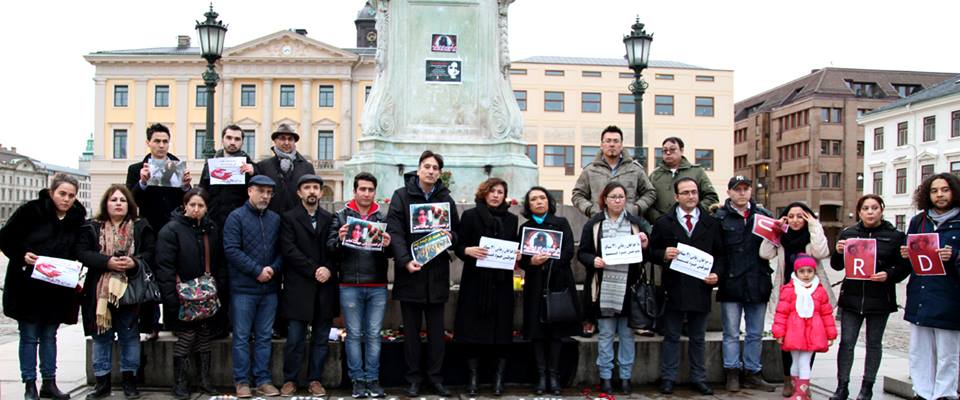
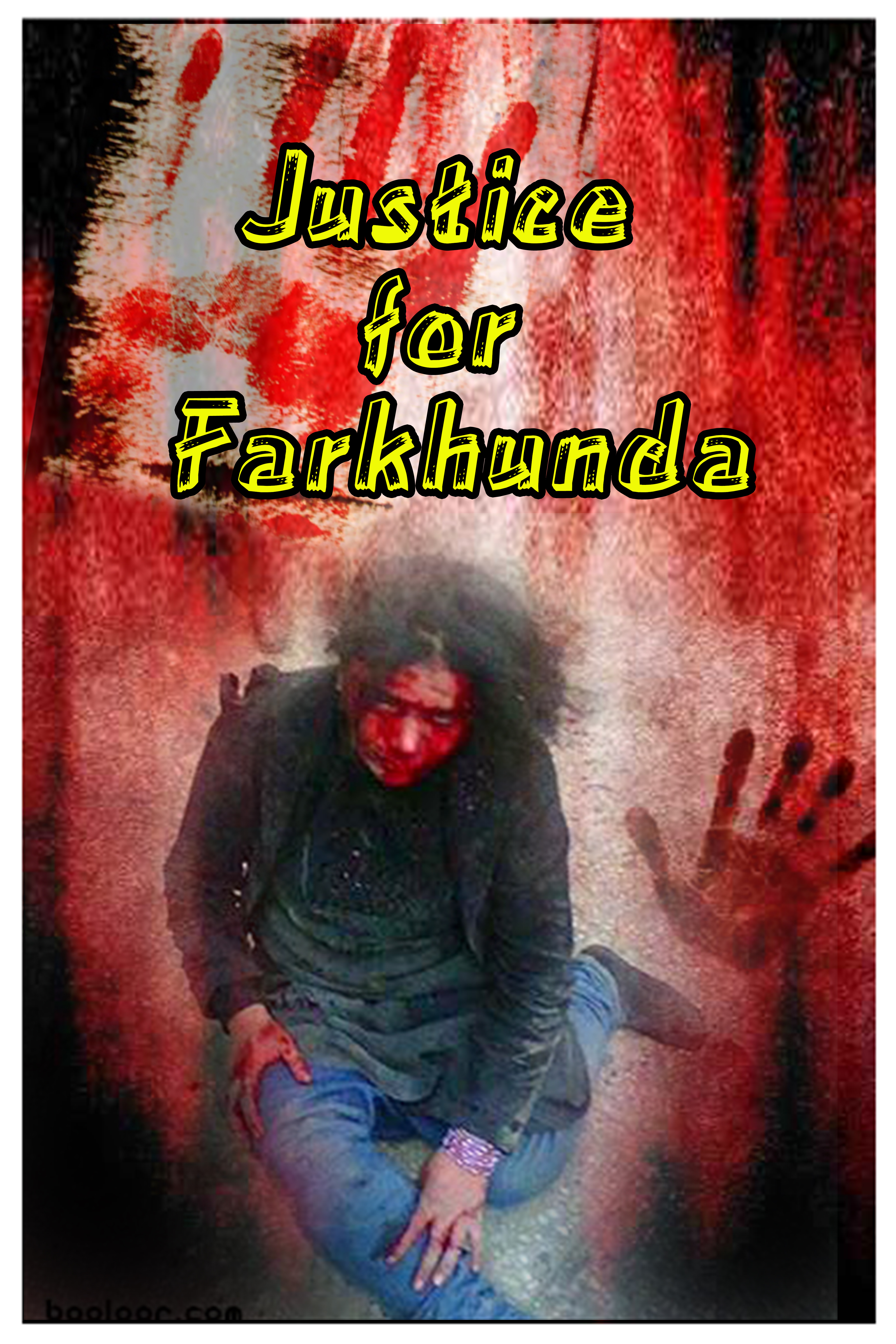
FarkhoAfter Many days mob killed 27 years old Farkhonda, social and human rights activist are still holding different campaigns to ask justice for Farkhonda. But shamefully, Afghanistan government and high officials did not have any talks about this violence case happened in center of Kabul.

People are following the case very seriously, they ask justice by protests in the street in big cities of Afghanistan and other countries such as Australia, UK, Canada, Indea, Tajikistan and Sweden…

Read the open letter to the High commission of Human rights of Afghanistan, written by the activist in Goteborg, Sweden.

Farkho2

Open letter to the United Nations High Commissioner for Human Rights

The Statement and open letter by the organizers committee of the memorial and commemoration of Farkhunda, regarding to the heartbreaking incident of killing and burning her on March 19, 2015.

***

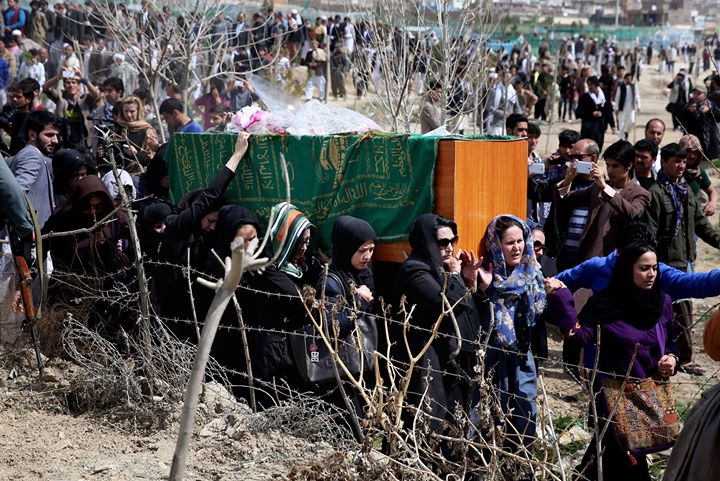
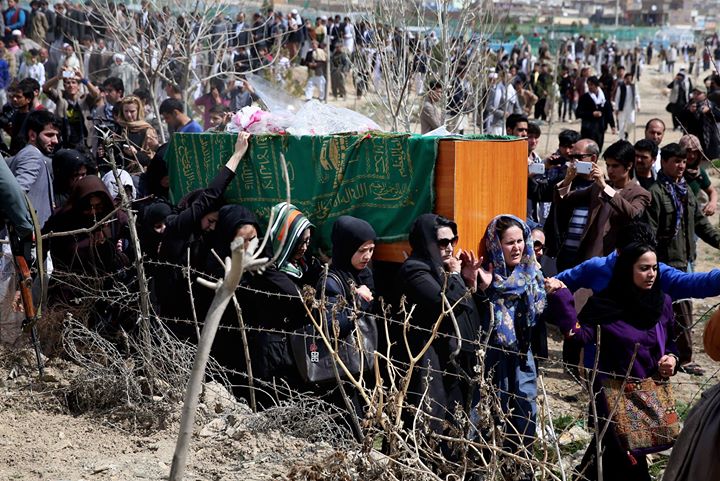
Murdering Farkhunda led the whole world into a shock. She was lynched on accusation of burning holy Quran, which turned out to be false. But a huge number of angry men, without any investigation and only based on a false accusal beat her, threw her from the roof of the Mosque to the ground, stoned her, drove a car on her, and finally burned her body.

This tragic felony was taken place during the day and in one of the most crowded areas of Kabul city while the police forces, which are meant to keep security of citizens, were watching it.

After the incident, some of the high-ranking officials of Afghanistan government and some religious figures supported the crime with justifications based on religion of Afghanistan people. But we, on our stronghold against the violation of women rights and civil rights, in-order to stand for equality of both genders, and to respect humanity and social justice, for Farkhunda and all women of Afghanistan, ask for justice to be implemented.

In-order to bring up justice for Farkhunda’s judicial record, we ask the following conditions to be considered:

1. Stop religious discrimination and Islamic radicalism. And ban all kinds of radicalism fetishistic activities and superstitious jobs, such as soothsaying, divination, foretelling, and etc…

2. Confirm and approve of the complete version of prevention of violence against women act as soon as possible.

3. Recognition, capture, and retribution of those who were involved in the heartbreaking lynching of Farkhunda. In this regard, all of those who caused the incident, including the instigators, appellants, motivators, justifiers, and vindicators should be arrested. Especially we ask to bring Molavi Ayaz Niazi to the court. He is the religious figure who justified the lynching and is encouraging religious discrimination and Islamic radicalism.

4. Creation of a committee by the Afghan government to observe and control the activities of Ulema Council, missionaries, Mosques, and religious schools.

5. One of the main reasons, which caused the incident, was the irresponsibility and failure of the police forces. We ask the Afghan government to reprimand and punish the responsible people at the Ministry of Interior, specially the Minister and Kabul General Commander.

6. We ask the Afghan government to investigate and handle the issue of 31 Hazara passengers who have been abducted for several months.

7. We are asking from United Nations High Commissioner for Human Rights, governmental influences, the international organizations, communities, and legal assemblies to follow up the elimination of racial discrimination and gender bias, and elimination of violence against women at Afghanistan.

At the end, we express our sympathy with Farkhunda’s family. We promise that we will not give up until the murderers and motivators of this historical and humanitarian tragedy have been brought to the court, and until our demands have been achieved. Otherwise we will not settle down and we will continue our protests and ask for justice.

We are all Farkhunda.

This movement was arranged by  the Committee of the memorial and commemoration of Farkhunda –

Gothenburg, Sweden:

Soheila Haidari

Jalil Taghizadeh

Fereshta Haidari

Alex Afshar

List of association’s representatives:

Svenska Afghanistankommittén: SAK

8:e marskommittén i Göteborg

Kvinnorättsförbundet

Fanos Förening

Medusahuset rådgivning center

and Rumi förening

Afghan woman burned after mob heard she burned Koran

 #Farkhunda

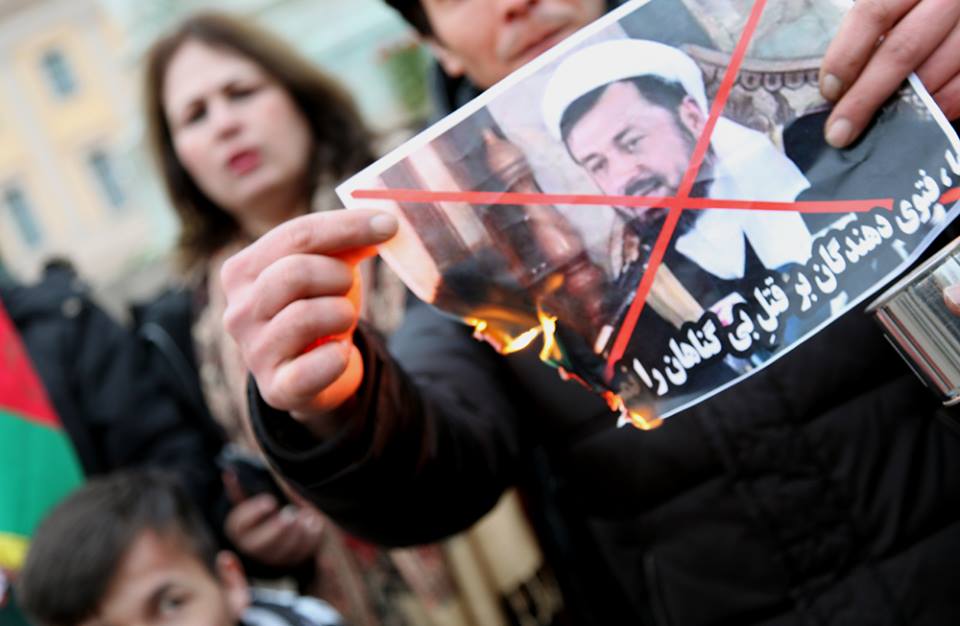
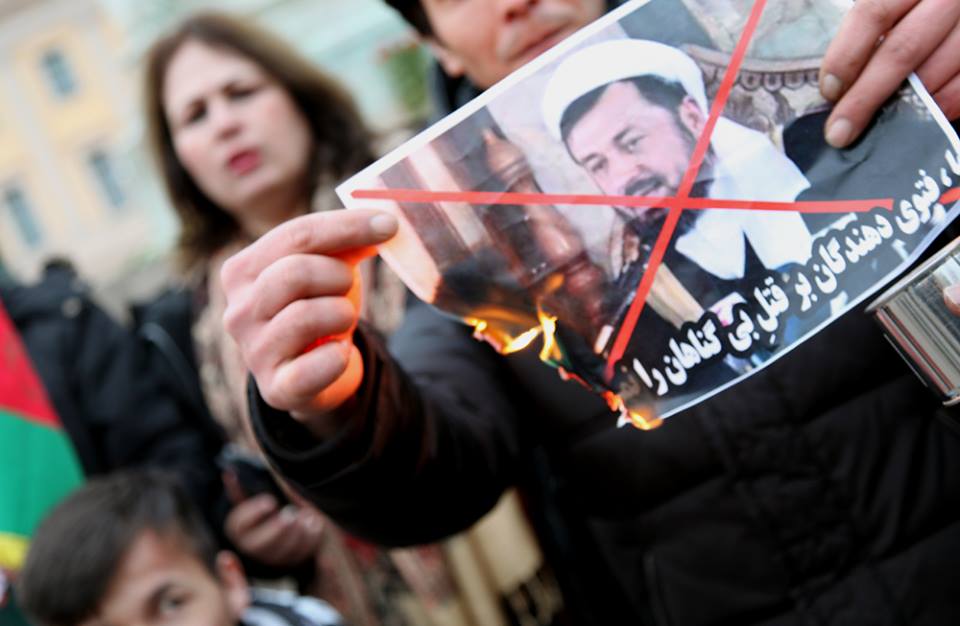
farkhondaYesterday in center of Kabul city in Afghanistan mob beats 27 years old Afghan woman, Farkhonda to death before burning her body and dumping it in a river because she set fire to a Koran.

Farkhonda was burned while her parents insist she had suffered from mental illness for past 16 years and that she had not meant to burn Kuran. Attack happened near Shah-e Doh Shamshira mosque in the heart of Kabul

Afghan Human rights website reporter says: In last 24 hours shocking videos of crowds of men has emerged in Medias of mob kicking, stoning and burning Farkhonda. Some of the men stamped on the victim’s limp body while others could be seen in the videos punching and kicking her.

Sediq Sediqi spoke man of the ministry of interior confirms and add that six have been arrested in connection with the attack on his twitter account. The police did not comment immediately on any circumstances that might have led to the attack.

Human rights groups and activists are concerning if the Kabul police done enough to stop the mob or not.

BBC reports one eyewitness to the lynching as saying: ‘I heard noise, I went and people said that a woman is burning Koran. When I went closer I saw angry people shouting they want to kill the woman.

‘They beat her to death and then threw her on the river side and burned her. Firefighters later came and put out the fire and took the body.’

Such public attacks and outdoor courts was began under Taliban rule after 1990 and unfortunately still violence against women in Afghanistan is exist and women remain under this risks

Read more: http://www.dailymail.co.uk/wires/ap/article-3004110/Afghan-police-7-arrested-Kabul-mob-kills-woman.html

Afghanistan: Abusive Strongmen Escape Justice

ata_past_present
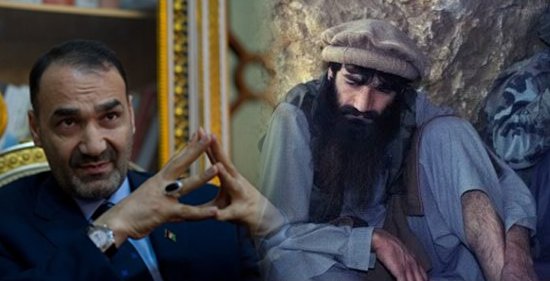
Atta Mohammad Noor, the influential governor of northern Balkh province is one of those the report says profited from Nato projects to expand the security forces, using them to absorb and fund his own militias, hundreds of men strong

(Washington, DC) – Afghanistan’s new government should prosecute officials and commanders whose serious human rights abuses have long gone unpunished, Human Rights Watch said in a report released today. US officials should press President Ashraf Ghani to take up justice for past abuses as a top priority during Ghani’s expected March 2015 visit to Washington, DC.

“The previous Afghan government and the United States enabled powerful and abusive individuals and their forces to commit atrocities for too long without being held to account,” said Phelim Kine, deputy Asiadirector. “The Ghani administration has already taken the welcome step of launching a national action plan to eliminate torture. The United States, which helped install numerous warlords and strongmen after the overthrow of the Taliban, should now lead an international effort to support the new government to remove serious human rights abusers from their ranks.”

The 96-page report, “‘Today We Shall All Die’: Afghanistan’s Strongmen and the Legacy of Impunity,” profiles eight “strongmen” linked to police, intelligence, and militia forces responsible for serious abuses in recent years. The report documents emblematic incidents that reflect longstanding patterns of violence for which victims obtained no official redress. The impunity enjoyed by powerful figures raises serious concerns about Afghan government and international efforts to arm, train, vet, and hold accountable Afghan National Police units, National Directorate of Security officials, and Afghan Local Police forces.

The government of former president Hamid Karzai failed to bring these individuals and their forces to justice, fostering further abuses and fueling local grievances that have generated support for the Taliban and other anti-government forces. Ghani has pledged to hold security forces accountable for their actions and end official tolerance for torture, but will need the full support of Afghanistan’s international supporters to carry out this politically sensitive task.

The report is based on 125 interviews Human Rights Watch carried out since August 2012 with victims of abuse and their family members, as well as witnesses, government officials, community elders, journalists, rights activists, United Nations officials, and members of Afghan and international security forces. It does not look at abuses by the Taliban and other opposition forces, which Human Rights Watch has addressed in other contexts.

A resident of Kunduz province whose father was murdered by a local militia in 2012 told Human Rights Watch, “I went on the roof of the house and saw we were surrounded by armed men…. My father was sitting there and said: ‘Say your whole kalima [the Muslim profession of faith], because I think today we shall all die.’”

Officials and commanders whose forces have a history of abuses typically go unpunished. For instance, forces under the command of Hakim Shujoyi have killed dozens of civilians in Uruzgan province, yet despite a warrant for his arrest he remains at large and evidence suggests he has enjoyed the support of US forces. In Paktika province, Afghan Local Police forces under the command of Azizullah,an ethnic Tajik who, as of June 2014, was a commander of the local ALP in Urgun district, have committed multiple kidnappings and killings. Azizullah has worked closely with US Special Forces despite their awareness of his reputation for unlawful brutality.

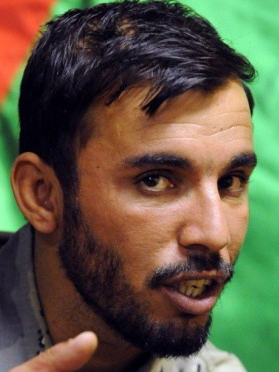
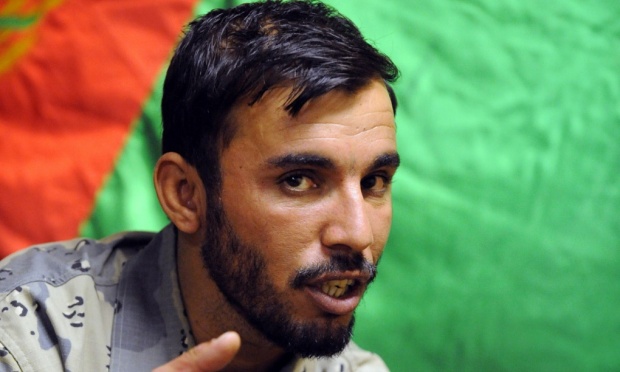
Gen. Abdul Raziq
The provincial chief of police in Kandahar, Brig. Gen. Abdul Raziq, has been directly implicated in ordering extrajudicial executions

The provincial chief of police in Kandahar, Brig. Gen. Abdul Raziq, has been directly implicated in ordering extrajudicial executions. And when the former head of the National Directorate of Security Asadullah Khalid sought medical care in the United States, he received a personal visit from President Barack Obama, sending a powerful message of US support for a notorious human rights violator.

“Since the defeat of the Taliban government in late 2001, Afghanistan has made limited progress in developing institutions, such as professional law enforcement and courts, that are crucial for the protection of human rights,” Kine said. “Afghanistan’s international allies have exacerbated the problem by prioritizing short-term alliances with bad actors over long-term reforms. It’s time for this pathology to end.”

Human Rights Watch urged the Afghan government to investigate all allegations of abuse by Afghan security forces, and remove from office and appropriately prosecute officials and commanders implicated in serious abuses. The Ministry of Interior should disband irregular armed groups and hold them accountable for abuses they have committed.

The United States and other major donors to the Afghan security forces should link continued funding to improved accountability, including prosecutions for killings, enforced disappearances, and torture. Donors should ensure that direct assistance to Afghan security forces is benchmarked to improvements in justice mechanisms. The US should fully implement the Leahy Law, which prohibits the provision of military assistance to any unit of foreign security forces where there is credible evidence that the unit has committed gross violations of human rights and that no “effective measures” are being taken to bring those responsible to justice.

“The Afghan government and its supporters should recognize that insecurity comes not only from the insurgency, but from corrupt and unaccountable forces having official backing,” Kine said.  “Kabul and its foreign supporters need to end their toxic codependency on strongmen to give Afghanistan reasonable hope of a viable, rights-respecting strategy for the country’s development.”

“The previous Afghan government and the United States enabled powerful and abusive individuals and their forces to commit atrocities for too long without being held to account. The Ghani administration has already taken the welcome step of launching a national action plan to eliminate torture. The United States, which helped install numerous warlords and strongmen after the overthrow of the Taliban, should now lead an international effort to support the new government to remove serious human rights abusers from their ranks.”
Phelim Kine, deputy Asia director

HRW

Read full Report

Image

Afghanistan officials sanctioned murder, torture and rape, says report

Human Rights Watch accuses high-ranking officials of allowing extrajudicial killings and brutal practices to flourish after fall of Taliban

raziq
Kandahar’s police chief Abdul Razziq was praised by Kabul and Washington despite claims of extrajudicial killings, according to the Human Rights Watch report. Photograph: Romeo Gacad/AFP/Getty Images

Top Afghan officials have presided over murders, abduction, and other abuses with the tacit backing of their government and its western allies, Human Rights Watch says in a new report.

A grim account of deaths, robbery, rapes and extrajudicial killings, Today We Shall All Die, details a culture of impunity that the rights group says flourished after the fall of the Taliban, driven by the desire for immediate control of security at almost any price.

“The rise of abusive political and criminal networks was not inevitable,” the report said. “Short-term concerns for maintaining a bulwark against the Taliban have undermined aspirations for long-term good governance and respect for human rights in Afghanistan.”

The report focuses on eight commanders and officials across Afghanistan, some of them counted among the country’s most powerful men, and key allies for foreign troops. Some are accused of personally inflicting violence, others of having responsibility for militias or government forces that committed the crimes.

Kandahar’s most powerful commander, the former head of the intelligence service and a key northern governor are among those implicated. All of the accused have denied the allegations against them.

Some have ties to the former president Hamid Karzai, who as early as 2002 warned that security would be his first priority. “Justice [is] a luxury for now; we must not lose peace for that,” the report quotes him saying soon after coming to power. While he was in office, a blanket amnesty law for civil war-era crimes was passed.

There are also multiple links to America’s military and government, sometimes beyond the liaisons that were essential for troops on the ground.

When Assadullah Khalid, the former head of the country’s spy agency, was badly injured in a Taliban assassination attempt, Barack Obama and the former defence secretary Leon Panetta both went to visit him in the American hospital where he was recovering.

In doing so they chose to ignore a long history of accusations of rape, torture, corruption and illegal detentions, some of it from US diplomats or their allies, detailed in the HRW report.

A confidential Canadian government report from 2007 warned that “allegations of human rights abuses by [Khalid] are numerous and consistent” and he was described as “exceptionally corrupt and incompetent” in a leaked US embassy cable.

Khalid has previously dismissed the allegations against him as fabrications. “I know there is nothing (in terms of evidence),” he said in 2012, when his nomination as spy chief stirred up controversy about his past. “This is just propaganda about me.”

Another favourite of US forces, Kandahar’s police chief Abdul Razziq, was pictured last year arm in arm with a beaming three-star US general, who credited him with improving security in the political and cultural heart of southern Afghanistan.

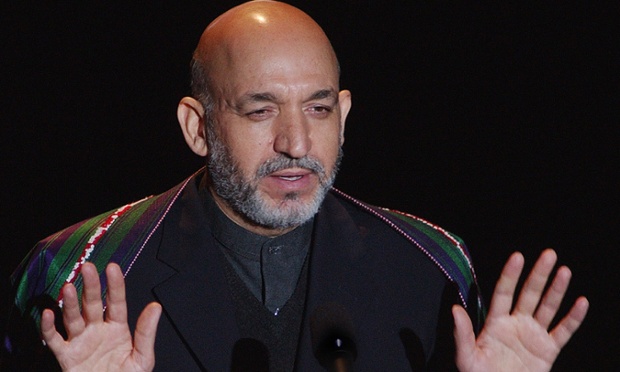
KARZAI
Hamid Karzai accepts the Freedom award from the International Rescue Committee in New York, 2002. The president said he would make security his first priority after he came to power. Photograph: Mark Lennihan/AP

Yet his rise to power he has been dogged by a trail of allegations of extrajudicial killings, forced disappearances and torture, some described by HRW in gruesome detail. As early as 2006, when still leading a unit of border police, he was accused of the abduction and murder of 16 men, said to be in a revenge killing for the death of his brother.

Advertisement

“The acting commander of border police in Kandahar, Abdul Razzaq Achakzai [Raziq], has acknowledged killing the victims, but has claimed (claims now proved false) that the killings took place during an ambush he conducted against Taliban infiltrators,” a report by the office of the EU envoy to Afghanistan said then.

Since he took control of the province’s police in 2011, the United Nations has documented “systematic” use of torture in Kandahar’s police and intelligence units, and the Human Rights Watch report lists multiple cases of men detained by Kandahar police, whose mutilated corpses were found discarded days later. Raziq has repeatedly denied all allegations of wrongdoing.

Raziq has categorically denied all charges of abuse, as attempts to undermine him. “When someone works well, then he finds a lot of enemies who try to ruin his name,” he told the Atlantic in 2011.

Last year he told the New York Times: “I don’t think people fear me … at least I don’t want them to fear me.”

The report also details large-scale corruption, that is said to have eroded both security and confidence in the government, while stuffing the coffers of abusive strongmen. Lucrative contracts for logistics and security allowed some to maintain militias under official cover, and pay off the Taliban instead of trying to defeat them, HRW said, while other security officials were involved in drug production and trafficking.

Afghanistan is one of the most corrupt countries in the world, according to Transparency International, and the compromised justice system also badly undermines accountability, with little sense among ordinary Afghans that abusers will ever be held to account.

“Initiatives ostensibly undertaken to curb corruption and other abuses have had virtually no impact, for the same reasons there has been no progress tackling impunity in other areas,” the report said. “Officially, the United States has backed anti-corruption measures, while at the same time reportedly protecting officials accused of corruption who have been deemed vital to the war effort.”

Atta Mohammad Noor, the influential governor of northern Balkh province is one of those the report says profited from Nato projects to expand the security forces, using them to absorb and fund his own militias, hundreds of men strong. They have been accused of abuses for which HRW says Atta bears responsibility, even if he is not head of a formal chain of command. Atta denies the allegations in the report.

“The informal nature of militias can make it difficult to establish who has ultimate command responsibility for their actions,” the report says. “However, the available evidence indicates that they could not operate without Atta’s consent and have been effectively under his control, including at the time of the alleged abuses.”

It quotes him telling one villager who complained about killings by a militia group under his command in 2011. “Please forgive [the killer], it was just a mistake.”

Atta in 2011 said that two of the militias he ran were needed to secure his province because Karzai’s government refused to increase police and army ranks there. “The people who complain about militia are people who have links with the Taliban,” he told the Wall Street Journal.

Human Rights Watch called on the Afghan government and its international backers to do more to hold the security forces to account. Despite meticulous documentation of many cases of abuse, there has not been a single prosecution for torture.

Afghanistan’s new president, Ashraf Ghani, said his government would not tolerate torture and thanked HRW for the report, but did not respond to the individual allegations.

The Guardian

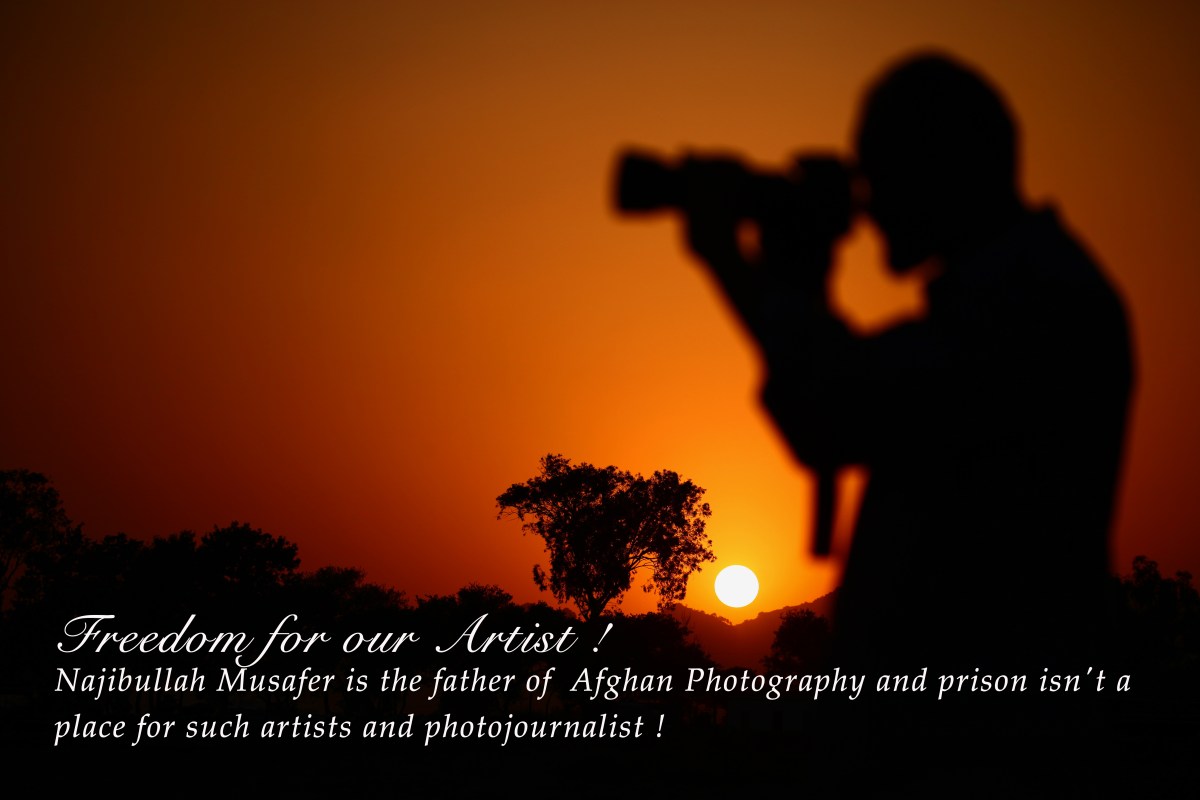
Free our artist and photojournalist Najibullah Musafer !

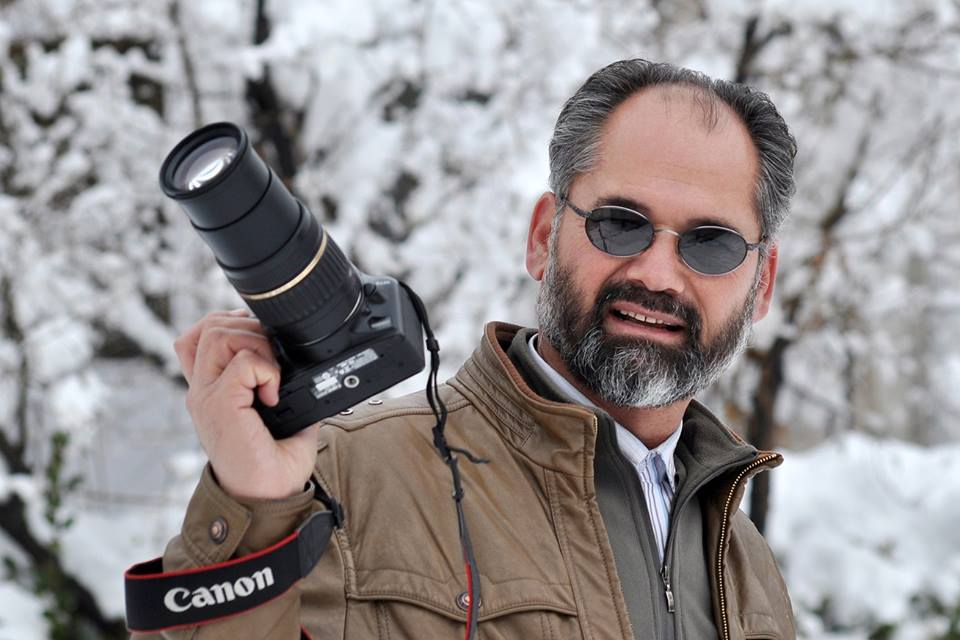
Najibullah Musafer the father of Afghan Photography, director of 3rd Eye Film & Photojournalism Center, Photojournalist at Killed Group, sentenced to six months in prison and was transferred to Puli Charkhi prison where douzen of terorist and Taliban members are in.

Najibullah Musafer famous Afghan artist and photographer transferred to Puli- Charkhi Prison.

Najibullah Musafer the father of Afghan Photography, director of 3rd Eye Film & Photojournalism Center, Photojournalist at Killed Group, sentenced to six months in prison and was transferred to Puli Charkhi prison where dozen of terrorist and Taliban members are in.

He received a letter from the second primary court and police office, that he have to come, when the latter comes Musafir was working and he leaves office to visit police station.

The police took him to the central police station court, he was under pressure of the police officers, the court sentenced him to six months charge in jail, where he wasn’t present at the court.

Professor Musafer was attended to Gazi Studoum where President Karzai was at an event spot ceremony, where dozen local and foreign journalists have been attended too in 2005.

Two young ladies were carrying a symbolic status for encouraging national sport, he take photos and the afterward the photos were sold to another advertising company.

The advertising company misused the photo widely with his partner Etisalat tele company at that time for industry promotion.

One of the girls went to police and to Etisalat, that why they replaced the national sport symbol to Etisalat Logo by Photoshop ?

Afghan justice institutions by receiving near 50 thousand dollars as bribes from companies to resolve their case and unfortunately Mr. Musafer a well known artist, photographer is imprisoned on charges of taking and sell photo.

Najibullah Musafer was born in Qol Abchakan of De Afghanan area in Kabul city in 1963. He got his certificate from Faculty of Fine Arts in Kabul University in the field of drawing. In addition to interest in design and color from the beginning, Musafer was interested in filming and photography too. Having primary facilities, he recorded seconds and hunted the moments skillfully, and took unique photos.

In 1997, he established an art-training center and trained many nominated students such as Sher Ali and Ali Khan Yazdaney who is currently teaching at the Kabul University. During the Taliban regime, Musafer developed his photography skills with the help of Kate Clarke. Musafer is now the director of 3rd Eye and he is also teaching in Bakhtar and Kabul Universities.

When I joined Aina Photo, I was its oldest member (at 40), and I probably still am, says Najibullah. I was the only person to successfully film a documentary on the Taliban among the Hazara minority located in central Afghanistan. I spent seven months in prison of Taliban for “photograph related crimes.” Had the Taliban discovered my film, I would have certainly been sentenced to death. I am now working as deputy assistant editor and photographer for two weekly Afghan magazines, Kallid and Morsell. Kallid focuses on current affairs, while Morsell is a magazine that explores women’s issues in post-Taliban Afghanistan.

In recent days, Gunmen in southern Afghanistan kidnapped 30 members of the Hazara ethnic community, authorities said Tuesday, in what appeared to be the latest in a series of attacks on Shiites in the predominantly Sunni country.

No group immediately claimed responsibility for the attack Monday afternoon, police and officials said.

The gunmen kidnapped the 30 people, all men, from two vehicles on a major road in Zabul province, provincial Gov. Mohammad Ashraf said. He said all women, children and non-Hazaras were left behind.

Authorities were searching for those kidnapped, some of whom may be government officials, Ashraf said.

Security is an enormous challenge for all Afghans in every sector. However, due to the fact that reporting the news is dangerous even in peaceful countries, this challenge is stronger for the media in Afghanistan.

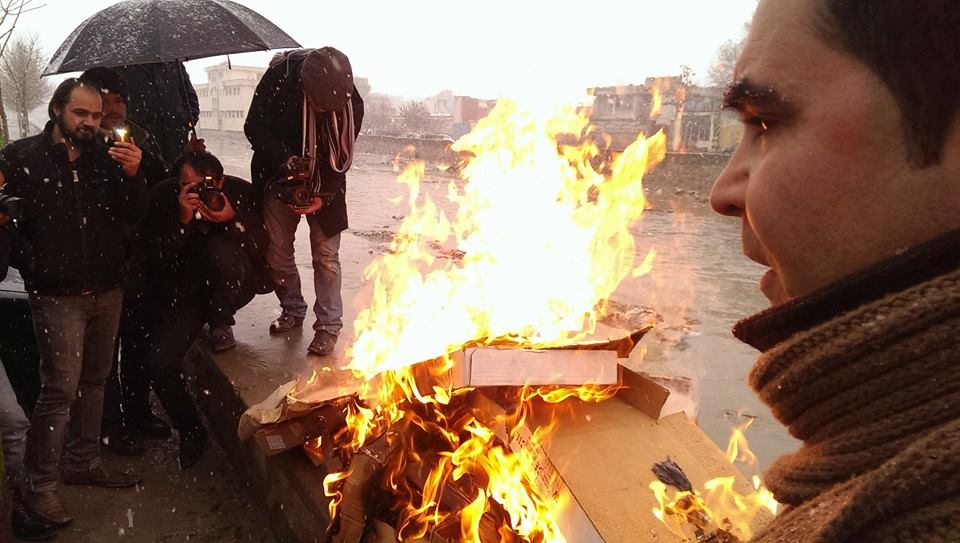
The situation in Afghanistan is horrible in these days, in that cause Mr. Massoud Hassanzadeh instillation artist and singer fired his instillation artwork to protest against the present situation.

Security threats mainly come from the Taliban and opposition armed group, but not only these groups. Shadowy armed groups with un-verifiable links frequently threaten and attack reporters. In the past 13 years, more than 40 journalists have been killed in Afghanistan (Nai 2014b). Dozens of cases, including some killings, are attributed to such mysterious armed groups. Only one case, the killing of a German journalist, was directly blamed on the government.

The situation in Afghanistan is quiet horrible, in that cause Mr. Massoud Hassanzadeh instillation artist and singer fired his instillation artwork to protest against the present situation.

Although the 3rd Eye Film and Photojournalism Center calling from the officials to free our artist photojournalist from the jail, where the jail isn’t for such positive artist and journalist who struggled for peace and democracy in past 20 years of his life in Afghanistan.

Gunmen kidnap 30 Hazaras in southern Afghanistan

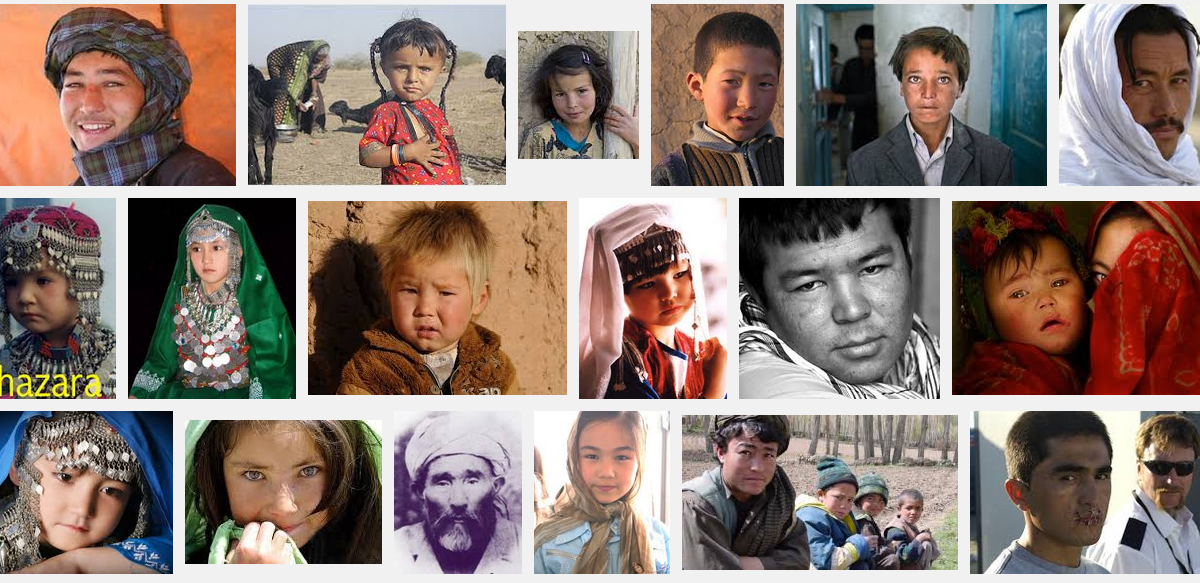
The Hazara, who account for as much as 25 percent of Afghanistan’s population, are mainly Shiite. The group has been targeted by the Taliban and other Sunni extremists, who view Shiites as apostates.

KANDAHAR, Afghanistan — Gunmen in southern Afghanistan kidnapped 30 members of the Hazara ethnic community, authorities said Tuesday, in what appeared to be the latest in a series of attacks on Shiites in the predominantly Sunni country.

No group immediately claimed responsibility for the attack Monday afternoon, police and officials said.

The gunmen kidnapped the 30 people, all men, from two vehicles on a major road in Zabul province, provincial Gov. Mohammad Ashraf said. He said all women, children and non-Hazaras were left behind.

Authorities were searching for those kidnapped, some of whom may be government officials, Ashraf said.

Abdul Khaliq Ayubi, a local government official, said the gunmen all wore black clothing and black masks.

The Interior Ministry said the buses were traveling from the southern city of Kandahar to the capital Kabul when the kidnapping was carried out by “unknown armed individuals.”

The Hazara, who account for as much as 25 percent of Afghanistan’s population, are mainly Shiite. The group has been targeted by the Taliban and other Sunni extremists, who view Shiites as apostates.

The predominantly ethnic Pashtun and Sunni Taliban persecuted the Hazara minority during their 1996-2001 rule, when they imposed a harsh version of Islamic law on the country.

___

Associated Press writer Amir Shah in Kabul, Afghanistan, contributed to this story.

Afghanistan: ‘Reprehensible’ attacks underscore urgent need to protect civilians

Afghan photo journalist Zubair Hatami, injured in an attack on French cultural institute in Kabul dies in hospital. ”

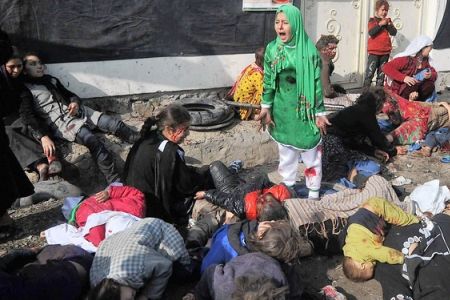
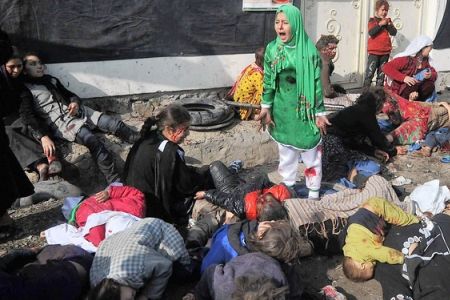
(Reuters) – A teenaged bomber on Thursday targeted a Kabul auditorium packed with people watching a drama condemning suicide attacks and being staged at a French cultural center, killing a German man and wounding 16 people, officials and a witness said.

The suicide blast was the second to strike the Afghan capital in a day, after six Afghan soldiers perished when their bus was hit on the outskirts of the city as they rode into work.

The violence, part of a nationwide campaign by Islamist Taliban insurgents to strike at military and civilian targets, came less than three weeks before the year-end deadline for most foreign combat soldiers to withdraw from the country.

General Ayoub Salangi, head of the Interior Ministry while the cabinet is being finalised, said the suspected theater bomber appeared to have been about 17 years old and detonated his explosives at the venue during an early evening performance.

“I heard a deafening explosion … There were Afghans, foreigners, young girls and young boys watching the show,” Sher Ahmad, an Afghan rights activist who was at the performance, told Reuters.

He said the blast came during a performance of a new play called “Heartbeat: Silence After the Explosion”, a condemnation of suicide attacks.

“Pieces of flesh were plastered on the wall. There were children and women crying for help. Some were running out, some were just screaming.”

Taliban spokesman Zabihullah Mujahid said the bomber targeted the event because it was staged “to insult Islamic values and spread propaganda about our jihad operations, especially on suicide attacks”.

Amid confusion immediately following the blast, one person could be heard saying “It’s all part of the show” in a video posted on YouTube purporting to be of the attack.

HEAVY SECURITY

Early police reports said the bomber attacked the French-run Lycée Esteqlal, one of Kabul’s oldest and most highly respected high schools, but Ahmad said the performance was at the French Cultural Centre located in the same compound.

Salangi said the person confirmed killed was a German man, but he could not immediately confirm his identity.

German Foreign Minister Frank-Walter Steinmeier said the attack was “particularly perfidious because it … was against exactly those people who are helping the country to build a better future.”

The French government said in a statement that “several” people were killed in the attack and “many” more injured, but none of the fatalities were French nationals.

The venue was heavily guarded during the event, according to Kabul police chief Abdul Rahman Rahimi, who added that the bomber may have hidden explosives in his underwear to pass through security.

He said the bomber detonated the explosives at the top of the auditorium stairs, which may have prevented more casualties. The body of the bomber was shredded, but police were able to identify him as a teenager because his head was found intact.

Taliban militants have stepped up a campaign of violence this year to take advantage of uncertainty and weakness besetting Afghanistan’s security forces as they prepare to take over the war on the insurgency, now in its 13th year.

Earlier on Thursday, a suicide bomber targeted a bus carrying Afghan army personnel, the Defense Ministry said, ending a near two-week lull in attacks in the capital. As well as the six soldiers killed, 11 were wounded.

Five Afghan school children were also reported killed in a foreign forces air strike in northern Parwan province, Afghan officials said.

The International Security Assistance Force confirmed an air strike in the area, but said five insurgents were killed.

Civilian casualties caused by air strikes have been one of the most contentious issues of the war, although there are often conflicting claims.

Afghanistan: ‘Reprehensible’ attacks underscore urgent need to protect civilians

The recent wave of attacks on civilians by the Taliban and other armed groups in Afghanistan are reprehensible acts which underscore the new Afghan government’s urgent responsibility to protect the right to life, Amnesty International said today.

The most recent assault, a suicide bombing at Isteqlal High School Theatre in Kabul on Thursday evening, killed one and injured around a dozen civilians who were watching a play. It added to the rising toll of lives lost and hundreds of injuries in armed attacks in different parts of the country in recent weeks.

“Targeting civilians for attack is reprehensible and a clear violation of international humanitarian law (IHL), amounting to war crimes. It is crucial that those responsible are brought to justice,” said Horia Mosadiq, Afghanistan Researcher at Amnesty International.

“One of the core responsibilities of the Afghan authorities is protecting civilians against such violent attacks. The onus is now on the new administration to bolster the security response and regain the trust of the Afghan people.”

The assaults have become more frequent as the majority of international troops stationed in Afghanistan wind down their operations and prepare to pull out later this month.

“The Taliban and other armed groups refer selectively to IHL whenever it suits them. But the targets of the recent string of attacks show a clear and ongoing disregard for fundamental IHL rules that are binding on these groups,” said Horia Mosadiq.

Amnesty International has been calling on the International Criminal Court (ICC) to investigate the situation in Afghanistan for possible war crimes committed by all parties to the conflict.

The organization is also calling on the United Nations to make sure that the protection of civilians and respect for IHL and international human rights law are high on the agenda in any possible future peace talks with the Taliban, among other human rights priorities.

A sad news, Maria – 12 years old – is left alone in Örebro City with no family

1599316_10205083300622420_2716082432218739098_oBy :Ahmad Zaki Khalil

Maria Ahmed came to Sweden in 2011 as an unaccompanied refugee child. She had to leave Afghanistan as her family’s life and safety was under threat in their home country. The family was shattered in the escape; Maria, her father, mother and two sisters. Only Maria boarded the plane to Sweden. Since autumn 2011, Maria has a permanent residence permit in Sweden.
During her three and more years here, her family has repeatedly applied for residency in Sweden to come into safety and to reunite the family.
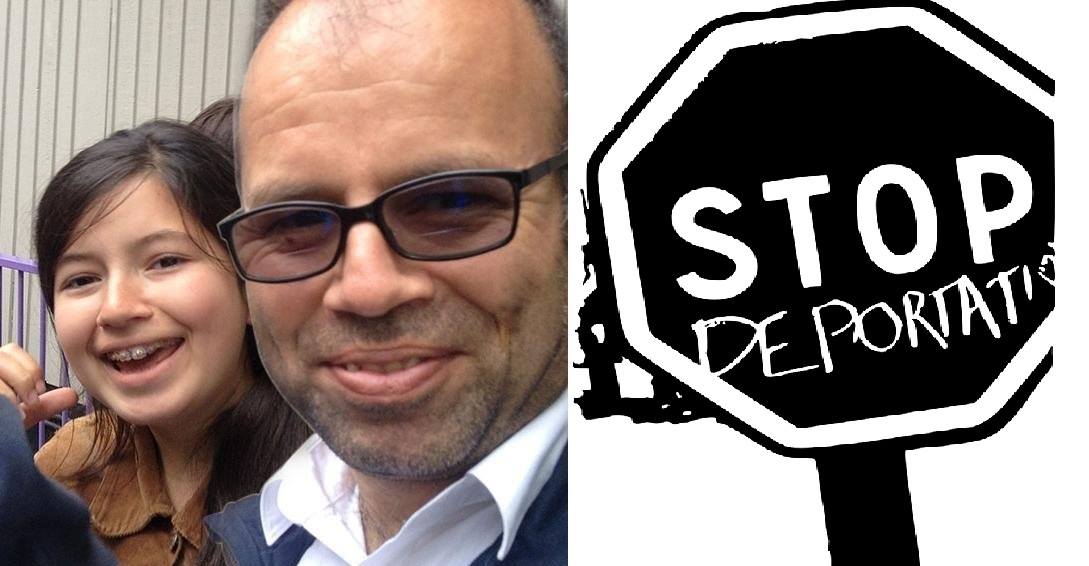
Maria’s father has been in Sweden since 2013. But right now he is in custody in Flen, awaiting deportation. When he leaves, Maria – 12 years old – is left alone in Örebro with no family. No parents.
All Maria’s friends from her class at Sörbyängsskolan in Örebro, Sweden have signed the petition. They say: ”We are all classmates in class 6B and we’re protesting against the Swedish Migration Board’s decision. We believe that all children have a right to their parents. This also applies to unaccompanied refugee children. Stop the deportation of Maria’s father now!

Sweden has so many times been objected and condemned by the international asylum rights activists and organizations due to force deportations and usage of drugs while accomplishing the force deportations to Afghanistan.
The government of Sweden is deporting the Afghan asylum seekers by force to Afghanistan whereas they fail to do such deportations to the other countries, because those countries deny to accept the forced deportees unless it is done in volunteer.
The ministry of refugees and repatriation and the border police of Afghanistan can play a very significant role in stop of such force deportations.

No Justice for teenaged Afghanistan Immigrants during Forced Deportation in Norway

7208759918_83cab46d78_z

By: Kawa gharji

It is nearly 12 years since the Taliban regime has fallen and a new government was established with the support of international communities accompanied by unprecedented support of people of Afghanistan. Over the past 100 years, no government in history of Afghanistan has experienced such level of widespread enthusiastic support. Before that, Afghanistan had the largest population of refugees.  By 2005, a great number of Afghans from neighbouring countries returned to their home country. They hoped for an Afghanistan free of conflict, unrest and war. They were filled with joy and enthusiasm to be part of positive changes that were about to take place in Afghanistan. However, after 2005 people fled the country again. Taliban had regained power and could be of great threats on highways. They burnt schools, exploded bridges and build obstacles on the ways of those whose only wish was to live normally in their homeland.

The young and teenaged Afghanistanis witnessed that the presence of warlords, human rights violators and drug traffickers and a weak and corrupt government in one hand and growing threats by Taliban on the other hand have left no hope for the future of their country. They had no option but to flee Afghanistan. That was the reason these disappointed young Afghanistanis, by absence of positive changes in their country and inability to encounter Taliban threats and warlords, decided to move toward the Western countries. Majority of them were aware of the potential dangers they might encounter until they reach a safe country. They knew that the refugees on boats were drowned on the way from Indonesia to Australia or from Turkey to Greece. They knew that their peers get frozen and die smuggled on lorries’ freezer on the way from France to England. They knew that at the event of a danger, the human traffickers rescue themselves first and use the refugees as human shields against bullets of border polices of Iran, Pakistan and Turkey. They knew they run the risk of getting exploited as sex slaves by traffickers. Despites all these risks, they decided to try their chance to reach a safe country in order to get education and have a future. It is because of the fact that the despair, fear and danger back in Afghanistan are much greater than the danger mentioned above.

Gholam Nabi was 17 when he come Norway. he was deported in 26 okrober 2014

When we speak of some one else’s sorrow, it is hard to grasp and understand the entity and depths of the pain unless we have experienced it ourselves. We are not aware of grave pain of toothache until we experienced it. It is the same for pain of exile, despair and devastation.  When a citizen of wealthy countries wishes to travel abroad, he/she just needs to pocket his/her passport and purchase a ticket. But for citizens of third world countries, particularly those from war-stricken countries such as Afghanistan, the humiliation and offence start right from the gates of foreign consulates.  It starts from obligation to talk and disclose very private and public matters to long hours of interviews and waiting times. There is absolutely no guarantee if one can obtain a visa after enduring such conditions. After that, the humiliation starts through the ambivalent behaviours of immigration officers at the airports, long waiting time for checking one’s passport from a ‘particular’ country, the suspicion and doubt of immigration officers on one’s real identity and finally irrelevant questioning which is only for annoying particular passengers.

Corrupted minister of Refugee and Repatriation Jamahir Anwari

The immigration officers of wealthy and semi-wealthy countries possess a list that contains names of 30 to 70 countries whose citizens should be treated in a particular way at the border. It is not because of the alphabetical order that Afghanistan is first on the list. It is because of the fear Afghanistan produces for its narcotic production, its terrorism and religious fundamentalism.  No one bothers to think that individuals related to these three threats are more likely to have suspicious documentations. As a result, it is only the normal citizens who suffer. These are only for those who travel legally. But those who travel illegally and are smuggled are actually risking their life.

The pain of exile and separation from the environment one has been raised, the language we learnt from our mothers, the food we are accustomed to, friends and most importantly family members, become more devastating when one has to flee at his/her very young age. Although at this age one has reached a level of semi-matureness physically, but at this phase, teenaged persons are in greater need of care by their father and mother and teachers. It is at this period that teenager’s character formation gets influenced by the surrounding environment and without essential supervision of the parents. A considerable number of refugees who flee Afghanistan are teenagers. The dangerous route, worries about one’s family, encounter with human traffickers, the violence experienced by smugglers as well as border police during detention time, all together create a great psychological shock for these teenagers.

The violence and abuse the majority of these young people has experienced or witnessed is much greater than the violence a normal person may have experienced entire of his lifetime. The culture they were brought up in has created moral restriction for them. Therefore, majority of them will not disclose the real reasons for their escape from Afghanistan.

Every week Norway deport 7 to 27 person by force to Afghanistan

The weak government of Afghanistan has freed itself from any responsibility on education and training of children and teenagers of Afghanistan, which is similar to its inability and reluctance to provide security and response to very basic human needs of its citizens, which are the normal responsibilities of any state. Majority of the development projects that are implemented in Afghanistan are for sake of providing a ‘good report’ only and not necessarily for brining a positive change in society. School textbooks in Afghanistan are filled with themes of particular ethnic, religious and lingual dominance, which influences children and teenagers’ mentality. Besides, warlords promote their culture of killing, gambling, drug trafficking, pedophilia (not to be mistaken with homosexuality) as model and a way of living for society and support generalization and destigmatization of such customs. During past two years, 406 cases of honour killing and sexual abuse and rape have been reported in Afghanistan. It is highly likely that real number of cases are 10 times higher as many families prefer not to report such cases. That is why those who were exposed to sexual abuses cannot talk about their problems and prefer to make up stories, which do not necessarily convince the immigration officers of host countries.

After spending some years, some of these refugee teenagers are deported to their country. Their reasons for seeking refuge have not convinced the immigration offices of host countries. For example there are cases of refugees who stayed in Norway from the age of 13 to 18. They have encountered grave dangers on the way to Norway. They have waited more than 5 years in limbo and are finally told they should go back to their country.  As their refugee status had not been recognized, they could not get education and could get only 300 hours of Norwegian language training. The time they had available was spent in loneliness and waiting and uncertainty. What prospect can they hope for once deported back to Afghanistan? To be in unfamiliar environment and ashamed of how one has been treated in the society where everybody knows about it, makes one unable to prove to be a positive element in society. His/her own country has not been able to protect him and address his/her basic needs at the time. His/her hope has been destroyed in Norway or any other European countries. Now the question is:  What option the human being communities has left for the future of these young people? Do they have any other option but to join terrorist, criminal, and drug dealer’s circles?

As a human being living in our shared planet, we should feel responsible. These young people have a bitter destiny and if we do not take care of them today, tomorrow our planet would not be a better place. Our tomorrow would be worse than our yesterdays and today’s.

SOURCE : HAZARA PEOPLE

OPEN LETTER The Afghan People’s 10-Point Road Map for Peace

Peace in Afghanistan
Peace hope in Afghanistan. Photo by 3rd Eye Film & Photojournalism Center

To: His Excellency, President of the Islamic Republic of Afghanistan, Ashraf Ghani Ahmadzai

Excellency,

We, on behalf of the biggest networks of Afghan civil society, congratulate you on your inauguration as President of the Islamic Republic of Afghanistan. We were pleased to note the prominence you gave in your inaugural address to good governance, human rights and women’s empowerment, as well as the need to tackle widespread corruption while ensuring equitable development. We view Afghanistan’s Government of National Unity as the ultimate vehicle to protect and promote the socio-political rights of all Afghans and, accordingly, share and support your vision of securing the rights of all Afghan men and women as the basis for building a peaceful, stable and prosperous Afghanistan.

Your Excellency, based on your request from Afghan citizens for their prioritisation of social challenges that the Government of National Unity should address, we wish to share with you the key findings of a rights- based initiative we have facilitated over the past three years: the Afghan People’s Dialogue on Peace. This initiative was conceived to promote an inclusive, Afghan-led peace process that puts ordinary Afghans at the heart of any effort to secure lasting peace in Afghanistan, while at the same time enabling us, as Afghan civil society activists, to amplify the voices of ordinary Afghans and ensure they are heard by all policymakers, including the ultimate policymakers – the leaders of our county.

To date, over 6,000 ordinary Afghan citizens – men, women and youth (including housewives, local business people, teachers, farmers, persons with disabilities, students, community elders and religious leaders, and former members of the armed opposition) have taken part in the Afghan People’s Dialogue on Peace through inclusive focus groups discussions in all 34 provinces, including remote, rural areas. Our efforts concentrated on soliciting ordinary people’s views on the key drivers of the on-going conflict as well as corresponding, workable solutions. The findings of the second phase of the Afghan People’s Dialogue on Peace were published in the form of a summary report launched in June 2014, entitled Afghan People’s Dialogue on Peace: Building the Foundations for an Inclusive Peace Process, and included a 10-Point Road Map for Peace.

The initiative has also resulted, to date, in the production of 30 draft provincial-level road maps for peace. The findings and solutions proposed in these road maps for peace serve as both a call to action and a demand that all peace building efforts meaningfully involve Afghan men, women and youth from all parts of society. Such an inclusive process will not only guarantee the legitimacy of any peace building effort, but also, critically, lead to durable peace based on the will of the Afghan people, thereby giving people a stake in the future development of their country.

1

Kabul, Afghanistan, 12 October 2014

The Afghan People’s Dialogue on Peace highlighted that Afghan men, women and youth view disarming and disempowering local militias, tackling widespread corruption and impunity, particularly among the police and judiciary, resolving ethnic tensions, tribal disputes and factional conflicts, which fuel broader armed conflict, respecting human rights and providing equitable development assistance and service delivery across the country, as the essential components of any strategy to achieve lasting peace in Afghanistan.

The most common theme echoed throughout the Afghan’s People’s Dialogue on Peace, and detailed in the summary report, is Afghans’ discontent with the Government due to corruption, weak rule of law and pervasive impunity for human rights violations and impunity. These factors were viewed as the main drivers of the armed conflict in Afghanistan. The report highlights that corruption offers a ‘path to influence’ and impunity is a direct by-product of corruption in the justice system. Your Excellency’s early focus on reviewing the Kabul Bank case and reforming the judicial system is a welcome development; we look forward to being consulted on and receiving regular updates on this process.

Afghans strongly called for the implementation of reform programmes, including independent and non- political measures to remove corrupt officials, merit-based appointments of local government employees, and the introduction of more efficient administrative procedures. People also called on the Government to ensure public scrutiny of key justice sector personnel, and to implement changes aimed at combatting corruption and abuse of authority in the police, prosecutor’s offices and courts.

The Afghan People’s Dialogue on Peace further pointed to a lack of Government presence in remote, insecure and contested areas as a key driver of the armed conflict. People noted that the Government’s inability to maintain sufficient levels of national security forces in many parts of the country has contributed to the resurgence of the Taliban and other abusive illegal armed groups in provinces such as Farah, Herat, Jawzjan and Parwan.

Afghans who live in insecure parts of the country stressed that fear stemming from Taliban infiltration and inadequate levels of national security forces led the previous Government to outsource the security of its citizens to notorious local militiamen. This, according to people in Kunduz province, has created “States within the State” where ‘law’ is administered locally according to the whim of warlords rather than by provincial or national structures. Afghans accordingly call on the Government of National Unity to disarm illegal armed groups and other so-called pro-Government militias. The people view this measure as critical to tackling the illegitimate influence of local powerbrokers and warlords over local government institutions.

Afghan men, women and youth also expressed grave concerns about deepening ethnic, tribal and factional animosity that drives insecurity and instability in many parts of Afghanistan. People stated that such conflicts carry the potential to and often have fuelled the broader conflict between the Government and the armed opposition. Afghans called on the Government of National Unity to focus more attention on resolving local-level conflicts and disputes and stem growing conflict by promoting community cohesion and reconciliation, which would assist in ensuring an inclusive peace process.

The report identifies lack of economic progress and social justice as a serious driver of instability. Poverty, slow and unequal development in all regions, along with mass unemployment, and inequality in the allocation of resources are problems that participants in the Afghan People’s Dialogue believe the Government has failed to address over the past 12 years.

Afghans also raised serious concerns about the misuse, misappropriation and inequitable distribution of development assistance. People noted that lack of community infrastructure and services such as roads, bridges, schools and healthcare facilities continued not only to undermine stable governance but also

2

resulted in enormous hardship and suffering among poor Afghans. We believe that your agenda, as articulated in your inaugural speech, where you state that the Government of National Unity has “a commitment to directly transfer the national budget to the provinces” can serve a basis to resolve these problems.

Focusing on unemployment, and in particular increasingly disenfranchised youth, who can pose security challenges, the Afghan People’s Dialogue on Peace found that ‘education is the key to security’. Emphasis on the plight of Afghan youth, along with employment and income generation initiatives were thus viewed by Afghans as an immediate and national priority for the Government of National Unity.

Opium poppy cultivation and the struggle for control over its illicit economy as directly linked to high rates of unemployment, corruption within government institutions, illiteracy, youth’s susceptibility to drugs and the influence of armed groups over youth are fundamental problems identified by the people. Afghans therefore called on the Government of National Unity to focus more proactively on fostering job creation, investing in alternative crops, and emphasising the development of education facilities and services for youth as ways to combat the drugs problem.

As also highlighted in the summary report, Afghans emphatically viewed the Afghanistan Peace and Reintegration Programme (APRP) as a failed programme. They expressed resentment at their exclusion from both the process around the implementation of the Programme, as well as the lack of broader community- based development envisaged at the Programme’s conception. In the report, Afghans expressed the view that the APRP is led by those who have a vested interest in continuation of the conflict. Former Taliban fighters who had been reintegrated through the APRP also voiced dissatisfaction with the Programme.

The report highlights that Afghans are calling for an inclusive peace process to ensure that peace is based on the legitimate desires and will of all Afghan people and not just elites and powerbrokers. People are calling on the Government of National Unity to fundamentally reform the APRP in a way that gives all people a stake in building the foundations for lasting peace at the local-level.

The report, summarising the views of Afghan men, women and youth is enclosed with this letter. We hope it will support and further enhance Your Excellency’s vision for building lasting peace in Afghanistan – based on the legitimate grievances, desires and will of the Afghan people. We also enclose the People’s 10-Point Road Map for Peace. The main massage of the report is that durable peace can only be achieved by addressing the root causes of the conflict that has plagued our county for years, based on the solutions identified by the people; only then will the conflict be meaningfully resolved.

We look forward to meeting with Your Excellency to further discuss the findings of the Afghan People’s Dialogue on Peace and how Afghan civil society can play a role in securing peace as a reliable bridge between people and the Government.

Yours sincerely,
Steering Committee members of the Afghan People’s Dialogue on Peace

Afghanistan Independent Human Rights Commission (AIHRC) Afghan Civil Society Forum (ASCF)
Afghan Civil Society & Human Rights Network (ACSHRN) Afghan National Union of Labour (AMCA)

Afghan Women’s Network (AWN)

3

Afghan Women Skills Development Centre (AWSDC)
Human Rights Focus Organization (HRFO)
Organization for Social Development and Legal Rights – Afghanistan (OSDLR) Sanayee Development Organization (SDO)
Transitional Justice Coordinating Group (TJCG)
Women Political Participation Committee (WPPC)

10-Point Road Map for Peace

How social media changed Afghan women life?

Nargis Rezai Afghan blogger

In 2013 I was awarded the global best blog Persian by “Deutsche welle”. Beside blogging I got involved into the community and start social activities in Kabul. Every thing start by blogging, a simple daily report of the world around me! Still I write because I believe in change.

I start blogging in 2009 and was on of the first afghan women who had blog in a society a very small percent of youths (mostly men) used Internet. For long time my blog had no viewer but now readers from all over the world check it. By blogging not only I connected to other blogs but also their thoughts, dreams and information.

I remember when I start using Internet; US Embassy donated five computer systems to national library of Herat city. After hours waiting we could use half an hour 128 kb/s Internet for searching about an article in Google or open the yahoo mail or chat by yahoo messenger.

I had a high passion to change my life and people around me; also I was very happy that I could show a real feature of Afghan women life to my readers who mostly were not living in Afghanistan.

I am happy that nowadays Life gets very easier, smart phones come to the bazar and made the world connected. New platforms like Facebook, instagram, LinkedIn, and twitter made us more social, aware and open-minded. Internet is also very cheaper because many different companies provide Internet service. Girls can easily use the social media everywhere they are living.

After a while blogging was my weapon to fight, the best tool to amplify my voice from inside of Afghanistan and point the reality of our society on basic rights of Afghan women and children, injustice against minorities and corruption inside the government system.

However the Stoning, murdering, number of wives, marriage under the age of 18, forced marriage and being deprived of right of education is what we often hear about Afghan women life situation in media but in other hand we have women who are the symbols of resistance and fighting for better life based on human standards.

Below read my chat with three famous Afghan woman social activists that briefly answer my four questions, 1-How social media changed your life? 2-What are the challenges toward social change through social media for women in AFG? 3-What is the weakness of Afghan society from your perspective to accept/ judge/ evaluates your willing/goals/ideas? 4-How effective you feel your activities are in social media?

3 Masooma Ibrahimi, one of the first Afghan woman blogger who is studying MBA in Arkon university in Ohio USA.

Masooma Ibrahimi, one of the first Afghan woman blogger who is studying MBA in Arkon university of Ohio in America, started social life from Blogging says; “social media helped me to find new friends, keeping in touch with old friends. To communicate and have dialogue with large group of people about different issues. Beside that social media is a platform to get and expand the information and ideas. The most challenging part is protecting your identity and your privacy and to write under the own names. It also happened that other people start a fake account under your name. Afghan society is traditional and religions society, they react hard when they traditions and their religious is denied or challenged. This reaction is getting worse when women disobey them. My life is totally changed by my blog and I learned a lot”

Kobra Rezaie a Socio-political activist who worked as director of gender in the ministry of Urban and Development Affairs and now I doing master degree in Japan says:

“Nowadays social media is a significant tool towards democracy. Talking about social media without considering freedom of speech is impossible. Sustainable democratic process needs strong social media tic activities and support freedom on social media activities.

2 Kobra Rezaie a Socio-political activist who worked as director of gender in the ministry of Urban and Development Affairs

Particularly in Afghanistan, role of traditional and social media is really remarkable. During all conflicts which have had happened in last 12 years in Afghanistan one of most vulnerable group which have had suffered from challenges are women.

Politician women have used mass media and social media to introduce themselves to the society even out of Afghanistan. Because Afghanistan is a traditional country and women were hidden from public environments. Mass media and social media has been opened worlds’ windows towards Afghan women capability and ambitious.

Base on my own experience, I had participated as youngest candidate during provincial election in Heart city in 2009. I was too young and honestly I did not know about ethnics, religious and regions well because I have risen out of Afghanistan. During political campaign I have understood that in my country multi-ethnicity, multi-cultureless and regions function as a fragmented features not as unity. Social media helped me to introduce plans, ideas and future programs that I have, very fast and easy.

Farkhonda Akbar Tufaan who studied International Relation works with United Nation in New York says: “Social media has connected me to my homeland and to the world. Therefore, I am involved in social issues happening back in Afghanistan and participate in campaigns, particularly related to Afghan woman issues and human rights. As a result of social media, I have become more active and more aware. An Afghan woman face a lot of challenges on social media, as a precedent has not been set before on how Afghan woman is ‘expected’ to present or appear on social media. Thus brings a lot of challenge to the Afghan women on practicing the culture of social media – such as ‘selfies’, personal statuses, photo sharing. Afghan women on social media cannot be part of it to a certain extend as the taboos and restriction that physically exist in the society is dragged on social m

1 Farkhonda Akbar Tufaan ,studied International Relation works with United Nation in New York

edia by the Afghan themselves. Afghan society is practicing its ultimate freedom on social media and in their democracy – both concepts are new and therefore are raw in the context of Afghanistan. My activities are certainly effective enough for the audience I am targeting. My activity is effective as long as like-minded people support it, repeat it and joins it. Once an activity is shared on social media, it becomes popular, just for the fact how many people you can influence.”

I believe the correct news and the contents in social media are the weapon of the democracy because it power comes from people thoughts. But unfortunately, the literacy rate is low in Afghanistan. Most of people are living in rural areas. Economic growth is very slow and development projects have not adequate speed. Government is struggling with insurgents and armed group. Taliban as most strict Muslim group is big threat for citizens inside the country. Therefor state could not pay enough attention to women issues and support women’s rights as much as internal and international expectation.

Afghanistan: No justice for thousands of civilians killed in US/NATO operations

April 7, 2013: A NATO airstrike killed 10 children and 8 other people in eastern Kunar province of Afghanistan. (Photo: Reuters)

The families of thousands of Afghan civilians killed by US/NATO forces in Afghanistan have been left without justice, Amnesty International said in a new report released today. Focusing primarily on air strikes and night raids carried out by US forces, including Special Operations Forces, Left in the Dark finds that even apparent war crimes have gone uninvestigated and unpunished.
“Thousands of Afghans have been killed or injured by US forces since the invasion, but the victims and their families have little chance of redress. The US military justice system almost always fails to hold its soldiers accountable for unlawful killings and other abuses,” said Richard Bennett, Amnesty International’s Asia Pacific Director.
“None of the cases that we looked into – involving more than 140 civilian deaths – were prosecuted by the US military. Evidence of possible war crimes and unlawful killings has seemingly been ignored.”
The report documents in detail the failures of accountability for US military operations in Afghanistan. It calls on the Afghan government to ensure that accountability for unlawful civilian killings is guaranteed in any future bilateral security agreements signed with NATO and the United States.
Amnesty International conducted detailed investigations of 10 incidents that took place between 2009 and 2013, in which civilians were killed by US military operations. At least 140 civilians were killed in the incidents that Amnesty International investigated, including pregnant women and at least 50 children. The organization interviewed some 125 witnesses, victims and family members, including many who had never given testimony to anyone before.
Two of the case studies — involving a Special Operations Forces raid on a house in Paktia province in 2010, and enforced disappearances, torture, and killings in Nerkh and Maidan Shahr districts, Wardak province, in November 2012 to February 2013 — involve abundant and compelling evidence of war crimes. No one has been criminally prosecuted for either of the incidents.
Qandi Agha, a former detainee held by US Special Forces in Nerkh in late 2012, spoke of the daily torture sessions he endured. “Four people beat me with cables. They tied my legs together and beat the soles of my feet with a wooden stick. They punched me in the face and kicked me. They hit my head on the floor.” He also said he was dunked in a barrel of water and given electrical shocks.
Agha said that both US and Afghan forces participated in the torture sessions. He also said that four of the eight prisoners held with him were killed while he was in US custody, including one person, Sayed Muhammed, whose killing he witnessed.
Formal criminal investigations into the killing of civilians in Afghanistan are extremely rare. Amnesty International is aware of only six cases since 2009 in which US military personnel have faced trials.
Under international humanitarian law (the laws of war), not every civilian death occurring in armed conflict implies a legal breach. Yet if civilians appear to have been killed deliberately or indiscriminately, or as part of a disproportionate attack, the incident requires a prompt, thorough and impartial inquiry. If that inquiry shows that the laws of war were violated, a prosecution should be initiated.
Of the scores of witnesses, victims and family members Amnesty International spoke to when researching this report, only two people said that they had been interviewed by US military investigators. In many of the cases covered in the report, US military or NATO spokespeople would announce that an investigation was being carried out, but would not release any further information about the progress of the investigation or its findings – leaving victims and family members in the dark.
“We urge the US military to immediately investigate all the cases documented in our report, and all other cases where civilians have been killed. The victims and their family members deserve justice,” said Richard Bennett.
Thousands of Afghans have been killed or injured by US forces since the invasion, but the victims and their families have little chance of redress. The US military justice system almost always fails to hold its soldiers accountable for unlawful killings and other abuses.
The main obstacle to justice for Afghan victims and their family members is the deeply flawed US military justice system.
Essentially a form of self-policing, the military justice system is “commander-driven” and, to a large extent, relies on soldiers’ own accounts of their actions in assessing the legality of a given operation. Lacking independent prosecutorial authorities, it expects soldiers and commanders to report potential human rights violations themselves. The conflict of interest is clear.
In the rare instances when a case actually reaches the prosecution stage, there are serious concerns about the lack of independence of US military courts. It is extremely rare that Afghans themselves are invited to testify in these cases.
“There is an urgent need to reform the US military justice system. The US should learn from other countries, many of which have made huge strides in recent years in civilianizing their military justice systems,” said Richard Bennett.
The report also documents the lack of transparency on investigations and prosecutions of unlawful killings of civilians in Afghanistan. The US military withholds overall data on accountability for civilian casualties, and rarely provides information on individual cases. The US government’s freedom of information system, meant to ensure transparency when government bodies fail to provide information, does not function effectively when civilian casualties are at issue.
Amnesty International also urges the Afghan government to immediately establish its own mechanism to investigate abuses by the Afghan National Security forces, who will assume full combat responsibility by the end of 2014.

Amnesty International Report

Afghan Couple Find Idyllic Hide-Out in Mountains, but Not for Long

By 

HINDU KUSH RANGE, Afghanistan — They eloped from their village in the Bamian Valley on the first day of spring, but their month on the run has taken them back into winter as they fled higher into these rugged mountains in centralAfghanistan. They stayed in the homes of friends when they could, and they slept rough in caves when they could not.

Mohammad Ali, 21, and Zakia, 18, are fugitives, but they are together at last, married by a mullah after being kept apart by disapproving families and the taboo of their different ethnicities and sects. Her family has threatened to kill them, and now they face potential arrest, too, as the police are seeking them on what the couple say are concocted charges of bigamy and “attempted adultery.”

A week ago, they reached the spacious, mud-walled house of Haji and Zahra on a promontory overlooking a valley of freshly tilled wheat and potato fields along a fast river. On three sides, towering mountains still capped with snow shielded their hamlet of only four homes from view, and the nearest road was a steep walk away over a shaky log bridge — a perfect hide-out, and honeymoon picturesque.

Haji and Zahra are distant relatives and former neighbors of Mohammad Ali, and they welcomed the couple despite having eight children of their own, and little in the way of food beyond bread, rice and tea.

When Mohammad Ali and Zakia related how her family opposed the match because they are Sunni Tajiks and he is a Shia Hazara, and how they had tried for years to persuade her parents to allow them to be together, Zahra and Haji readily agreed that the couple could stay.

“I support what they did; they love each other,” Zahra said. “And for God’s sake, I decided we should help them.”

This was the eighth place the couple had slept since the night that Zakia fled the women’s shelter in Bamian, where she had spent months in custody under court order. At one point, they tried to flee across the Iranian border, but the people smugglers there wanted more money than they had, and the walk was, Mohammad Ali feared, more than Zakia could survive.

ImageFor a while, they took refuge in Ghazni Province, a dangerous area with a large Hazara population.

Finally they came to these high mountains, where they could at least find friends and distant relatives, although not all were welcoming. One night, turned away from shelter, the couple had to sleep on a mountainside; two nights, though they were near a large town, they feared to enter it and slept in a cave on the outskirts.

By the time they arrived at Haji and Zahra’s home, Mohammad Ali said, he was down to his last 1,000 afghanis — less than $20. There was no cellphone service unless he climbed to the top of a 14,000-foot peak nearby, and often that still did not work. He needed to make calls to arrange their next refuge.

Meantime, they described it as a week in heaven. “We could go out for walks in the mountains,” he said. “Everywhere else we had to hide inside.”

Green grass crept up the mountainside, providing forage for the donkeys and sheep, and reminding Mohammad Ali and Zakia of their shared childhood, when they tended their families’ animals together; their farms had been side by side.

“They seemed so happy together,” Zahra said. “For the whole week they were here, they were never fighting or angry with one another.”

By Friday, reality caught up. Mohammad Ali’s father, Anwar, and his oldest brother, Bishmullah, 27, came to visit them because word had circulated about where the couple were hiding. A woman, another distant relative, coming back from a funeral had visited Zahra and Haji and saw the couple there.

“That stupid woman,” Zahra said. “Some people don’t know how to keep a secret.”

Haji spoke up: “They have to leave here today.”

There was neither argument nor resentment. Zakia quickly packed the two plastic bags in which they keep their clothes, along with a small knapsack. Zahra teared up. “She loves him and wanted to be with him is all,” she said. “But the problem is if it comes to a dispute between families, they might kill each other — and them, too.”

Anwar thought it might be the last time he saw his son and daughter-in-law, and he had something to say. The first time he had heard about Mohammad Ali’s plan to marry Zakia, Anwar had thrashed his son so badly that the young man had facial bruises for months. But since then, the father had come around.

“My daughter-in-law stood behind my son and was brave enough to say she loves my son, and it is an honor for us to stand behind her,” Anwar said. “She’s a part of my family now.” Both Anwar and Bismullah were red-eyed with emotion. (Like many Afghans, none of them use surnames; in Haji and Zahra’s case, surnames are being withheld for their protection.)

Mohammad Ali and Zakia were the only ones who did not look bereft, smiling and laughing easily with each other, even as they got ready to run again. “It’s worth it, because we love each other,” he said. “Of course we’re concerned about our safety, but our happiness is greater than our concern.”

“How can I be sad?” Zakia said, and gathered her veils over her face. “We’re together; I’m with my love.” Mohammad Ali had suggested she wear an all-covering blue burqa for disguise, but she refused proudly.

“I can’t put that thing on me,” she said.

They hoped to be hundreds of miles away by Saturday morning, but were not sure which way they would go. The road to the north went through Taliban country. To the west, bandit country, where they risked being robbed — or worse. The road to the south went over passes still blocked by snow.

There was no road east, but they could always walk.

Watch Video here : http://nyti.ms/1jp2bDS

AT least 17 civilians have been killed and 46 others injured in a crowded market in northern Afghanistan.

Image
According to reports, a suicide attacker with a body-borne improvised explosive device (IED) detonated in the centre of Maimana, Faryab’s capital. Local health officials have confirmed that two children were amongst those killed, and the injured included a pregnant woman. Photo by BNA

BBC Reports “A pregnant woman and two children are also among the dead,” said Abdul Sattar Barez, deputy governor for Faryab province.

“The bomber driving an explosive-filled auto rickshaw and wearing an explosive vest blew himself up in the crowded Maisara area in Maimana city.”
Most of the victims were shopkeepers and other vendors, he said, adding: “The blast was so strong that the bodies were torn to pieces.”
The wounded were taken to nearby medical facilities and also to Mazar-e-Sharif, provincial capital for Balkh.
The crowds in the area were larger than usual as people were shopping for the Afghan New Year, according to another official.
Faryab is a restive province bordering Turkmenistan in northern Afghanistan.
In November, six Afghans working for the French agency Acted were shot dead by Taliban militants in Pashtun Kot district.

UN Press Statement
The United Nations Assistance Mission in Afghanistan (UNAMA) strongly condemns a deadly suicide attack which took place today in the northern province of Faryab, killing 15 civilians and injuring another 47.

According to reports, a suicide attacker with a body-borne improvised explosive device (IED) detonated in the centre of Maimana, Faryab’s capital. Local health officials have confirmed that two children were amongst those killed, and the injured included a pregnant woman.

“The continuing rise in civilian deaths from IEDs is tragic. Their use in a distinctly civilian location such as a market is atrocious and cannot be justified,” said the Secretary-General’s Deputy Special Representative for Afghanistan and acting head of UNAMA, Nicholas Haysom. “I reiterate the many calls made by UNAMA for an immediate stop to the indiscriminate use of IEDs, especially in areas known to be populated by civilians.”

UNAMA stresses that the indiscriminate use of IEDs may amount to a war crime. International humanitarian law – which binds all parties to the armed conflict in Afghanistan – strictly prohibits the use of weapons and attacks that do not distinguish between civilians and military objectives.

In the first two and a half months of 2014, IED tactics, which include suicide and complex attacks, have killed 190 civilians in Afghanistan, a 14 per cent increase from the same period last year.

UNAMA extends its condolences to the families of all of those killed and wishes a speedy recovery for the injured.

Why Hazaras are being Killed in Pakistan?

Protest against bomb blast at a grocery market of Hazara Town Quetta

Once again Lashkar-e-Janghvi (LeJ) terrorists managed to kill 28 Hazara pilgrims including women and children in Mastung district, some 50km Southwest of Quetta City, Pakistan and the provincial government once again failed to protect the lives of its citizens.
With respect to Hazara killings, the terrorists always get right information to murder Hazaras en masse outside of their vicinity. If they couldn’t find Hazaras outside of their surrounding areas, they easily manage to penetrate into Hazara neighbourhood by crossing heavily guarded security check posts to target Hazaras.

So far, over 100 Hazara Shias have brutally been murdered only in Mastung area but not a single terrorist involved in the killings of Hazaras has been captured. Only this year 33 Hazaras have so far been killed but not a single person was convicted. Last year, 281 Hazaras were massacred but not a single person was brought to book. Till to date, 1300 plus Hazaras have so far been killed and more than 3500 injured since 1999 but not a single person brought to justice.
LeJ and Jaish-e-Islam claim the killings of Hazaras publicly on the print and electronic media. In Balochistan, local media persons are fully aware of Hazaras killers but the government and the security agencies unfortunately don’t know who they are to get hold of them? They don’t know where do they live? What telephone number they use? And where do they make bombs?

Should we really believe what-so-ever the government and the security agencies say—in terms of the security failure? Do they really not have any information about the killers? Should we really believe that the terrorists are more capable than the writ of the government? No, of course not. It’s not as simple as it is portrayed. Everybody knows about the response of the security agencies to alleged Baloch nationalists. As we all know, thousands of Baloch nationals are reported missing and hundreds of them have already been reported allegedly killed brutally without being presented in the court.

Are the religious terrorists more powerful than the security forces? No, they are not. Is government scared of them? No, it’s not. Are they not aware of the religious terrorists’ hideouts? I’m sure, they know. Is there any issue with the capability of the government and law enforcement agencies in dealing with the religious terrorists? No, of course not.

http://www.hazararights.com/
Hazara People Rights: We have started two new poetry projects dedicated to the Hazara people. Our projects are a chain poem and a poetry anthology. So far the following 59 poets from 35 countries have joined us…

Then what holds the government and law enforcement agencies back to take action against them? It is the “will”. Do they have “will” to go after the terrorists? No, they don’t have. If not, then the question arises why the “will” doesn’t allow the higher authorities to bring the religious terrorists to justice? How many Hazara dead bodies does the higher authority want? Over 1300 Hazaras have already been killed. What does the elite class want Hazaras to do in Quetta City? Or what message the big boss wants to convey to the international community through Hazara dead bodies?
These are the questions need to be analyzed well to get the right answer. Human Rights Watch report 2014 (HRW)says that the militant groups, including the Tehreek-i-Taliban Pakistan (TTP) and some other banned outfits, are operating with “virtual impunity” in Pakistan as the country’s civilian and military institutions are either “unable” or “unwilling” to prevent terrorist attacks.
With regard to the ability of the government and military institutions, we have already discussed it and there’s no need to further discuss, however, the “unwilling” needs to be analyzed well to understand ongoing genocide of Hazaras in Pakistan.

If we take a look of past couple of days’ terrorist activities in Pakistan, we will easily come to know about the pressure on the federal government against Taliban. At least 20 soldiers were killed last Sunday by Taliban while in retaliation, Pakistani military aircraft bombed Taliban hideout in northern areas of Pakistan killing dozens.
Some conspiracy theorists believe that the government feels immense pressure from the military to take action against Taliban and Hazara killings actually means to develop pressure on the government by engaging the civil society to take action against Taliban. But the question arises, which Taliban? What Taliban I’m talking about—the good ones or the bad ones? Which ones the governments want to take action against? And which one is involved in the killing Hazaras? Too difficult by Pakistani government to separate the bad Taliban from the good ones.
Hazaras as usual have started sit-in protest with their dead bodies on Alamdar Road Quetta to demand action against the religious militant groups especially LeJ and Jaish-e-Islam, which will later on be supported by media, political parties and the civil society.
I strongly favour military action against the religious militant groups particularly LeJ and Jaish-e-Islam affiliated with Taliban and Al-Quaida but “why my community has been picked for the mass lobbying?”

And will the government ever launch military actions against the good religious militants groups especially LeJ, Jaish-e-Islam affiliated with pro-Pakistan Taliban? No, never. Why the government will show “unwilling”? Because they are “the national assets”. Like past, the government may carry out some kind of clichéd military actions against them but will soon be stopped when the situation calms down.

By Muhammad Younas

Read more: Outlook Afghanistan 

‘Death Road’ blocks Afghan minority from homeland

MAIDAN SHAHR, Afghanistan — Maps refer to it as part of the Kabul-Behsud Highway. Motorists call it Death Road.

Mass-grave of Hazara's, show's that people suffering from long time ago and the exist with traffic valiance's in Afghanistan and Pakistan.
Mass-grave of Hazara’s, show’s that people suffering from long time ago and they are existing with traffic valiance’s in Afghanistan and Pakistan.

A 30-kilometer (18-mile) stretch of two paved lanes heading west from the town of Maidan Shahr in central Afghanistan has seen many beheadings, kidnappings and other Taliban attacks in recent years against members of the minority ethnic Hazara community. Nowadays, nearly all drivers avoid it.

The highway is the main route between the Afghan capital and Hazarajat, the informal name of the 45,000-square mile (116,550-square kilometer) region of highlands and rich pastures where Hazaras have traditionally settled. An alternate route out of Hazarajat involves a long detour to the north, and passes through areas where they have been targets of violence.

The threat of attack on Death Road is so great that Hazaras who’ve moved by the tens of thousands east to the capital in search of work are afraid to travel back to their home villages.

“If it were safe, I would go back,” said Sultan, 50, who fled to Kabul nine years ago after his village was torched by nomads allied with the Taliban. “Life is good in my village. There is fresh water, and the weather is good.”

The situation is a reminder of how fragile Afghanistan’s ethnic and sectarian balance remains less than a year before all foreign forces are to leave the country. The area has become a flashpoint for conflict between the Hazaras and Afghanistan’s majority ethnic group, the Pashtuns. The Taliban are predominantly Pashtun. The vast majority of Hazaras are also Shiite Muslims, reviled as heretics by Sunni Muslim extremists such as the Taliban.

For many years, Hazaras had taken the lowest-status jobs in Afghan cities, working unskilled, backbreaking jobs on construction sites. They have done far better, however, since the U.S.-led invasion toppled the Taliban regime in 2001. Hazaras have enrolled in universities, taken jobs with international agencies and even won the Afghan version of American Idol, “Afghan Star,” the last two seasons.

Needless to say, Hazaras strongly support a continued presence of international forces after 2014, seeing it as a guarantee of the security, educational and economic gains they have made since Taliban times.

But even now, Hazaras cannot rely on international forces to protect them on Death Road.

Earlier this month, Hazara elders brought their complaints about security to the new chief of police in Maidan Shahr, the capital of Wardak province. They noted that because Hazarajat is so rural, they require construction crews from Kabul for any building projects.

“Construction of schools and clinics has stopped because it’s impossible to travel on this road,” said Mohammad Fahimi, the highest-ranking Hazara on the local provincial council. “The army has Humvees, weapons, bunkers. They can see the Taliban with their eyes but they’re afraid to come out of the bunker. They’re useless.”

Since a 2011 suicide bombing that killed over 70 Hazaras in Kabul, Afghanistan has not seen the sort of large-scale massacres that have claimed the lives of hundreds of Hazaras in neighboring Pakistan each year. But smaller-scale killings like those on the road remain a source of fear.

Last August, three Hazaras were kidnapped and killed in separate Taliban attacks along the road.

Seated in his office here in the provincial capital, Fahimi flips through a worn, handwritten diary to find details of the most recent killings.

“Mohamad Hadhi, 30 years old from Bamiyan, killed because he was Hazara. Baqar Fahimi, a university student from Ghor province, killed because he was Hazara. A driver named Ziauddin from Ghazni, killed because he was Hazara,” Fahimi reads aloud.

“The road is blocked, I can’t travel to talk to my constituents. The people elected me but I can’t to talk to them and find out what they need,” Fahimi said.

At the province’s brand new police headquarters, new Humvees are parked outside and about 50 recruits stand at attention in the dusty parade ground.

The police chief, Gen. Mohammad Fahim Qhiem, has promised to improve security on the road. Qhiem said the August killings remain unsolved, but he’s talked with village elders among the largely Pashtun population living along the road.

“Now it is OK, the road is safe,” Qhiem said.

Fahimi disagreed. He called his district, Behsud, “the worst place for Hazara safety in all of Afghanistan.” He estimates that over the past 10 years some 40 percent of the district’s population has fled.

The flight is fueled by the search for jobs and better education as much or more than for security. They’ve flooded into Kabul, 100 miles (160 kilometers) east of the Hazara’s biggest city, Bamiyan. Hazaras make up only perhaps 9 percent of Afghanistan’s population of 31 million, but some estimates say they now comprise half the population of the capital.

Hundreds of thousands of Hazaras have found their way to Dasht-e-Barchi, a sprawling Hazara district in western Kabul. It sprang virtually out of the desert 10 years ago, and now is home to an estimated 1.5 million Hazara.

One of them is Sultan, who like many here uses only one name. He says he hasn’t been able to return to his home for years because of attacks along the road. “Twenty-four people have been kidnapped and most killed by Taliban on this road, all Hazaras.”

Haji Ramazan Hussainzada, a Hazara community leader in Dasht-e-Barchi, says Hazaras are treated like “third-class citizens” in Kabul. He complains that parts of Kabul populated by other ethnic groups have more paved roads and access to schools, clinics and services.

The Hazaras say they value education very highly. “A Hazara father can go to bed with an empty stomach with no problem, as long as he can afford school for his children,” Sultan said, expressing a widely held view among Hazaras. He sends two of his sons to private school at nearly double the cost of a state school.

Seated in his sunlit shopfront along Dasht-e-Barchi’s traffic-choked main road, Sultan said he hopes his sons will one day become government ministers — but he’s worried that anti-Hazara discrimination could work against them.

The current government has no Hazara ministers. None of the 10 candidates in April’s presidential election is Hazara, though the leading two candidates have each chosen a Hazara running mate.

___

Associated Press writer Amir Shah in Kabul contributed to this story. Copyright 2014 The Associated Press. All rights reserved. This material may not be published, broadcast, rewritten or redistributed.

Source : WP

EU and Afghanistan: Mission Accomplished, Women Abandoned?

Published in:  EU Observer
Photo by RAWA
Photo by RAWA

UK Prime Minister David Cameron may feel that his country’s Afghanistan mission is “accomplished,” but Afghan women paint a much bleaker picture.

Despite 12 years of armed conflict, investment and capacity-building by foreign governments in Afghanistan, including by European Union governments and the EU itself, women’s rights remain in peril. 

Violence against women and forced marriage are rife, while high-profile female government officials and civil society activists face threats and attacks by the resilient Taliban insurgency.

All too often, the government appears unable or unwilling to bring to justice the perpetrators of these crimes. Worse, in the last year Afghan government officials have themselves attacked some of the most basic legal safeguards for women.

On the International Day for the Elimination of Violence Against Women on 25 November, news broke that Afghan government officials had participated in preparing a draft law that would have reinstated the Taliban-era punishment of execution by stoning for adultery.

This is only the latest example in a recent string of serious setbacks or attempts by government officials and parliamentarians to roll back women’s rights.

These attacks threaten to unravel the fragile but important advances in women’s rights in Afghanistan since the fall of the Taliban regime in 2001.

Those gains are real and deserve recognition, particularly in the areas of education, health care, and the role of women in government and politics. But delivering long-term, sustainable improvement in the rights of women and girls in Afghanistan is still a distant goal: literacy and female school attendance remain low while maternal and infant mortality remain high.

The Taliban insurgency has largely maintained the same approach to women’s rights as that of the Taliban regime, which barred women from education, working—or even leaving their homes unescorted.

The threats to women’s rights in Afghanistan demand meaningful EU action.

On 20 January, EU foreign affairs ministers have an opportunity to take concrete steps to address the threat to Afghan women’s rights when they meet in Brussels to discuss the EU’s Afghanistan strategy.

This matters because the EU institutions, together with the 28 EU member states, have significant influence in Afghanistan, both politically and financially.

As we told ministers in a recent letter, at this crucial time the EU and its member states need to make it absolutely clear that women’s rights are a non-negotiable, core aspect of the EU’s relationship with Afghanistan.

The EU has committed itself to women’s rights often enough.

High Representative Catherine Ashton and other officials have stressed that a country cannot be safe and secure unless its women are, and that “women are essential to democracy.”

Now is the time to put those words into action.

In recent meetings, Human Rights Watch had in Brussels and other European capitals to discuss these attacks on women’s rights, diplomats and officials largely agreed that women’s rights matter and that they face increasing threats in Afghanistan.

But their expressed concern about these abuses didn’t always extend to offering meaningful support in combatting them.

Some officials claimed that this was the “wrong time” to discuss women’s rights. Others reasoned that women’s rights are not linked to security, “which is what matters right now.”

There were concerns by a few officials that pushing women’s rights was awkward or inappropriate at a time when – in their view – the government and Taliban are negotiating and a deal could be achievable.

The timing of the upcoming April presidential election was also seen as a potential complication to advocating for women’s rights.

And – too often – we heard that even if this would be the right time for such advocacy, and even if this were a true emergency, they didn’t have the leverage to do anything more.

The women and girls of Afghanistan do not have the luxury of time. If now is not the time to discuss women’s rights, when is? After more police women get murdered? When more women’s rights activists have fled the country out of fear?

The lack of vocal, consistent criticism and concern by the EU and others about the deterioration in women’s rights in Afghanistan makes it easier for those inside and outside the Afghan government to roll back advances women achieved since 2001 without fear of international protest.

For example, in May 2013, the Afghan Ministry of Justice added a provision to a new criminal procedure law that prohibits family members from testifying against each other. That prohibition would effectively prevent prosecutions for domestic violence, forced marriage and child marriage.

On 18 May 2013, conservative parliamentarians attacked the Law on Elimination of Violence Against Women (EVAW), the most important law on women’s rights since the constitution, calling for it to be overturned as counter to Islam.

Also in May, the lower house of parliament reduced reserved seats for women on provincial councils.

Afghanistan President Hamid Karzai has compounded the government attack on women’s rights by informing women’s rights activists that he will no longer publicly back EVAW.

The EU needs to ensure that Afghan leaders and activists on the frontlines of the battle to protect women’s rights receive firm political and financial support.

In the words of High Representative Ashton: “The battle for women’s rights is becoming the decisive contest between prejudice and democracy.”

On 20 January, the EU has an opportunity to ensure that message is heard in Kabul loud and clear.

Source: International HRW 

In Afghanistan, Women Betrayed

Image
Sébastien Thibault

By HEATHER BARR / The New York Times 

KABUL, Afghanistan — When, in late November, I read a draft law prepared by Afghan government officials that reintroduced execution by stoning as the punishment for the “crime” of adultery, I was horrified but not that surprised. The draft, leaked to me by someone desperate to prevent reinstatement of this Taliban-era punishment, is just the latest in a pattern of increasingly determined attacks on women’s rights in Afghanistan.

The last 12 years have been a time of significant achievements here, hard-fought by Afghan activists. Millions of girls have gone to school, women have joined the police and the army and the civil service. Twenty-eight percent of the members of Afghanistan’s Parliament are women, and a 2009 law made violence against women a crime.

But signs are everywhere that a rollback of women’s rights has begun in anticipation of next year’s deadline for the withdrawal of international combat forces. Opponents of women’s rights are already taking advantage of growing international fatigue with Afghanistan.

On Monday, the United Nations issued a new report showing that while reported cases of violence against women went up by 28 percent in the last year, prosecutions increased by only 2 percent. A parliamentary debate last May on the Law on the Elimination of Violence Against Women was derailed by conservatives calling for the abolition of a minimum marriage age for girls and arguing against making rape a crime. One of President Hamid Karzai’s new handpicked commissioners at the government’s previously well-respected Independent Human Rights Commission is an ex-member of the Taliban government who wasted no time after his appointment before calling for the repeal of the EVAW Law, which he said “violates Islam.”

These setbacks have occurred against a backdrop of continuing day-to-day abuses against women that are so commonplace that some extreme practices go almost unnoticed.

About half the women in prison in Afghanistan and about 95 percent of girls in juvenile detention — a total of about 600 people — are imprisoned on accusations of “moral crimes,” like sex outside of marriage or running away from home. In reality, most have fled forced marriages or domestic violence. Some are survivors of rape who are blamed by the courts for “immorality,” sometimes alongside their attackers.

Their stories are a call to the Afghan government to do much more to track down and punish abusers of women, and to crack down on police officers, prosecutors and judges who treat women fleeing abuse as criminals rather than victims. Above all, the government needs to end the barbaric practice of virginity tests. Whenever a woman or girl is arrested on “morality” charges — and sometimes even when she is accused of non-moral crimes such as theft or assault — she is whisked away for a vaginal examination at a government clinic in the province in which she was arrested. There is no opportunity for her to refuse.

Because of frequent mix-ups and general inefficiency, some women are sent for the examination two or three times. The examination, carried out by government doctors, results in a report on whether or not the woman or girl is a “virgin.”

These reports are often used as the sole evidence to support “moral crimes” charges in court, aside from a “confession” taken down by a police officer immediately after the arrest, which is usually signed with a thumbprint by a woman or girl who has no idea what it says. I have seen cases where a judge used the report as evidence against a girl even when its findings were inconclusive. For many of the 600 women and girls imprisoned for “moral crimes,” the doctor’s observations are a key factor in her receiving a stiff prison sentence.

Forcing these women and girls to undergo invasive vaginal examinations, sometimes repeatedly, to ascertain “virginity” as evidence likely to be used against them in criminal proceedings is not only a form of degrading and inhuman treatment strictly prohibited by international law but also a violation of their basic fair trial rights.

All of this would be horrific enough if it weren’t bad science, but it is. “Virginity” tests have no medical validity. A medical examination cannot determine, with any level of accuracy useful to a court, a woman’s sexual history.

And despite progress in other countries in banning such examinations, there are no signs of this practice ending in Afghanistan. For vulnerable Afghan women, things are only getting worse. One recently proposed law revision would ban victims of crime from testifying against family members — effectively preventing all prosecutions for domestic violence and forced or underage marriage. Female activists in Afghanistan, who have accomplished so much in the past 12 years, are doing all they can now to prevent that progress from unraveling. Countries, including the United States, have pledged continued funding for services for Afghan women, but in addition to aid they need political support. International support for the Afghan government and its security must depend on continued progress for Afghan women. Anything less would be a betrayal.

Heather Barr is the senior Afghanistan researcher at Human Rights Watch.

Empowering Women in Afghanistan: Interview with Anita Haidary at Global Voices

Image

Anita Haidary is an Afghan women’s rights activist and co-founder of Young Women for Change(YWC), a non-governmental organization aiming to empower and improve the lives of women in Afghanistan. She is now studying Film Studies at an American college, while continuing to advocate for Afghan women’s rights. Global Voices has interviewed Anita about her activism and her views on the role of women in Afghanistan after the 2014 elections.

Global Voices: What inspired you to start Young Women for Change?

Anita Haidary: Every detail in my life, my family, and religion, the classes I took, and the school I went to have made me the person I am, with the values I have. The equality taught by my religion and the experience of seeing this equality practiced in my family made me stronger and nurtured certain values in me. Seeing inequality and insult at school invoked resistance in me, and I have been resisting injustice since the eighth grade. I didn’t always know that what I was fighting against was gender inequality. I was rather unwilling to accept something that I thought was wrong. Later this grew into a bigger struggle for the Afghan women.

GV: Why did you choose to campaign for women’s rights?

AH: Many people think that you have to be a victim to feel the pain. But I am not campaigning for women’s right because I was a victim. Instead, I was always told that I was a strong, capable, and smart person. Teachers in my school used to tell us that we, girls and women, were vulnerable, and I decided to speak up against this view. I continued doing so when seeing harassment against women and our limited role in society. This all has led me to work for women’s rights and become a co-founder of the Young Women for Change.

GV: Is it dangerous for you to advocate for women’s rights in Afghanistan?

AH: Any attempt at social change and any challenge against the mainstream is dangerous. That’s exactly why this work should be done. It has to start somewhere. On the other hand, I do not agree with statements that activists should be “made of steel” and should be fearless. We are human beings, and it is in our nature to have fear. The important thing is that we continue fighting despite the dangers we come across. I have to remind myself from time to time that as a woman, I have the right to security. Therefore, while the determination to continue the struggle is important, it is also important to be smart in order to survive and be able to keep the struggle alive.

GV: How does YWC help to stop violence and discrimination against women in Afghanistan?

AH: YWC focuses on grassroots work. We ran several school projects that focused on preventing harassment and addressing women’s rights issues in general. We also organized demonstrations against honor killings and street harassment, and disseminated posters calling on people to stop these practices. We also write blogs to raise awareness. Besides, YWC organizes open lectures to raise people’s awareness about women’s rights in Islam and in international law.

GV: How close do you think YWC is to reaching its goal?

AH: We have started. YWC’s goal is to start the conversation about Afghan women’s rights, find solutions to most common issues within our society, and use the forces of society to implement those solutions. I think we have been successful in approaching our goal so far, particularly in recruiting volunteers, generating fruitful discussions, and finding collective solutions that respect the diversity of Afghan society.

We are currently working to give YWC a formal structure which is important as we are planning to grow and extend our geographic coverage in Afghanistan. We will soon be launching a street harassment report. We will also extend our work with schools and private courses.

GV: What are the main challenges YWC faces?

AH: We are a grassroots movement which depends on volunteers rather than paid employees. Volunteers face many challenges in Afghanistan, and this makes our work challenging too. Financial issues and social problems such as street harassment add up to our problems.

Besides, people know little about our cause and often resist what we do in some areas of Afghanistan. There are strong views against women and men working together in parts of Afghan society. But we include men in YWC’s work because we firmly believe that it is important that men learn about women’s rights and join our struggle for these rights.

GV: What is your view on the Elimination of Violence Against Women (EVAW) law? [Drafted by civil society, EVAW was enacted by a presidential decree in 2009. The Afghan parliament has recently refused to endorse the law].

AH: I think EVAW law is one of the most important steps that have been taken towards elimination of violence against women in Afghanistan. The law runs against multiple local laws which are not favoring women.

GV: Why do you think the Afghan parliament did not endorse the EVAW?

AH: Political parties in the parliament have their own agendas. They vote against laws that do not serve their goals. Some lawmakers stated they could not approve the law because it “contradicted” Islamic norms. But such statements are questionable because the law has been there and has been partly implemented since 2009. Why wasn’t the questions of the law being “un-Islamic” was not raised when the law was made?

GV: How can the EVAW law be improved?

AH: I think the law should incorporate Afghan women’s perspective. The government of Afghanistan also needs to remain aware of the international human rights norms when dealing with women’s rights.

GV: How do you see the role of women after 2014?

AH: I am concerned about the sustainability [of the gains that have been made] because of the possible deterioration of security. But I think women will remain very active. The lack of security will limit their activism. But at the same time, it will lead women to continue the struggle for their rights. The government should open up even more to women to ensure a greater representation for them, not only at lower levels but also in in major decision-making positions.

GV: There are no women candidates in the 2014 presidential elections. What is your take on this?

AH: I think this is very sad because we did have a female candidate during the previous presidential elections. I think it would be a very positive step if we had women in the presidential race. It would give other women courage to come forward. At the same time, the reality is that our society is dominated by men. People firmly believe that women are incapable of holding high-level governmental posts. Therefore, I cannot comment on whether a woman could really win the elections, but I definitely think that having a female presidential candidate would send a positive image to everyone in Afghanistan and the international community.

GV: As an Afghan women’s rights activist, what advice do you have for the young people of Afghanistan?

AH: I would advise them not to give up. It is just the beginning. If we keep fighting, we will get there. The rest of the world also had to struggle through hard times, and this is our time to start. We need to remember what divided our society in the past. We need to embrace and respect our diversity, and build tolerance between men and women, as well as among Afghanistan’s different linguistic, religious, and ethnic groups. We are a diverse society and nothing can change this fact. Now it is up to us whether we accept this and learn to live with each other and work together – or we can follow the path that we have long followed and face the grim consequences.

Global Voices also interviewed Noorjahan Akbar, another Afghan women’s rights activist and co-founder of Young Women for Change, earlier this year.

Samea Shanori

The Eight Year Old Girl Who Didn’t Make It Past Her Wedding Night…

Without any clear signs of the Taleban’s intention to respect rights of women, rights of victims and respect for justice, it is not possible to make peace with people who cause death and injury to the citizens of Afghanistan.

The 8-years-old girl whose story you’ll read in coming lines did not make it to the 2nd night of her wedding nor did she make it to her 9th or 10th birthday.

Her name unknown, my source telephoned me last week at 9:30 pm to tell me her story. At the first I thought it’s just going to be a short conversation but later it was unveiled that the story is different.

The story came from a village in Khashrood district of Nimruz province in Afghanistan.

A medical doctor assigned in the main hospital in Zaranj city, the capital of the province, who wished to remain unnamed confirmed that he was “made aware” of the incident and that it was “too late to do anything for her” as well the “remote area didn’t allow them to do anything”.

The girl was one of the several daughters of a man in his late 30s. For an unknown reason he gave his daughter to the Mullah of their village for a big amount of money. It is also common in Afghanistan’s rural areas or 3rd level provinces/cities to marry young girls to old men, and trading their daughters for their debts or other items.

The mullah is in his late 50s and is the mosque guy of the village where this incident happened.

The mullah is already married and has many children too.
The two families hold a tribal meeting, agree on the price that the groom’s family pay to the bride’s family, and they set a date for wedding.

In rural areas like this here there are no engagements or any ceremonies beforehand like there are some in the metropolitan and urban areas.

The two families planned a wedding party, the wedding and Nekah (The religious process in which a woman is officially married to a man) took place and the 8-years-old bride became the 50-years-old Mullah’s 2nd wife.

The celebration party was over and the sun downed – the time to have sex (not make love) with the 8-years-old bride.

The girl was just 8 years old and everybody understands the fact that she knows nothing about sex or wedding or making love or virginity or sexual related topics; not even at a basic level for two reasons, one being that she’s just a child – not even a teenager and that in that part of the country, nobody knows anything about these things nor they are given trainings or education about a healthy sexual life.

The mullah takes off the bride’s clothes as well as his owns and with apparent so much happiness approaches her for sexual intercourse with the 8-years-old bride.
Because of the Mullah’s huge physique which gave him a big penis, he threw himself on her and started to penetrate the girl’s vagina.

After several tries that led him to failure to penetrate her vagina, the Mullah was frustrated.

He failed because the 8-years-old girl who was about to die was physically thin and had a very tight vagina opening.

Sourced from the Mullah’s animal behavior, he took out the sharp knife that he always carried with himself in his pocket and tore apart the girl’s vagina from the clitoris side upwards as well as tore it downwards towards her anus in order to make the vagina larger enough so he can enter his penis into her vagina.

Naturally, she started to bleed in a very bad amount, but the mullah was too annoyed for not being able to have sex with her, to care for what he did or her bleeding or her wounds that he gave her.

The girl had her scarf stuffed in her mouth, crying and trying to not raise her voice because others were there in the room adjacent to or outside.

It is a rule in some of the areas in Afghanistan that the groom brings out a piece of cloth that he cleaned his wife’s hymen blood with it as a proof that the girl was virgin.

Mullah entered his penis into the girl’s severely bleeding vagina and had sexual intercourse with her on a blood-covered bed, and then got up and cleaned himself with a cloth.

The girl, who now has lost everything, was bleeding and there was nobody to help her neither could the Mullah ask for help as it was a shame for him and the girl’s family (who were sitting over a cup of tea in the other room, would kill him).

Our 8-years-old bride bled and went into a traumatic shock because of both forced sex as well as severe bleeding. She had lost so much blood, this I can tell for certain.

She bled and bled as herself was in trauma shock until morning and early in the morning around 5 when the sun was about to rise, she passed away.

According to the Mullah, she was pale and her eyes were open when she died. The bed, as he described, was all red with her blood and she was lying in her blood only. No cloth beneath her was recognizable and everything was in dried blood because a whole night had passed on the blood.

She was pale because she had lost all her body’s blood. Her eyes were open as she was shivering when she died and her hands were tied in a praying position, saying her death time prayer.

The Mullah called in the same person and asked him to clean up the mess around and prepare a reason to tell the others for her death. Because the man was a close friend or family of the mullah, he did whatever he could, including every piece of cloth that was bloody.

They wrapped her in a piece of white clothes and called the others that she has passed away.

That morning her family mourned her death in the saddest manner without looking for proper explanation about her death, and then took her to wash her body as a religious ritual.

Because the Mullah had a great influence on the village, none of the women who washed the girl’s body dared to ask or seek the reason for the wounds around her vagina.

By 10 am or so they rallied the now-dead 8-years-old bride to the graveyard and buried her.

Her life ended.

The close friend of mullah, who knew everything, was very upset and shared the story with my source that then called me and told me the story.

Another doctor that I asked in Zaranj said that he wasn’t aware of the case, but he remembers that he used to treat the now-dead bride when she was 4 or 5 years old.

This doctor also asked me to not name him anywhere but only said that he was “deeply saddened that incidents like that still happen in Afghanistan”.

He called it one of the reasons of Afghanistan no going forward: People’s idiocy and uncivilized behaviors and traditions.

This story reached to me was told the exact way as it happened by the Mullah to a very close friend of him after the girl’s dead body was buried. According to the Mullah, he had a “bad conscience” about it.

Mustafa Kazemi
War Correspondent  Afghanistan

Red Flag

TWENTY-FOUR HOURS FOR HUMAN RIGHTS

Image

By Edris Joya

For more than sixty years, December 10th has been celebrated as the Human Rights Day . The remembrance is a commemoration of the declaration of human rights, which was passed on December 10th in 1948. But at the same time, it is an annual reminder. It shows us how year after year passes, and still the situation for people around the world who suffer from human rights violation, increases only in small steps.

One might think that sixty years are a very long time, when in fact it is very little if it comes to changing things. If we try for example to transform the way people treat or perceive each other in our immediate social environment (this might include a school, university, or home town), we soon realize how incredibly hard it is to change peoples minds. Ways of thinking about or treating people, for example of a different ethnic or religious group, are patterns manifested already in childhood days. The result is a society where for example racism occurs on a daily basis.

If we can’t even, or only hardly can make our direct neighbors pay attention to human rights – how should this ever be possible on a worldwide basis?

Human rights are violated every day in wars like Iraq, Afghanistan, Syria, Palestine and many more, and it is often hard to tell by which side of the conflicr. Exploitation, human trafficking and modern day slavery are still major issues of the 21st century. And countless journalists, whistle blowers or intellectuals that are held in prison or killed by repressive regimes show that freedom of speech is still not guaranteed anywhere. Random killings and genocide of certain minorities are sad and regular atrocities to humanity.

How come though that the western hemisphere has appointed itself as the ultimate protector of human rights? A look behind the bars of America’s high security prison Guantanamo Bay quickly lets the image of our so called civilized world fade a way. Not only the US, but also Europe ensure discrimination rather than the protection of human rights.

The increasing number of immigrants in many European countries is one of the biggest challenges for society because it requires innovative ideas and new ways of thinking. Instead, political parties and media often misuse the image of migrants as the new enemy and a threat to the local culture and population – only to have someone to blame for current problems. Sadly, this leads to stereotype thinking, prejudice and fear among citizens and culminates in zero tolerance. People from other countries face huge problems just finding a job or renting a flat. The conditions asylum seekers have to live in, sometimes for years, are devastating especially in the crowded accommodations in Greece or Turkey. Life in central Europe is not much more pleasant for them, though. Police forces make use of so called racial profiling and observe people with a darker skin color or foreign appearance much more often than locals. This shows how even in national institutions neutrality is slowly being replaced by presumption.

Facing these deficits in the protection of human rights, not just on the other side of the world but also in our immediate social environment, no one should be satisfied with only twenty-four hours for human rights every year. We need to realize that discrimination sometimes takes place in wars of countries far away, but sometimes just round the corner of where we live. This also means that everyone can step outside and start changing something right away. We need to work on this, the issue of human rights, together as a global community, and not just leave it all to governmental bodies, so that the steps of improvement can steadily grow bigger every year. An individual may be the smallest part of society, but individuals also make up the biggest proportion. With once being aware of this, every day will become Human Rights Day.


Iran: Afghan Refugees and Migrants Face Abuse

(Kabul) – The government of Iran’s policies toward its Afghan refugees and migrant population violate its legal obligations to protect this vulnerable group from abuse, Human Rights Watch said in a report released today. Iranian forces deport thousands of Afghans summarily, without allowing them the opportunity to prove they have a right to remain in Iran, or to lodge an asylum application.

The 124-page report, “Unwelcome Guests: Iran’s Violation of Afghan Refugee and Migrant Rights,”documents how Iran’s flawed asylum system results in a detention and deportation process with no due process or opportunity for legal appeal. Iranian officials have in recent years limited legal avenues for Afghans to claim refugee or other immigration status in Iran, even as conditions in Afghanistanhave deteriorated. These policies pose a serious risk to the rights and security of the almost one million Afghans whom Iran recognizes as refugees, and hundreds of thousands of others who have fled war and insecurity in Afghanistan. The practices also violate Iran’s obligations under the 1951 Refugee Convention.
“Iran is deporting thousands of Afghans to a country where the danger is both real and serious,” said Joe Stork, deputy Middle East director. “Iran has an obligation to hear these people’s refugee claims rather than sweeping them up and tossing them over the border to Afghanistan.”
Human Rights Watch documented violations including physical abuse, detention in unsanitary and inhumane conditions, forced payment for transportation and accommodation in deportation camps, forced labor, and forced separation of families. Human Rights Watch is particularly concerned about the Iranian security forces’ abuses against unaccompanied migrant children – who are traveling without parents or other guardians – a sizable portion of Afghan migrant workers and deportees.
Iranian authorities are increasingly pressuring Afghans to leave the country. The Iranian government in June 2012 ended registration for its Comprehensive Regularization Plan (CRP), which had permitted some undocumented Afghans to legalize their status and obtain limited visas.
In November 2012, the Iranian cabinet of ministers issued a regulation allowing the government to expel 1.6 million foreigners “illegally residing in Iran” by the end of 2015. The regulation, approved at the vice presidential level, also instructed the Interior Ministry to facilitate the voluntary repatriation of an additional 200,000 Afghans legally classified as refugees and terminate the refugee status of another 700,000 Afghans.
Iranian officials ordered 300,000 Afghans living in Iran with temporary visas and temporary permission to work under the regularization plan to leave the country after the visas expired on September 6, 2013, with no chance of extension. As of this writing, Iranian officials had not yet implemented their plan to deport these Afghans.
As the Iranian government ratchets up the pressure on Afghans to leave, Afghanistan’s deteriorating economic and security situation increases the dangers for returnees. In the first six months of 2013, Afghanistan’s armed conflict and diminished security boosted the number of displaced people inside the country by 106,000, bringing the total to over 583,000. Attacks by the Taliban and other insurgent groups are the main factor in a 23 percent increase in civilian casualties in the first six months of 2013 compared with the same period in 2012.
Declining international investment and development aid ahead of the deadline at the end of 2014 for full withdrawal of international combat forces is creating increasing economic insecurity.
0,,16955803_303,00
Iranian legal restrictions and bureaucratic obstacles effectively deny newly arriving Afghans the opportunity to lodge refugee claims or register for other forms of protection mandated by international law and based on conditions in Afghanistan. Iranian policies deny the opportunity to legally challenge deportation to hundreds of thousands of Afghans in Iran who may face persecution or serious harm upon return to Afghanistan, Human Rights Watch found.
“Iran has shouldered the burden of hosting one of the world’s largest refugee populations for more than three decades, but it needs to meet international standards for their treatment,” Stork said. “Afghanistan may be even more dangerous now than when many of these refugees first fled – now is not the time for Iran to send them home.”
The Iranian government should address the serious flaws in its asylum system that deny Afghans the right to lodge refugee claims, Human Rights Watch said. The now more than 800,000 Afghans recognized as refugees registered in 2003 under the country’s Amayesh system, a registration program designed to identify and track recognized refugees. They are required to renew their refugee registration cards every year or risk deportation to Afghanistan.
Human Rights Watch also documented problems in Iran’s treatment of registered Afghan refugees. The Iranian government has instituted a complex and onerous process for Afghans to retain their Amayesh status. The process includes frequent re-registration with relevant government agencies, without official assistance for those with limited literacy who struggle to understand bureaucratic procedures, and onerous fees, which many poor refugees cannot afford.
Afghan deportees from Iran told Human Rights Watch that the smallest technical errors, including mistakes during the registration process, can prompt the Iranian authorities to strip Afghans of their refugee status permanently and deport them summarily. The Iranian government has also decreed large swaths of Iran to be travel and residency “no-go areas” for non-Iranians.
Iranian police and security forces also violate the rights of Afghans and commit serious abuses while deporting them. Some of the Afghans Human Rights Watch interviewed had received legal status as refugees from the Iranian authorities, and many of them had spent many years or even decades in Iran. Yet they reported that the Iranian officials who deported them denied them the time and opportunity to collect their wages and personal belongings, or even, in some cases, to contact their family members.
The Iranian government’s policies toward Afghan migrants create other kinds of abuses and discrimination. Although Iranian authorities have made efforts to educate Afghan children, many undocumented Afghan children face bureaucratic obstacles that prevent their children from attending school, in violation of international law. Iranian law limits Afghans who have permission as refugees to work to a limited number of dangerous and poorly paid manual labor jobs, regardless of their education and skills. Iranian law also denies or severely restricts Afghans’ citizenship and marriage rights. Afghan men who marry Iranian women cannot apply for Iranian citizenship, and the children of such marriages face serious barriers to citizenship.
The Iranian government has also failed to take necessary steps to protect its Afghan population from physical violence linked to rising anti-foreigner sentiment in Iran, or to hold those responsible accountable.
“Iran is failing on many counts to respect the rights of Afghans living in Iran,” Stork said. “Even migrants without refugee status have clear rights to educate their children, to be safe from abuse, and to have the opportunity to seek asylum prior to deportation – none of which the Iranian government is respecting.”
Select Statements from Afghans Interviewed
“We were traveling in a mini-bus in Sarhak. A police officer came in and asked for our ID. The police officer took the ID and said ‘I will give it back tomorrow, come at 8 am.’ I went and they put us all in a car and took us to a [deportation] detention facility. [Then they deported us, leaving our children, ages 8, 10, and 12 behind in Iran….] I don’t know what I will do. I don’t have money to get a passport and visa. We have no one in Mashad to help. We are going to Mazar-e-Sharif. We have no house there but we will try to rent a house and bring the children back from Iran. I don’t know how God will guide me.”
– Arif, who was deported with his wife and infant, with their three older children, ages 12, 10, and 8, left behind in Iran. The family had lived in Iran for 10 years, and had valid Comprehensive Regularization Plan (CRP) cards at the time of their deportation.
“They beat us in the head and shoulders. I was hit five times in the back of the head with an AK47. I was kicked in the chin after sitting up. They kicked me in the chin and said go get in line.”
– Rafiq, age 18, who was a member of a group of Afghans who were travelling into Iran with a smuggler. Several of them were beaten after they were captured by police and failed to respond to police questioning about who the smuggler was.
“We decided to leave when the children were expelled from school [for being foreigners]. But it was too late. We weren’t documented anymore so we couldn’t go anywhere. We had green cards [residency cards], UN documents. But the Iranian government collected these documents and issued new documents extended every six to nine months. The last document was not very valuable [and then] they took this finally.”
– Najib T., age 55, and his wife, age 45, who lost their refugee status when the Iranian government declared the city where they had lived for 18 years a “no-go” zone for foreigners and they were found still living there after all foreigners had been ordered to leave.
“We woke up and were surrounded by Iranian soldiers. They said don’t move or we’ll shoot. People who had rings, they [police] took [them]. They broke my phone. We were taken in containers in big trucks. We were close to dying because of lack of oxygen. They locked the door. We begged them to keep the door open or we will die. They said you should die.”
– Naeem, age 30, who travelled into Iran in a group of about 500 Afghans being brought in by smugglers. They were resting soon after crossing the border when they were caught by police.
“I have two sons, five daughters. One of my daughters died of a stroke in Afghanistan. So now I have four daughters left. One of my sons got deported, so there’s only one more left. I had grown used to living with my one son. Then the merciless people even took him away from me. He was a naughty boy, he was always running around. I had locked all doors so he couldn’t get out. And [my] older son also told me to lock our doors before he went to work. But it’s not possible…how can you keep a young boy indoors? After a while, he started pleading with me to open the door. He said, open the door. I will go get some eggs to cook for myself. They caught him immediately after he got out of home. He’s 12. He was deported six months ago.”
– Jamila, age approximately 40. She went to Iran from Afghanistan after her husband died to join family members who were there, including her sister. She and the two sons she was living with in Iran were undocumented.
“I left Afghanistan about one month ago. I went because we didn’t have anything to eat. We didn’t have any money. In a way, we were destroyed. My family paid the smuggler, but it was my decision to go. We went through Pakistan. In the Pakistan mountains we were walking and thieves came with five AK-47s and took everything from us… Between Zahedan and Tehran, we were robbed again. I had money in my shoe that the first thieves didn’t find, but the second thieves found it. One day later, while walking, before making it to Tehran, the police found us and we were arrested. In the detention facilities there was too little food. I paid 30,000 Iranian tomans [about US $25] in the first detention facility and 10,000 rials [about US $8] at White Stone [Deportation Camp]. Our families sent money. The police said you have to pay or you will have to stay here.”
– Salim, age 14, who travelled with a smuggler by himself from Dai Kundi province in central Afghanistan to Iran to try to join his two older brothers who were already in Iran.
“I don’t know what we will do. We don’t have money here; we don’t have money to go back. My wife does not work – she is uneducated.”
– Father of Hasina and Zohrah, after he and his teenage daughters were deported, leaving his wife and three young children behind in Iran. Officials deported the father and daughters after the teenagers were arrested because Hasina was wearing bright pink sneakers in the holy city of Qom. After they called family members for help and their father and Zohrah’s fiancé came to the police station. Realizing that they were Afghans, the police deported all four of them.
“Around 6 am about 20-25 officers in military uniforms attacked the houses and arrested us. Some of us were beaten. They loaded us onto trucks and drove for a while. Then we got out in the middle of a barren desert at some point. They brought us some food. Then they took us to a local police station. There were some 12 and 13 year olds with us too. At the local police station there were about 450 undocumented Afghans. We needed to come up with 5,000 tomans each [US $4] to pay for our transportation to the detention facility in Kerman. I was forced to stay one night because I didn’t have any money and they [the police] beat me with a baton in the head that night several times. They asked me to pay 2,000 tomans [US $1.63] but I didn’t have it so they put me in a car and transferred me to Kerman Detention Facility anyway. There I needed 5,000 tomans but I didn’t have it so I cried and begged until people helped me. Kerman Detention Facility was horrible. [The detention facility guards] beat and harassed us and fed us very little.”
– Daoud, age 16, had previously been deported from Iran and was returning in a group of 48 people being smuggled in an effort to try to rejoin his brother who had remained in Iran. The group was sleeping in guesthouses when they were apprehended by police.
Source : HRW 

28 Afghan human rights, women’s rights and civil society organisations and networks publish today an open letter to Ms. Navi Pillay, UN Human Rights Commissioner

Afghan human rights, women’s rights and civil society organisations and networks publish today an open letter to Ms. Navy Pillay, UN Human Rights Commissioner and draw her attention to serious human rights violations and offer detailed recommendations to the Government of Afghanistan and the International Criminal Court.

Open letter to Ms Navi Pillay, UN Human Rights Commissioner

25 September 2013

Kabul, Afghanistan

Dear Ms Pillay,

Your effective presence in Kabul last week was a great opportunity for us, human rights and women’s rights organisations and networks. You offered your observations and concerns in your press conference on 17 September 2013. Not only do we agree with you, we are happy that you have endorsed our views.

155-690x279

The prospect of the withdrawal of international forces by the end of 2014, combined with the release of the Taleban leaders from prison and their increasing presence in important positions necessitate urgent measures to guarantee and perpetuate the significant institutional and democratic achievements since 2001, to ensure that Afghanistan shall not return to extensive and systematic violation of human rights and shall not become a safe haven for terrorism again. The hasty reconciliation with the Taleban without paying necessary attention to human rights, which the Afghanistan government and the international community are currently pursuing, shall be unsustainable and is doomed to fail. This approach will lead to eradication of truth and justice-seeking efforts, perpetuation of impunity and further human rights violations. Such reconciliation shall not establish the foundations for a lasting peace.

In the past few years, numerous nat

ional and international key actors have distinguished between peace-building and negotiations with the Taleban, women’s rights, human rights and transitional justice as separate and unrelated issues. They have established numerous unrelated institutions and claimed that the aforementioned processes are separable and have no impact on one another. Nevertheless, experience of post-conflict countries has proved that reconciliation without paying attention to truth and justice seeking shall lead only to rehabilitation of perpetrators of serious violations of human rights and ignoring rights of the victims.

We wish to draw your attention in particular to the following pressing issues:

1. The increase in the number of civilian casualties as a result of the growing terrorist operations and general insecurity means a systematic violation of human rights. The government of Afghanistan and its supporters must take effective measures to confront the insurgents and have a clear stand on non-negotiable red lines. Without any clear signs of the Taleban’s intention to respect rights of women, rights of victims and respect for justice, it is not possible to make peace with people who cause death and injury to the citizens of Afghanistan. The main actors are also sending worrying messages: Unconditional pardon for and release of Taleban prisoners in Afghanistan and Pakistan that has recently included key Taleban leaders (e.g. Mulla Abdul Ghani, No. 2 in the Taleban leadership hierarchy), can only reinforce the culture of impunity and pose a threat to a sustainable peace in Afghanistan.

In this regard, we are eagerly waiting for the independent recommendations of the UN Human Rights Council on the situation of human rights in Afghanistan and its assistance to the government to enhance the rule of law. UN Human Rights Council is responsible for preventing the violation of human rights.

2. A list of about 5,000 vi

ctims of 

the 1978-1979 period was recently published by 8 Sobh, a national daily newspaper. The initiative was a consolation for thousands of relatives of the victims who, despite the elapse of several decades, did not know what had befallen their beloved. Thus, the need for uncovering the truth and implementing justice has been underlined once again.

The government of Afghanistan should:

Enshrine in its immediate agenda the revival and realisation of the Action Plan for Justice, Peace and Reconciliation, which was included among its tasks with its own approval in several national and international documents.

3. Violence against women, failure of the Parliament to approve the Law for Elimination of Violence against Women (which is in force by a Presidential Decree), the widespread illiteracy of 90% of women and their lack of access to education and health illustrate the acute conditions of women in Afghanistan.

The government of 

Afghanistan should:

– Annul all discriminatory laws against women, in particular the Marriage Law, the discriminatory provisions of the Penal Law and the Property Law, the discriminatory traditional laws and the Law of Personal Status of the Shiite;

– Take measures to put an end resort to mobile informal courts and guarantee women’s full and effective access to the formal justice system;

– Enhance the implementation of the Law for Elimination of Violence against Women, in coordination with the Prosecutor-General’s Office throughout the country;

– Continue to improve wo

men’s access to social rights, e.g. health and education, and combat illiteracy among women nationwide;

– Always extensively consult and cooperate with women, civil society organisations and the AIHRC to draft government reports to the UN committees, in particular the Committee for Elimination of Discrimination against Women (CEDAW), to implement their concluding observations and the recommendations of the Special Rapporteur on violence against women.

4. Despite considerable mobilisation of women in elections, the new Election Law has reduced women’s seats in provincial councils from 25% to 20%, even though women had operated very successfully in those councils and offered valuable service to the

 people. The Law has also eliminated women’s quota in the District Councils. The serial and systematic kidnapping and killings of women who are active in social and political fields, lack of executive power of the Ministry of Women’s Affairs, which the government and its partners have given the greatest responsibility, the failure to achieve the targets of the National Action Plan for the Women of Afghanistan (NAPWA) and Afghanistan National Development Strategy (ANDS) – which have been formulated with a spirit of equality for women and total elimination of sexual discrimination – have sounded the alarm for women’s rights and achievements.

The government of Afghanistan should:

– Ensure women’s equal and effect

ive (and not just symbolic) participation in all stages of the peace talks, based on UN Security Council Resolution 1325 on women, peace and security;

– Guarantee that the minimum 25% quota of seats in Parliament allocated to women will not be modified in electoral law, and ensure that the same quota is returned to women in Provincial Council elections;

– Appoint women to key positions in the government, the judiciary and other decision making bodies; and

– Prosecute perpetrators and instigators of the killings and kidnapping of women.

5.

The Afghanistan Independent Human Rights Commission should lead all peace-building processes and guarantee realisation of human rights in the country. However, it has been marginalised and its access to international mechanisms has been restricted.

The government of Afghanistan should:

– Appoint professionally and morally competent and qualified persons to strengthen the AIHRC and guarantee its independence;

– Ensure the AI

HRC’s participation in all peace and reconciliation-related processes; and

– Publish immediately the full text of AIHRC’s ‘Conflict Mapping Report’ on violations of human rights in Afghanistan during the war.

6. The justice system’s mechanisms have displayed their inability and unwillingness to open serious investigations and prosecute perpetrators of international crimes.

The ICC’s Office of the Prosecutor should:

– Publish regularly its detailed reports on its preliminary analysis of Afghanistan and its activities concerning the principle of complementarity of the court;

– Open investigations into the crimes committed in Afghanistan since 2003 and respond to victims’ need for redress.

We thank you, Ms. Navi Pillay, for your consideration and look forward to the pursuit of these indicators for an efficient and human rights oriented development of Afghanistan, we wish you success in the important task you have.

Sincerely yours,

Armanshahr Foundation/OPENASIA, Transitional Justice Coordination Group, Cooperation Center for Afghanistan, 8 Sobh Daily, Afghanistan Watch, Afghanistan Cooperation for Peace and Development, Simorgh Peace Prize, Nai Supporting Afghanistan Open Media, National Movement of Afghanistan’s Youth Human Rights and Democracy Organization, Civil Society & Human Rights Organization, Roya Film House, Herat Civil Society Institutions Network, 1st International Women’s Film Festival-Herat, Afghanistan Pen, Tahminah Organization, Afghan Civil Society Forum Organization, Subhan Foundation, Negah-e Zan Magazine, Development and Support of Afghan Women and Children Organization, Kandahar Women’s network, Empowerment Center for Women, All Afghan Women Union, Merman Women’s Radio, Khadija Kubra Women Association for Culture, Nawandish Social and Cultural Foundation, Fadai Heravi Publishing House, Support to Afghanistan Civil Society Organization, Supported by the International Federation for Human Right (FIDH).

Contacts:

Afghanistan (Dari) – Tel: +93 700427244 – Email :armanshahrfoundation.openasia@gmail.com

Media: Arthur Manet (French, English) – Tel: +33 6 72 28 42 94 – Email : press@fidh.org

Audrey Couprie (French, English) – Tel: +33 6 48 05 91 57 – Email : press@fidh.org

CC:

– His Excellency President Hamed Karzai

– Ms. Sima Samar, Afghanistan Independent Human Rights Commission

– Ms. Hossn Banu Ghazanfar, Minister of Women’s Affairs

– Mr. Abdul Rahoof Ibrahimi, Speaker of Parliament

– Mr. Salahuddin Rabbani, High Council of Peace

– Ms. Fatou Bensouda, Office of Prosecutor, International Criminal Court

– Mr. Ján Kubiš , Special Representative for Afghanistan and Head of the United Nations Assistance Mission in Afghanistan (UNAMA)

– Ms. Georgette Gagnon, Director of UNAMA’s Human Rights Unit

Afghanistan: Child Marriage, Domestic Violence Harm Progress

Maternity In Afghanistan

President Karzai Should Enforce Violence Against Women Law !

Amina R. (not her real name) sleeps with her newborn baby in a hospital in Kabul. © 2002 Paula Bronstein/Getty Images (New York) – Afghan President Hamid Karzai should take urgent action to fight child marriage and domestic violence or risk further harm to development and public health in Afghanistan, Human Rights Watch said today in a letter to the president. In the 15-page briefing paper, “Afghanistan: Ending Child Marriage and Domestic Violence,” Human Rights Watch highlights the health and economic consequences of marriage under age 18 and violence against women and girls. Karzai, who is barred by term limits from running in the April 2014 presidential election, should make full enforcement of the 2009 Law on the Elimination of Violence Against Women (the EVAW Law) a priority for his last year in office. “President Karzai’s signing of the violence against women law in 2009 ushered in vital protections against child marriage and domestic violence,” saidLiesl Gerntholtzwomen’s rights director at Human Rights Watch. “By ensuring the law is enforced, Karzai would leave a lasting legacy of support for the rights of women and girls in Afghanistan.” The law imposed tough new penalties for abuse of women, including making child marriage and forced marriage crimes under Afghan law for the first time. Child marriage remains common in Afghanistan, increasing the likelihood of early pregnancy, which heightens the risk of death and injury in childbirth. According to a 2010 mortality survey by the Ministry of Public Health, 53 percent of women in the 25-49 age group were married by the age of 18; 12 percent of Afghan girls aged 15-19 became pregnant or gave birth; and 47 percent of deaths of women aged 20 to 24 were related to pregnancy. It found that one Afghan woman died every two hours because of pregnancy. Child marriage and early pregnancy also contributes to fistula, a preventable childbirth injury in which prolonged labor creates a hole in the birth canal. A 2011 government report found that 25 percent of the women and girls diagnosed with fistula were younger than 16 when they married and 17 percent were under 16 when they first gave birth. Fistula leaves one leaking urine or feces, and often results in social ostracism, loss of earning capacity, medical expenses for treatment, and depression. Left untreated, fistula can cause further serious medical problems, even death. Children born as a result of child marriages also suffer increased health risks. The 2010 mortality survey found a higher death rate among children born to Afghan mothers under age 20 compared to those born to older mothers, which reflects global findings. “Afghan officials should act to end the harm being caused by child marriage,” said Brad Adams, Asia director at Human Rights Watch. “The damage to young mothers, their children, and Afghan society as a whole is incalculable.” Domestic violence harms individual women and their families and also takes an economic toll on society, including through healthcare costs and lost productivity, Human Rights Watch said. Domestic violence is alarmingly common in Afghanistan: a 2006 study by Global Rights, an international nongovernmental organization, found 85 percent of Afghan women reporting that they had experienced physical, sexual, or psychological violence or forced marriage. An estimated 2,000 Afghan women and girls attempt suicide by setting themselves on fire each year, which is linked to domestic violence and early or forced marriages. In the decade since the overthrow of the Taliban government, Afghanistan has failed to take measures adopted by other Islamic countries and countries with large Muslim populations to curtail child marriage and domestic violence, Human Rights Watch said. Bangladesh, Egypt, and Jordan among others have increased the minimum age of marriage to 18. Saudi Arabia, Bangladesh, Indonesia, and Malaysia have introduced legal reforms to combat domestic violence. At a donor conference in Tokyo in July 2012, the Afghan government promised to do more to enforce the EVAW law in return for $16 billion in pledges for future aid to Afghanistan. The government should also implement the 2008 Plan of Action for the Advancement of Women adopted by the Organization of Islamic Cooperation (OIC). The plan of action calls for the elimination of all forms of discrimination against women, including preventing early and forced marriages, which are considered an impediment to improving the health, education, political participation, social justice, and well-being of women. Human Rights Watch urged Karzai to initiate awareness campaigns about the harms of child marriage and domestic violence, and to urgently take the following measures:

  • Support passage of a law to set the minimum age for marriage at 18 for girls and boys;
  • Launch a country-wide awareness campaign about the negative impacts of child marriage, including information about the risk of maternal death, fistula, and infant death or poor health;
  • Support immediate steps to establish specialized EVAW prosecution units in every province and track the number of EVAW prosecutions by province and district;
  • Develop new and effective initiatives to improve recruitment and retention of female police officers, and ensure that all police Family Response Units are staffed by female police officers.

Afghanistan: Worsening violence against children in Afghanistan

Children right

KABUL, 21 June 2013 (IRIN) – One of the victims of last month’s attack on the International Organization for Migration (IOM) compound in the Afghan capital is still to be identified – a six year old boy.

The child’s body, found near the attack site, has not been claimed and the police have not been able to find the boy’s parents.

As a result of the ongoing conflict in Afghanistan, the number of child casualties in the first four months of 2013 was 414 – a 28 percent jump from the 327 last year, according to the UN Secretary-General’s Annual Report on Children and Armed Conflict. Of the 414 child casualties, 121 were killed and 293 injured.

“Afghanistan remains one of the world’s most difficult and dangerous places to be a child,” UN Children’s Fund (UNICEF) spokesman Alistair Gretarsson told IRIN.

From 2010 to 2012, the UN report says 4,025 children were killed or seriously wounded as a result of the conflict in Afghanistan.

Child casualties for the country totalled 1,304 for 2012. However, the reported 28 percent increase in child casualties in the first four months of this year is fuelling concern that 2013 could be one of the deadliest years yet for children in Afghanistan.

“Every day when I leave the house, my Mum worries about us,” said Mohammad Qayum, a 14-year-old boy selling gum on the streets of Kabul. “There are more attacks in Kabul and my friends working on the streets are also scared. We are a lot more scared than we used to be.”

Continuing a trend from recent years, improvised explosive devices (IEDs) are still the leading killer, contributing to 37 percent of the 414 conflict-related child casualties.

Children caught in crossfire made up 20 percent of the child-casualties; “explosive remnants of war” – 18 percent; with the remainder attributed to other causes.

According to UNICEF, the armed opposition accounted for most of the attacks. However, the Taliban, just one of many armed opposition groups in the country, deny the claim.

Indirect victims

Aside from being physically caught up in the violence, children suffer in a variety of ways from the conflict – from disrupted education, to forced recruitment as child soldiers, to the loss of family members.

Qayum’s father died in a suicide attack six years ago. He has three sisters and one older brother; so the US$4 he earns a day selling gum and flowers on the street is essential.

While the government and armed opposition groups, particularly the Taliban, have laws and regulations prohibiting the recruitment of children as fighters and suicide bombers, both continue to do so.

Ali Ahmad, 12 at the time, was searching for a job at the Spin Boldak border when he was abducted.

“They took me to a training centre and trained me for 20 days. They taught me how to use guns and weapons and also taught me how to do a suicide attack by pressing some button and telling me that I will be given a lot of money,” Ali told IRIN.

Findings from the UN Assistance Mission in Afghanistan (UNAMA) 2013 torture reportshow of the 105 child detainees interviewed, 80 (76 percent) experienced torture or abuse at the hands of Afghan security forces – a 14 percent increase compared to previous findings.

Sexual abuse

Children described being beaten with cables or pipes, being forced to make confessions, being hanged, having genitals twisted, death threats, rape and sexual abuse. Of all the violations against children in Afghanistan, sexual violence remains one of the most under-reported abuses.

“Although sexual abuse of both boys and girls is a crime under Afghan law, the sexual abuse of boys continues to be tolerated far too often, especially when it takes place in association with armed groups where families of the children involved have no real recourse,” Heather Barr of Human Rights Watch told IRIN.

Bacha-bazi – the practice of “owning” a boy for sexual purposes, usually by people with money and power such as government officials and militia commanders – rarely receives attention.

“The reality is that it is very widespread and it’s very prevalent in the Afghan society. It’s something that Afghanistan as a society is not able to discuss openly. The society is not ready to face that this problem exists and something has to be done,” said one analyst who asked not to be named.

Last year in southern Helmand Province several cases of rape and abuse were exposed. A district governor was found keeping a 15-year-old “boy”, whose identity was only highlighted after he killed an international soldier.

Conflict-related violence continues to hinder children’s access to education. Most violations such as the burning of schools, intimidation and threats against staff are reportedly the result of armed groups. However, schools are also used by pro-government forces to carry out operations.

As a result of the growing violence across the country, more and more youth are seeking a way out.

“Unfortunately the number of young people leaving the country today is increasing,” Gen Aminullah Amarkhel, head of Interpol, told IRIN in a recent interview.

According to a UN Refugee Agency (UNHCR) report released this week, Afghanistan is one of five countries that make up 55 percent of the world’s 45.2 million displaced people. One in every four refugees is from Afghanistan, making it the world’s largest contributor.

Children under 18 make up 46 percent of refugees worldwide. A record number of asylum seekers submitting applications in 2012 came from children, either unaccompanied or separated from their parents.

Conflict is the main cause, said the report.

“As the Qatar office opens and formal negotiations between the government and the Taliban perhaps finally start,” said Barr, “issues like protection of civilians and protection of children should be the first thing on the agenda”.

Source: IRIN

Resolution Statement of Afghan Civil Society and Human Rights Activists

More than 200 students from the Social Science Faculty of Kabul University turned to go on indefinite hunger strike to rise up their voices against injustice and discrimination; and since then, they have been persisting Ministry of Higher Education to bring essential changes at management and curriculum levels

Facts and realities from the world history are demonstrating that universities and academic spectrum have always functioned as the cornerstone for nurturing elites, the production and reproduction of wisdom, social consciousness, cultural awareness and political awareness, having paved the way for and strengthening human development and civilization.

After the brutal 9/11 incident and the subsequent global alterations introduced as the result of the generous supports and technical assistance of International Community, along with comprehensive efforts of Afghan politicians, it was anticipated that Afghanistan would experience more constructive and deeper changes at higher education stage so that, on one hand; it could produce technical and professional cadres for filling the social, cultural and educational gaps, and on the other hand; the higher education graduates, experts and academic professionals could play vital roles at establishing long term communication and understanding among citizens belonging to different ethnic, regional and religious groups.

Unfortunately, recent examples of some regretful contingencies occurred throughout the academic institutions of Afghanistan, it has depicted an unpleasant fact that most academic institutions suffer lack of competent cadres, outdate and non-standardized teaching curriculum, lack of required technologies and equipment that have tremendously affected negatively overall situation of the academics. In addition, there are numerous evidences of inhuman approaches of some lectures and management personnel of the universities towards students, particularly against those who feel unsatisfied about the quality of teaching and learning process. Anyone who have spent his/her some days as a student of the public universities, have many unsaid stories of prejudice, discrimination and unjust treatments of the teachers and other university personnel. But most of the students hardly can reveal such hidden stories due to threats hey receive again and again.

Following very few examples of such strikes and protests, on-going hunger strike that started six days ago in Kabul has been incredibly shocking and agonizing. More than 200 students from the Social Science Faculty of Kabul University turned to go on indefinite hunger strike to rise up their voices against injustice and discrimination; and since then, they have been persisting Ministry of Higher Education to bring essential changes at management and curriculum levels. But unfortunately, yet, they have not received any practical and logical response. As a result, right now the health conditions of the strikers are deteriorating second after second and many of them have been sent to hospitals for survival.

The signatories of this resolution statement, who are comprised of civil society and human rights activists while strongly supporting the legal demands of the strikers, would like to bring up the following points as their unchangeable propositions to Ministry of Higher Education. However, they are ready to continue their struggle until the last possible moments:
1. Promptly satisfying responses to the legal demands, propositions of the strikers and embarking on immediate decisions to end the strike peacefully;
2. Establish a transparent and just system to guarantee meritocracy, professionalism and competitive based recruitment and employment;
3. Implement well-planned programs aiming at standardization, up-to-date, review and develop the education curriculum and textbooks;
4. Follow and inspect particular examples of discriminated and harmful treatments of such specific faculty personnel, and enforce appropriate mechanism for disciplining, punishment and their expulsion from the academic institutions.
5. Provide practical scales to ensure freedom of speech, open discussion academically healthy and constructive interaction within the university departments and academic environments.
With Best Regards,
The Afghanistan Civil Society and Human rights Activists.
25 May, 2013

Life as One of the Most Persecuted Ethnic Groups on the Planet

You are a Hazara, and you've been on the run for centuries. Now you're in Syria, and things aren't looking up. JEFFREY STERNMAY 21 2013, 10:00 AM ET Imagine that you live in Afghanistan.
You are a Hazara, and you’ve been on the run for centuries. Now you’re in Syria, and things aren’t looking up. JEFFREY STERNMAY 21 2013, 10:00 AM ET Imagine that you live in Afghanistan.

Your ancestors have lived there for hundreds of years, but you are a minority. In fact, you are a minority two times over, because the religion you practice is different from the one most people practice, and the way you look is different from the way most people look.

In the 1890’s, Emir Abdur Rahman comes along. He is a king who reserves special scorn for your people, and in order to control territory and to scare troublesome groups into obedience, he makes an example out of yours. Your people are easy to target — the different-believers, the different-lookers.

The moment you leave the country, you are illegal. So you are sitting in a parking lot watching your people die, because even though you haven’t chosen sides in this civil war, you’ve been assigned one.

Many of you escape, but millions of you don’t. So many of your people are killed that you believe fewer than half survived. Even statues that look like you are attacked.

For the next century, those of you who survive are relegated to the bottom rungs of society. The king has made it difficult for your people to gain admission to university and places a ceiling on the rank you can achieve in the military. Later, a group that calls itself The Students, or the Taliban, will take over the country and declare it every Afghan’s duty to kill your people.

Imagine, though, that you are one of the lucky ones, and you escape before the king or The Students can get you. You go to a country next door.

Country #2

Iran is a country where, mercifully, everyone is the same religion as you — Shia. You think you will be welcomed there. There, you are still an ethnic minority, but you are no longer a religious one.

Then there is a revolution, and then a war, and then the ending of a war. People emerge from the tumult and remember that their economy is not very good. There are sanctions. And your people, the different-lookers, are the target of most of the rage. There are not enough jobs for everyone, so why should your people get to take them?

You are not the only immigrants, but you are immigrants people can see are immigrants just by looking. In your country of refuge, you are now an enemy of the people.

You must leave again.

Country #3

Some of you go to Iraq. There, Shias are not in power, but at least there are many of them. Plus, there are important Shia sites in Iraq, so while you feel physically alien, you can make-believe you are spiritually home. Iraq has a powerful and fearsome dictator, but no matter; you are safe.

Until you are no longer safe. The dictator embarks on a foolish war and becomes an enemy of peace, a cancer in the region. Iraq is a pariah state and its dictator a paranoid man who fears that those who aren’t like him will soon betray him. He hates Iran, and knows your people were there. And even though you were driven from Iran, you are spying for them, the dictator thinks.

You must leave again.

Country #4

In Syria the situation is reversed — there are far more Sunnis than Shias, but the Alawites, a kind of Shia, are in power.

You find homes near a shrine, and you settle again. Finally you are safe and free, even though you are four countries from your own and have no papers so you cannot leave.

Then a popular uprising envelops the region and the president of this new land watches heads of state fall all around him. He resolves to stay. He cracks down on those opposing him; he is merciless and decisive. He is killing militants and people suspected of being militants. Soon he is killing so many civilians it is hard to believe he is not killing civilians on purpose.

It is a terrible thing you are seeing, but that’s not the worst of it. The worst of it is that the president doing all this killing belongs to your religion. The people dying are the Sunnis.

The Sunnis are angry, traumatized, and full of fire. They have seen the bodies of their loved ones broke open, and when they look up from the carnage, they see you, the different-lookers. The people who believe like he believes, the man behind the slaughter.

The victims think: You like this evil man. His family let you live in this country, so surely, you are helping him. You are providing him information. Or maybe you’re not now, but soon you will. And so some of the victims arrive at your doorstep to drive you from your home.

There are about 1,000 of you left. You’ve now been kicked out of your houses, you live in a parking lot next to a shrine, and you are watching mortar rounds fall closer and closer to your family.

And then you’re watching mortar rounds hit your family. You are watching your people die in a fourth country. You want to flee, but you can’t. You don’t have papers, remember? The moment you leave the country, you are illegal.

So you are sitting in a parking lot watching your people die, because even though you haven’t chosen sides in this civil war, you’ve been assigned one.

You are Hazara. Your name actually means “thousand,” and you are reliving your own founding myth. You look Asian because your ancestors in Afghanistan were Buddhist pilgrims, or because you descended from Genghis Khan, or both — this is a contested historical point.

You are Muslim, but you are Shia. What this means is that in Afghanistan, you believed in the right God, but the wrong way. In Iran you believed the right way, but looked wrong. In Iraq, and now in Syria, you were wrong in both ways.

You have never been too comfortable in the places you live because you’ve always looked different. And you have always been under suspicion because you believe differently. Those of you with features mild enough to pass as other ethnicities often try to.

But now you are trapped. You’ve moved west and west and now if you moved any further west you’d be in the Mediterranean Sea. You have survived a massacre in Afghanistan, a revolution in Iran, a tyrant in Iraq, and now, a civil war in Syria. You have always been the first to suffer, but you’ve always been able to go a little further west. Now you can’t.

Afghanistan’s Women Increasingly Jailed For ‘Moral Crimes’

Of the 600 females now detained for moral crimes, about 110 are girls under 18, almost all of them charged with running away from home, said HRW's Afghanistan researcher
Of the 600 females now detained for moral crimes, about 110 are girls under 18, almost all of them charged with running away from home, said HRW’s Afghanistan researcher

KABUL, Afghanistan — The number of Afghan women and girls jailed for “moral crimes” has risen dramatically in the past 18 months, raising concerns that gains in women’s rights might be reversed with the withdrawal of most international troops next year, a rights group said Tuesday.

New York-based Human Rights Watch said 600 females are now detained under charges listed as moral crimes, a catch-all category that covers running away from home and sex outside of marriage. The number of females behind bars has jumped by 50 percent since late 2012, it said.

Many women who report rapes to police find themselves arrested for adultery, and many who flee violent abuse or forced marriages are jailed for running away from home, though that is not a crime under Afghan’s criminal code, said Phelim Kine, Human Rights Watch’s deputy director for Asia.

“The majority of women and girls imprisoned for `moral crimes’ are actually victims themselves,” Kine said.

Of the 600 females now detained for moral crimes, about 110 are girls under 18, almost all of them charged with running away from home, said HRW’s Afghanistan researcher, Heather Barr. Many police and prosecutors cite provisions of Shariah Islamic law to order the detentions based on “intent to commit adultery.”

The number of women and girls jailed for alleged loose morals is the highest since the ouster of the Muslim fundamentalist Taliban regime in a U.S.-backed invasion in 2001, Barr said. The Taliban were known for harsh treatment of women under their strict interpretation of Islamic law during their five-year reign, ordering beatings for women failing to wear the full-body burqa garment in public and banning them from leaving their homes without a male relative.

Activists fear that hard-won women’s rights, one of the most visible improvements since the invasion, are in danger of eroding in Afghanistan, where many people remain deeply conservative and opposed to rights measures they see as imposition of Western values.

Tuesday’s report came three days after conservative parliamentarians fiercely opposed ratifying a presidential decree on protection of violence against women, rejecting provisions banning child marriage, domestic violence and jailing of rape victims as un-Islamic. Some activists worry the parliament may try to amend or even repeal the decree, which remains in force for now.

Barr said the sharp increase in prosecutions for moral crimes could be related to religious conservatives feeling more confident with the departure of international troops. Most foreign forces will leave by the end of 2014.

Photo by R.A

Text Surce :huffington post

Terrorist attack on 3 April in Farah province of Afghanistan

4 April 2013 – The members of the Security Council condemned in the strongest terms the terrorist attack on 3 April in Farah province of Afghanistan, causing numerous deaths and injuries of mostly civilians.

The members of the Security Council expressed their deep sympathy and condolences to the families of the victims, and to the people and Government of Afghanistan. They wished the injured a speedy recovery.

The members of the Security Council underlined the need to bring perpetrators, organizers, financiers and sponsors of these reprehensible acts of terrorism to justice, and urged all States, in accordance with their obligations under international law and relevant Security Council resolutions, to cooperate actively with the Afghan authorities in this regard.

The members of the Security Council reiterated their serious concern at the threats posed by the Taliban, Al-Qaida and illegal armed groups to the local population, national security forces, international military and international assistance efforts in Afghanistan.
The members of the Security Council reaffirmed that terrorism in all its forms and manifestations is criminal and unjustifiable, regardless of its motivation, wherever, whenever and by whomsoever committed, and should not be associated with any religion, nationality, civilization or ethnic group.

The members of the Security Council reaffirmed the need and reiterated their determination to combat by all means, in accordance with the Charter of the United Nations and all obligations under international law, in particular international human rights, refugee and humanitarian law, threats to international peace and security caused by terrorist acts.

The members of the Security Council reiterated that no terrorist act can reverse the path towards Afghan-led peace, democracy and stability in Afghanistan, which is supported by the people and the Government of Afghanistan and the international community.

KABUL, 4 April 2013 – The United Nations Assistance Mission in Afghanistan (UNAMA) strongly condemns an attack against a Government compound in the south-western province of Farah on 3 April that resulted in the deaths of at least 41 civilians, most of whom were civilian Government workers, and injuries to more than 100 others.Among the civilians killed were two judges and six prosecutors, as well as administration officers and cleaners working at the site. The attack was the deadliest for Afghan civilians since December 2011.

The Taliban claimed responsibility for the attack, stating that they intended to target civilian Government employees, in particular workers in the courts and prosecutors’ offices.

“The United Nations again calls on the Taliban to follow through on their previous public commitments to protect civilians,” said the Secretary-General’s Special Representative for Afghanistan and head of UNAMA, J

án Kubiš. “Who is a ‘civilian’ requiring protection is not a matter of controversy; the term is defined in international law and parties to the conflict, including the Taliban, are obliged to abide by this definition.”

UNAMA notes that international humanitarian law defines civilians as all those who do not take a direct part in hostilities and who are not combatants – such as civilian Government employees. Attacks against civilians are prohibited at all times and may amount to war crimes.

The civilian toll of Afghanistan’s armed conflict has already increased in 2013. UNAMA has repeatedly called on all parties to the armed conflict to increase their efforts to protect civilians. With the onset of the spring fighting season, UNAMA again highlights the obligations of parties to take all necessary measures to protect civilians.

UNAMA expresses its deepest condolences to the victims of the attack and their families, and wishes a speedy recovery to those injured.

Correcting Details: More on the NYT Reporting the Human Rights Mapping

by: Kate Clark

The New York Times piece ‘Top Afghans Tied to ’90s Carnage, Researchers Say’ ‘revealed’ what everyone knows and rarely says, that many of today’s senior Afghan politicians have murky pasts. Talking about the war crimes of the last thirty years has proved difficult for Afghans and the international powers alike. The decision, in 2005, to put together a Conflict Mapping Report of the alleged war crimes from 1978 and the communist coup d’état of 1978 to December 2001 and the transition of power to Hamed Karzai was taken partly to help the nation discuss its troubled history. The Times article raised the possibility of those senior politicians trying to block publication of the report. Unfortunately, says AAN analyst, Kate Clark, the article was so peppered with inaccuracies that it risked giving ammunition to those who want to bury the crimes of the past together with the report. She also asks why did the Times yet again duck mention of the alleged presence of US Special Forces at one of the massacre sites.

In a guest blog for AAN last week, Ahmed Rashid accused The New York Times of arrogance in claiming an exclusive on a subject which many other journalists and human rights activists had been risking their lives to cover for years. For me, reading through the piece, it was the inaccuracies which were glaring – and surprising because the reporter, Rod Nordland, is usually excellent.

People in Kabul, including journalists, whom I spoke to about the article had assumed the Nordland had read a leaked copy of the Conflict Mapping Report, the ‘monumental’(1) work put together by the Afghanistan Independent Human Rights Commission (AIHRC) detailing the war crimes of the 1978-2001 period. However, if you read his piece carefully, he said only that he spoke to Afghan and foreign sources who had worked on the report. This is important because almost all the allegations he makes are garbled in some way. It is not that the men he names necessarily have clean hands, but that Nordland makes factual errors, including attributing crimes to men when there is no evidence of a link. No-one, apart from its authors, has read the Conflict Mapping Report and as Nordland’s sources are anonymous, it is impossible to judge where the inaccuracies came in. However, it is difficult to imagine anyone with any knowledge of the war crimes of the last thirty years making the basic errors which feature in the Times piece.

As the Times is a paper of record and Nordland’s allegations are serious, I wrote to the foreign editor asking for corrections. The paper made only two, I thought, therefore, that readers might find it useful if I detailed what I think the factual errors in the piece are (drawing on the good published sources on the war crimes of 1978-2001, see footnote 2, below, as well as my own background) and what the consequences of it might be:

1) [The Conflict Mapping Report covers] human rights abuses in Afghanistan the Soviet era in the ’80s to the fall of the Taliban in 2001, according to researchers and officials who helped compile the study over the past six years.

The Report starts with the coup of 1978, not the Soviet invasion. Indeed, it is often forgotten that the pre-Soviet era featured the most concentrated blood-letting of the entire war, with mass arbitrary detention, torture and killings. An estimated 100,000 people were disappeared by the Taraki and Amin governments; they included ulema, students, school pupils, suspected Parchamis, Maoists, Islamists and members of the old elites, both in Kabul and in the provinces, including tribal elders. Entire extended families were wiped out. This is important. Otherwise, anyone reading the Times article could be forgiven for thinking the Conflict Mapping Report focuses on the war crimes of the mujahedin/Northern Alliance and to a lesser extent, the Taleban only. (In response to my letter, the Times admitted this error, saying it had crept in at the editing stage.)

2) Named specifically in the [Conflict Mapping] report as responsible for war crimes in massacres of prisoners in Mazar-i-Sharif are two Taliban commanders now held at the Guantánamo Bay prison camp — Mullah Fazul Akhund and Mullah Khairullah Khirkawa (sic) — and whose release is thought to be a condition of negotiations with the insurgent group.This allegation is simply not true. Indeed, it seems the Times has mixed up the Mazar massacres.

In 1998, the Taleban massacred an estimated 6000 people in Mazar(3); they were predominantly civilians, but some fighters from Hezb-e Wahdat who were prisoners – who had been captured or had surrendered(4) – are believed to have been summarily executed.(5) In command of this massacre was Mulla Niazi.

Khairkhwa was in Herat at the time as governor. No sources have placed him in Mazar at the time of the 1998 massacre. Indeed, he is not accused of any crimes that I know of, with one possible exception: 35 to 45 civilians were killed in Dehdadi, a district just outside Mazar-e Sharif, by retreating Taleban and/or their local Hezb-e Islami allies in 1997, after the Taleban lost Mazar. Khairkhwa may have had command responsibility; he was in charge of the part of the Taleban army which retreated from Mazar to the west and may have ordered or failed to prevent the killings or failed to discipline subordinates who carried them out.

The victims in Dehdadi were Hazara civilians and they were killed in particularly brutal ways. However – and this is number 3 in the list of mistakes – the Times misattributes these killings to ‘General Dostum and his Hazara allies.’

There is also no evidence pointing to Mulla Fazl having been in Mazar at the time of the 1998 massacre, either. However, he is accused of many other war crimes, including: as a field commander, along with the late Mulla Dadullah, leading the wanton destruction of civilian property and associated killings in the Shomali in 1999 and; as Army Chief of Staff, having strategic command and control responsibility for the massacre of civilians in Yakaolang, January 2001 and the village burnings and associated killings in Northern Hazarajat later that year.

As neither Fazl nor Khairkhwa is at liberty to defend himself, it seems especially important to be scrupulous about reporting allegations against them. Khairkhwa actually had a comparatively good reputation during his time in the Taleban leadership. For details on both men, see an earlier AAN blog which has biographies of all five senior Taleban in Guantanamo who have been talked about for possible release as part of peace negotiations.

For the record, there were two notable massacres of prisoners in Mazar, but the victims in both cases were Taleban. In 1997, General Malek, who had ousted Dostum and invited the Taleban to Mazar, is accused of ordering the massacre of at least 3000 Taleban prisoners of war. Then there was the November 2001 massacre of Taleban prisoners, which is referred to later in the Times piece:

4) In all, 13 mass graves have been identified in the Mazar-i-Sharif area, including one detailed by human rights workers in the Dasht-e-Leili desert in the neighboring Jawjzan Province, believed to contain 2,000 Taliban prisoners slaughtered by General Dostum’s forces.

In 2001, an unknown number of surrendered Taleban fighters (estimates range from several hundred to two thousand) were crammed into containers and transported west to Jawzjan; they died through suffocation, thirst or when the containers were shot at from outside. Given the history of container deaths in the Afghan war, it could reasonably have been predicted that men neglected in this way would die. The prisoners were under the control of forces loyal to General Dostum. There is no evidence that Dostum ordered the killing, although at the least, he may well have been guilty of command responsibility by omission (ie, failing to prevent subordinates from carrying out war crimes or failing to discipline them afterwards). The accusation that he later ordered the destruction of the site and the evidence they contained is much firmer.

5) Remarkably, however, the Times makes no mention of the credible allegation that US special operations forces were present at the site in 2001 and may have been complicit in the killings. This is the second time the paper has failed to mention this. In 2009, James Risen reported on how the Bush government had resisted investigating the massacre. However, the allegation that US special operations forces had been present, made by one of Risen’s main sources for the story, an FBI agent called Dell Spry, did not make it into the published piece.

When President Obama was asked about Risen’s story, he promised an investigation, telling CNN, ‘… if it appears that our conduct in some way supported violations of the laws of war, then I think that, you know, we have to know about that.’(6) The wording was certainly strange – was he just referring to the resistance to investigate US allies or had he been briefed on the Special Forces allegation – which would suggest the Times had discussed this before they published? If Obama’s investigation was carried out, it has never been made public nor, as far as I know, referred to officially again. (For sources on the 2001 massacre and possible US military presence, see here, here, here and here.)

Nordland’s reporting on the US currently objecting to the release of the Conflict Mapping Report is interesting and important. As it has done for the last 11 years, Washington continues to argue that now is not the right time to discuss war crimes and that such talk will ‘reopen all the old wounds’. (Don’t mention the war crimes – until 2014 when we’re out of the door was the clear message of the un-named embassy official quoted in the Timespiece.)

6) A researcher for the Afghan rights commission who investigated both of the graves in Khalid Ibn al-Walid [a neighbourhood of Mazar] said the victims were killed by General Noor’s [Ustad Atta] political party [Jamiat-e Islami], which had what the researcher called a ‘human slaughterhouse’ on the site in the 1990s, as well as by the Taliban, who later took over the same facility for the same purpose.

This allegation looks unsound to me: if Atta (or indeed the Taleban) had a ‘human slaughterhouse’ in Mazar, it seems likely those of us who follow war crimes would have heard about it. For the record, the one credible allegation I have seen against Atta personally from the pre-2001 period is that he ordered his forces to fire on unarmed demonstrators in Mazar in the period after the Taleban first took and then lost Mazar in 1997 and finally took it the following year. At the same time, it should be stressed that all the war crimes reporting on this period details accusations that forces loyal to Atta (hardly a ‘political party’, although they belonged to Jamiat indeed) and those of Dostum and Muhaqiq carried out ‘criminally-minded’ abuses of the civilian population, including looting, murders and forced marriage and rape. This, along with their infighting (the Times does refer to how they ‘fought bitterly among themselves’), was so appalling that the civilian population did not stand with them against the Taleban as they had done in 1997; when, in August 1998, the Taleban again massed to take Mazar, it fell.

Correcting the factual mistakes in the Times article is important because, not only are the allegations serious, but readers may have come away with the impression that the Conflict Mapping Report is sloppy or that the AIHRC has concentrated on the alleged crimes of the mujahedin/United Front (also known as the Northern Alliance). A spokesman for one of the successor organisations to the United Front has indeed reacted exactly that way very recently. It is unfortunate that the Times may have given ammunition to the very powerful politicians named in the article whom we can assume would like the Conflict Mapping Report not to be published.

It is an irony of course, that these men are powerful today in no small part because of the US intervention in 2001 and the arms and continuing political support Washington has given most of them. Those of us who did warn in the autumn of 2001 about the murky background of many of the men chosen to be America’s anti-Taleban allies can surely be forgiven for pointing out that the Times’ revelations, far from being an exclusive, are actually 11 years too late.

(1) The word is the New York Times’. This does seem accurate.

(2) Until the Conflict Mapping Report is (I hope) published, the best published sources on the war crimes of 1978-2001 are by the Afghanistan Justice Project and the UN (another Conflict Mapping Report which the UN suppressed, although it was briefly and inadvertently published and was cached) and, additionally for the Kabul civil war, by Human Rights Watch:

You can also find earlier sources (including by the UN, Helsinki Watch, Amnesty International, Human Rights Watch, the ICRC and the media) in these reports.

(3) The following estimates were made: 2000 (Human Rights Watch), 6-8000 (Ahmed Rashid), who also wrote: ‘The UN and ICRC later estimated between 5000 and 6000 people were killed.’ (Taleban: Militant Islam, Oil and Fundamentalism in Central Asia).

(4) Rashid says there were about 1500 Wahdat fighters, out of whom only 100 survived, but it is not known how many died in combat or were executed.

(5) Under the laws of armed conflict, soldiers who are hors de combat, ie they are in the power of the enemy because they are wounded or captured, are protected persons.

(6) The full excerpt (broadcast on 12 July 2009) from a CNN interview is:

ANDERSON COOPER: And now it seems clear that the Bush Administration resisted efforts to pursue investigations of an Afghan warlord named General Dostum, who was on the CIA payroll. It’s now come out, there were hundreds of Taliban prisoners under his care who got killed…

PRESIDENT OBAMA: Right.

ANDERSON COOPER: …some were suffocated in a steel container, others were shot, possibly buried in mass graves. Would you support – would you call for – an investigation into possible war crimes in Afghanistan?

PRESIDENT OBAMA: Yeah, the indications that this had not been properly investigated just recently was brought to my attention. So what I’ve asked my national security team to do is to collect the facts for me that are known. And we’ll probably make a decision in terms of how to approach it once we have all the facts gathered up.

ANDERSON COOPER: But you wouldn’t resist categorically an investigation?

PRESIDENT OBAMA: I think that, you know, there are responsibilities that all nations have even in war. And if it appears that our conduct in some way supported violations of the laws of war, then I think that, you know, we have to know about that.

Top Afghans Tied to ’90s Carnage, Researchers Say

Kuni Takahashi for The New York Times
A human skull and bones at a mass grave near the Afghan town of Mazar-i-Sharif. Such graves still litter the countryside.
MAZAR-I-SHARIF, Afghanistan — The atrocities of the Afghan civil war in the 1990s are still recounted in whispers here — tales of horror born out of a scorched-earth ethnic and factional conflict in which civilians and captured combatants were frequently slaughtered en masse.
Kuni Takahashi for The New York Times
A mass grave, covered by the brick structure on bottom right, was found near Mazar-i-Sharif in northern Afghanistan.
Kuni Takahashi for The New York Times
Tarpaulin covers the site of the mass grave where, experts say, the remains of at least 16 victims were found.
Clockwise from top left: Zaheeruddin Abdullah/Associated Press; Caren Firouz/Reuters; Ahmad Jamshid/Associated Press; Musadeq Sadeq/Associated Press
Clockwise from top left, Ahmed Shah Massoud, Gen. Abdul Rashid Dostum,Vice President Marshal Muhammad Qasim Fahim and SecondVice President Karim Khalili are named in the report.
The New York Times
The mass graves that were found include sites in the Dasht-e-Leili desert, and at Dehdadi, Khalid Ibn al-Walid and Kefayet Square.
Stark evidence of such killings are held in the mass graves that still litter the Afghan countryside. One such site is outside Mazar-i-Sharif, in the north. It lies only half-excavated, with bones and the remains of clothing partially obscured by water and mud from recent flooding. Experts say at least 16 victims are here, and each skull that lies exposed is uniformly punctured by a single bullet-entry hole at the back.
The powerful men accused of responsibility for these deaths and tens of thousands of others — some said to be directly at their orders, others carried out by men in their chain of command — are named in the pages of a monumental 800-page report on human rights abuses in Afghanistan from the Soviet era in the ’80s to the fall of the Taliban in 2001, according to researchers and officials who helped compile the study over the past six years.
The list of names is a sort of who’s who of power players in Afghanistan: former and current warlords or officials, some now in very prominent positions in the national government, as well as in insurgent factions fighting it. Many of the named men were principals in the civil war era after the Soviet Union withdrew, and they are also frequently mentioned when talk here turns to fears of violence after the end of the NATO combat mission in 2014. Already, there is growing concern about a scramble for power and resources along ethnic and tribal lines.
But the report seeking to hold them accountable is unlikely to be released anytime soon, the researchers say, accusing senior Afghan officials of effectively suppressing the work and those responsible for it. For their part, human rights activists say the country is doomed to repeat its violent past if abuses are not brought to light and prosecuted.
At the same time, some officials here — including some American diplomats — express worry that releasing the report will actually trigger new civil strife.
Titled simply, “Conflict Mapping in Afghanistan Since 1978,” the study, prepared by the Afghan Independent Human Rights Commission, details the locations and details of 180 mass graves of civilians or prisoners, many of the sites secret and none of them yet excavated properly. It compiles testimony from survivors and witnesses to the mass interments, and details other war crimes as well.
The study was commissioned as part of a reconciliation and justice effort ordered by President Hamid Karzai in 2005, and it was completed this past December. Some of the world’s top experts in forensics and what is called transitional justice advised the commission on the report and provided training and advice for the 40 researchers who worked on it over a six-year period.
Three Afghan and foreign human rights activists who worked as researchers and analysts on large sections of the report spoke about its contents on condition of anonymity, both out of fear of reprisal and because the commission had not authorized them to discuss it publicly.
According to Afghan rights advocates and Western officials, word that the report was near to being officially submitted to the president apparently prompted powerful former warlords, including the first vice president, Marshal Muhammad Qasim Fahim, to demand that Mr. Karzai dismiss the commissioner responsible, Ahmad Nader Nadery.
At a meeting on Dec. 21, including Mr. Karzai and other top officials, Marshal Fahim argued that dismissing Mr. Nadery would actually be too mild a punishment. “We should just shoot 30 holes in his face,” he said, according to one of those present. He later apologized to other officials for the remark, saying it was not meant in earnest.
Mr. Karzai did remove Mr. Nadery. But a spokesman for the president, Aimal Faizi, said it was “irresponsible and untrue” to say that the president fired Mr. Nadery because of the mass graves report or was trying to block its release. He also called the accounts of the Dec. 21 meeting with Marshal Fahim and other officials “totally baseless.”
Mr. Nadery had finished two five-year terms as a commissioner and the president was legally entitled to replace him, Mr. Faizi said. “This decision has nothing to do with any A.I.H.R.C. report on war atrocities,” he said. “We believe that if there is any such report by the A.I.H.R.C., sooner or later it will come up and will be published one day.”
The figures accused in the report of playing some role in mass killings include some of the most powerful figures in Afghanistan’s government and ethnic factions, including the Northern Alliance that fought the Taliban in 2001.
Among them are First Vice President Fahim, a Tajik from the Jamiat Islami Party, and Second Vice President Karim Khalili, a Hazara leader from the Wahdat Party; Gen. Atta Mohammed Noor, a Tajik from the Jamiat Islami Party and now the governor of the important northern province of Balkh, of which Mazar-i-Sharif is capital; and Gen. Abdul Rashid Dostum, a former Uzbek warlord from the Jumbush Party who holds the honorary title of chief of staff to the supreme commander of the Afghan Armed Forces, among many others.
Those men gave no response to verbal and written requests for comment about their naming in the report.
In all, the researchers said, more than 500 Afghans are named in the report as responsible for mass killings, including the country’s revered national martyr, Ahmed Shah Massoud, one of the last militia leaders to hold out against the Taliban sweep to power and who was assassinated by Al Qaeda just before the Sept. 11, 2001, terrorist attacks.
The report also investigates killings of civilians and prisoners said to be carried out by the Taliban and other insurgents, including Gulbuddin Hekmatyar, the leader of the Hezb-i-Islami insurgents.
Named specifically in the report as responsible for war crimes in massacres of prisoners in Mazar-i-Sharif are two Taliban commanders now held at the Guantánamo Bay prison camp — Mullah Fazul Akhund and Mullah Khairullah Khirkawa — and whose release is thought to be a condition of negotiations with the insurgent group.
Entombed Evidence
As the report languishes, evidence in the graves is being destroyed, sometimes as a function of poor care of the sites and sometimes intentionally.
One mass grave containing more than 100 dead was discovered in the Kefayet Square area of Mazar-i-Sharif, where General Noor holds sway, during a road-building project in March. The half-dozen bodies that were turned up were simply relocated to a cemetery and the construction went on, bulldozing over most of the rest of the remains.
In 2007, two mass graves in the Khalid Ibn al-Walid township of Mazar were simply covered over by construction of a new residential complex that researchers said was developed and owned by General Noor.
A researcher for the Afghan rights commission who investigated both of the graves in Khalid Ibn al-Walid said the victims were killed by General Noor’s political party, which had what the researcher called a “human slaughterhouse” on the site in the 1990s, as well as by the Taliban, who later took over the same facility for the same purpose.
In the case of the grave with exposed skulls, it was discovered in January by American and Afghan workers during a United States Army Corps of Engineers construction project in Dehdadi District, six miles outside Mazar-i-Sharif — one of at least two graves found there so far. Human rights investigators said that grave dated from the period when General Dostum and his Hazara allies controlled the site; the victims, their wrists still bound in many cases with stout twine, included women and children, judging from the clothing found with them.
During the civil war period, after the Communists were defeated and before the Taliban took power, warlords like General Noor, General Dostum, and the Hazara leader Hajji Mohammad Mohaqiq fought bitterly among themselves as well as against the Taliban, who are mostly ethnic Pashtuns. The conflict among these leaders, who had all fought in the jihad against the Soviet occupation of Afghanistan, was on both political and ethnic grounds.
For many Afghans, the warlords’ atrocities are taken as a given — old news better left unrevived.
“It will take us centuries to forget this,” said an Afghan National Army lieutenant colonel. “We don’t want to go back to those bad days again.”
In all, 13 mass graves have been identified in the Mazar-i-Sharif area, including one detailed by human rights workers in the Dasht-e-Leili desert in the neighboring Jawjzan Province, believed to contain 2,000 Taliban prisoners slaughtered by General Dostum’s forces.
“That grave was there and then suddenly it was not there,” said a second human rights worker who worked on the investigation in Jawjzan. “They just got rid of all the evidence.”
He said bulldozers were brought in during 2008 to remove the bodies, leaving huge pits behind. The remains were reportedly incinerated at a secret location, he said.
A Question of Will
Mr. Nadery would not discuss the contents of the mapping report except in the most general way. “You open the map in the report, you see there are dots everywhere,” he said. “Everyone should know that what they suffered was not unique. We should be able to tell our people: ‘This is our past, this is our history. It’s ugly, it’s bad, but we should be able to face it.’ ”
He said he still hoped that the commission would be able to submit the report, although he conceded that those prospects looked dim.
“I don’t want the report to become an event, just a headline for one day,” he said. Instead, he said, it needs to be presented officially so it can be acted on officially, whether by the Afghan government or by the international community.
He said the report tallied more than a million people killed in the conflict and 1.3 million disabled, although not all of those are necessarily victims of war crimes.
Other human-rights officials in Afghanistan also expressed urgency about releasing the report.
“There are lots of examples where a report like this was an important first step to bringing justice for the victims,” said Heather Barr, head of the Human Rights Watch office in Afghanistan. “It does put pressure on people who are named; it leads at least to marginalizing them.”
The volatility of the accusations was on full display in April, when a well-established but small political bloc, the Afghanistan Solidarity Party, held a demonstration against what it said were war criminals in government. “For us there is no difference between the Taliban and these war criminals,” said Hafizullah Rasikh, a party spokesman. “They are like twin brothers.”
Parliament responded with a declaration accusing the party of treason and demanding its disbandment.
A former mujahedeen commander, Abdul Hafiz Mansoor, who is now an editor of a weekly publication called Mujahed, did not deny that many atrocities took place, on all sides.
“One cannot make war with rosewater,” he said, referring to a popular ingredient in sweets and perfumes here. “If this war and all these killings were so bad, then why aren’t we putting their international backers on trial? If we talk about violation of human rights, we should accuse the U.N. special representative for Afghanistan, who supported the mujahedeen at the time and now calls them warlords. Or President Ronald Reagan, who provided these warlords and human rights violators with Stinger missiles.”
The American Embassy here has been another source of objection to the mass-graves report. American officials say releasing the report would be a bad idea, at least until after Afghanistan’s 2014 presidential election — which is also when the NATO combat withdrawal should be complete. “I have to tell you frankly on the mapping thing, when I first learned about it, it scared me,” said a senior American official, speaking on condition of anonymity as a matter of embassy policy. “There will be a time for it, but I’m not persuaded this is the time.”
“It’s going to reopen all the old wounds,” the official said, noting that several men who were bitter rivals during the civil war were at least nominally working together in the government now.
For its part, the United Nations has supported release of the report. “The U.N. position has always been that such reports should always be released publicly,” said Georgette Gagnon, the top human rights officer for the United Nations mission in Afghanistan. “But it’s up to the commission and we would support whatever they decide to do.”
Of the 180 graves documented in the report, only one has so far been exhumed forensically because the Afghan authorities lack the facilities to carry out DNA testing and the sort of scientific identification of remains that was done systematically in Bosnia.
That one was a grave on the grounds of the Interior Ministry in Kabul, according to M. Ashraf Bakhteyari, head of the Forensic Science Organization, a foreign-trained group that carried out the exhumation. Mr. Bakhteyari said he was ordered by the Interior Ministry not to divulge who the victims were. “It is classified information,” he said.
He is frank, though, about the prospects for investigating the rest of Afghanistan’s mass graves. “It is impossible to prosecute those who are responsible for the mass graves,” Mr. Bakhteyari said. “Neither the international community nor the Afghan government have the will to do that.”
Alissa J. Rubin contributed reporting from Kabul, Afghanistan.
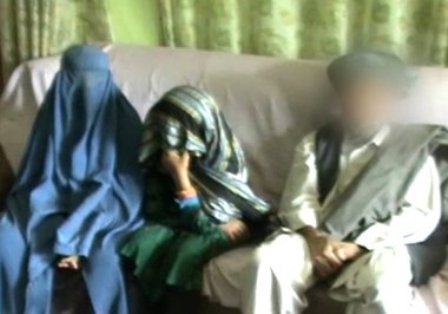
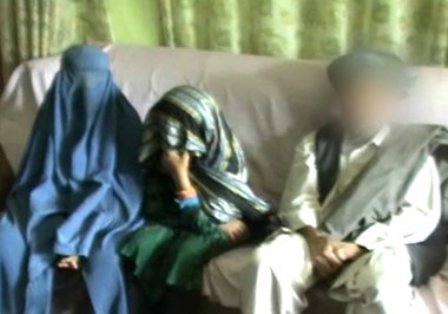
Too Young to Wed: The Secret World of Child Brides

Taliban killed five family members in Helmand province

Most of the time when the local people cooperate with the central government or receive any help from the government they come under the attack of the Taliban.
In the recent incident in Sangin district of southern province of Helamand Taliban killed five members of a family.
Dawood Ahmadi provincial governor spokesman confirmed and told Bokhdi News Agency: “last night Taliban entered in a residential house in this district shot and killed five members of this family”.
It comes the time that this family one day prior to this as they were killed received a few bags of formed seed on behalf of Helmand Agriculture and Irrigation Department. 
Ahmadi added initial investigation show the reason behind this incident is the distribution of formed seed but he declined to give further details onward and said, it needs more investigation.
Helmand province is located in the south part of the country and in its some part the Taliban groups have active presence.
Most of the time when the local people cooperate with the central government or receive any help from the government they come under the attack of the Taliban. 
Recently Helmand agriculture and irrigation department distributed a few bags of formed seed of wheat among the residential people of Sangin district to encourage the people to do not cultivate poppy in their farmland.
Elham Sorosh-Helmand

Top Afghan lawyer Kabir Ranjbar arrested on rape charge

A PROMINENT Afghan lawyer close to a possible presidential candidate has been arrested on charges of kidnapping and raping a woman.
Kabir Ranjbar, the president of the Afghan Lawyers’ Union and a former member of parliament, was detained on Saturday, deputy attorney-general Rahmatullah Nazari said.
Mr Nazari said the woman, now aged 20, was kidnapped from Dehsabz district, northeast of Kabul, about two and a half years ago and held at the home of Mr Ranjbar’s niece.
Mr Ranjbar, a familiar face on Afghan television talk shows, allegedly got the woman drunk and raped her, the prosecutor said, and two months ago she gave birth to his child.
“I can confirm Kabir Ranjbar, a former Kabul MP in the lower house of parliament, has been arrested by the attorney-general’s office yesterday, accused of kidnapping and raping a girl,” Mr Nazari said, adding that the investigation was at an early stage.
Mr Ranjbar is a key member of the Right and Justice Party, led by ex-interior minister Hanif Atmar, who is seen as a potential candidate for the presidential election in 2014

Jailed Afghan rape victim freed

An Afghan woman imprisoned for adultery after a relative raped her has been freed after President Hamid Karzai intervened on her behalf.

Jailed Afghan rape victim freed

The woman, identified only as Gulnaz for her own protection, had been sentenced to prison for 12 years after she reported that her cousin’s husband had raped her two years ago. Wednesday, she was free, at a women’s shelter in Kabul, with her daughter.

Her plight gained international attention when the European Union blocked the broadcast of a documentary about her ordeal, saying it would further jeopardize her safety.

Afghan Justice Minister Habibullah Ghaleb and a judiciary committee both proposed a pardon. Karzai then ordered authorities to decree Gulnaz’s release.

After the attack two years ago, Gulnaz hid what happened as long as she could. She was afraid of reprisals. But soon she began vomiting in the mornings and showing signs of pregnancy. It was her attacker’s child.

Raped Afghan woman gets reduced sentence In Afghanistan, this brought her not sympathy, but prosecution. She was found guilty by the courts of sex outside of marriage — adultery — and sentenced to 12 years in jail. She was only 19.

Interview with Gulnaz

In conservative Afghan society, Gulnaz faces considerable pressure to marry her attacker, thereby soothing the rift between the two families, restoring her honor and also legitimizing her daughter.

She was willing to do so in order to end her incarceration, she told CNN last month from Kabul’s Badam Bagh jail, though she does not want that option. She would like to marry an educated man, according to U.S. attorney Kimberly Motley in Kabul.

How Gulnaz will be able to re-assimilate into the life she once had remains a confusing question.

Her choices are stark. Women in her situation are often killed for the shame their ordeal has brought the community. She could still be at risk, some say, from her attacker’s family.

CNN

Afghanistan bombs kill 58 in Kabul and Mazar-i-Sharif

Twin attacks apparently targeting Shia Muslims have killed at least 58 people in Afghanistan.

In the deadliest incident, a suspected suicide bomb struck a shrine packed with worshippers in the capital, Kabul, killing at least 54.  Photo by Massoud Hussaini
In the deadliest incident, a suspected suicide bomb struck a shrine packed with worshippers in the capital, Kabul, killing at least 54.
Photo by Massoud Hussaini

In the deadliest incident, a suspected suicide bomb struck a shrine packed with worshippers in the capital, Kabul, killing at least 54.

BBC

Another blast hit the northern city of Mazar-i-Sharif at about the same time, killing four people.

The attacks appear to be of a sectarian nature unprecedented in recent Afghan history, correspondents say.

They coincided with the Shia Muslim festival of Ashura – the most important day in the Shia calendar and marked with a public holiday in Afghanistan.

Ashura is the climax of Muharram, the month of mourning for the martyrdom of the Prophet Muhammad’s grandson.

The police have cordoned off all roads to the blast site in the medieval Murad Khani district where many Shias had gathered to commemorate Ashura at the Abu Fazal mosque.

Here, at an emergency surgical centre just 10 minutes from the site, people are gathered crying and wailing. I have heard women shouting: “My son is dead, my son is dead.” I have seen people with charred clothing.

Security forces have been ferrying victims to waiting ambulances. There are many wounded too. Those who were there say there are a lot of casualties. People are gathering in front of the hospital and the police are on the streets around here controlling the traffic.

Children hit

The near-simultaneous explosions happened at about midday (07:30 GMT).

In Kabul, the bomb went off near a gathering of hundreds of Shias singing at the Abu Fazal shrine.

Fifty-four people were killed in the blast, said health ministry spokesman Norughli Kargar, while 150 were injured.

“It was very loud. My ears went deaf and I was blown three metres [yards],” Mustafa, who uses only one name, told Associated Press news agency.

“There was smoke and red blood on the floor of the shrine. There were people lying everywhere.”

Amid the chaos straight after the blast, a young girl, dressed in a green shalwar kameez (traditional dress) smeared in blood, stood shrieking, surrounded by the crumpled, piled-up bodies of children, AFP reported.

Afghan President Hamid Karzai spoke of the unprecedented nature of the attack, saying it was “the first time that, on such an important religious day in Afghanistan, terrorism of that horrible nature is taking place”.

No-one had claimed to have carried out the attacks, said Mohammad Zahir, head of Kabul’s criminal investigation department.

A Taliban statement said the group had not been behind either incident.

Police said they foiled another attack elsewhere in the capital.

The bomb which exploded near the main mosque in Mazar-i-Sharif was apparently strapped to a bicycle, and went off shortly after the Kabul blast.

Balkh province Deputy Police Chief Abdul Raouf Taj said the device exploded as a convoy of Shias, shouting in celebration of Ashura, passed by, AP reported.

At least 17 people were injured.

Elsewhere, police said at least three people were wounded by a motorcycle bomb in the southern city of Kandahar, the Taliban’s heartland – but it appears to have been unconnected to the other two attacks.

Rarity

Mohammad Bakir Shaikzada, the top Shiite cleric in Kabul, said he could not remember a similar attack on such a scale.

“This is a crime against Muslims during the holy day of Ashura,” he told AP.

“We Muslims will never forget these attacks. It is the enemy of the Muslims who are carrying them out,” he said, though he would not speculate on who might be responsible.

There are tensions between Sunni and minority Shia Muslims in Afghanistan, but violence of the type seen in Pakistan or Iraq is rare, the BBC’s Quentin Sommerville in Kabul says.

Over the past decade Shias in Afghanistan have celebrated their festivals more confidently, openly and on a bigger scale than ever before.

The attacks come a day after an international conference on Afghanistan’s future was held, in the German city of Bonn.

Pakistan boycotted the conference, after a Nato attack killed 24 of its troops at a checkpoint near the Afghan border last month.

Afghan security officials held their breath during the conference, our correspondent says, fearing there might an attack in Kabul to divert attention.

Afghan President Hamid Karzai has condemned the bomb attacks.

Are you in Kabul? Were you in the area? Did you witness anything? Send us your comments and experiences.

Statement attributable to the Secretary-General

Afghan President Hamid Karzai shakes hands with UN Secretary-General Ban Ki-moon after the Kabul International Conference

Statement attributable to the Secretary-General
concerning the attack against the UNAMA compound in Mazar-i-Sharif

1 April 2011 – I condemn in the strongest terms the outrageous and cowardly attack against the United Nations office in Mazar-i-Sharif in Afghanistan. Our reports are still preliminary, but it appears that three United Nations international staff as well as four international security officers were killed in the attack. My Special Representative, Staffan de Mistura, has travelled to Mazar-i-Sharif and is personally overseeing the investigation.

Those who lost their lives in today’s attack were dedicated to the cause of peace in Afghanistan and to a better life for all Afghans. These brave men and women were working in the best tradition of the United Nations and gave their lives in the service of humanity.

I express my sincere condolences to the families and colleagues of those who were lost and call on the Afghan Government to thoroughly investigate this incident and bring its perpetrators to justice.

Nairobi/New York; 1 April 2011

Harmful Traditional Practices and Implementation of the Law on the Elimination of Violence against Women in Afghanistan


Georgette Gagnon, UNAMA’s Director of Human Rights; and Ahmad Fahim Hakim, Deputy Chairman of the Afghanistan Independent Human Rights Commission (AIHRC).
Kabul – 9 December 2010UNAMA: Good morning. Thank you all for coming. Today’s launch of UNAMA’s human rights report: Harmful Traditional Practices and Implementation of the Law on the Elimination of Violence against Women in Afghanistan coincides with our celebration of International Human Rights Day, which is tomorrow 10 December. Every day, but on International Human Rights Day in particular, we commend the courage, commitment and dedication of all Afghan defenders of human rights and today we pay special tribute to those who defend the rights of Afghanistan women and girls. We are very pleased to have with us today the Deputy Chairman of the Afghan Independent Human Rights Commission, Ahmad Fahim Hakim, who himself and his group are the key defenders of human rights in Afghanistan.

The report we are releasing today – and this is a very important point – represents the voices and views of Afghan men and women on harmful traditional practices. These include forced and child marriage, giving away girls to settle disputes under baad, honour killings and other forms of violence against women.

The report describes the prevalence of these practices; it look at the consequences these practices have on the lives of Afghan women and girls and the community as a whole and it also looks at the efforts of the Afghan Government to address violence against women, in particular the Government’s implementation of the 2009 Law of Elimination of Violence Against Women.

This law, also know as the EVAW law came into force in August 2009. It represents a huge gain of legal protection of women’s rights, because the law says customs, traditions and practices that cause violence against women, contrary to the religion of Islam, should be eliminated . The law makes it a crime to buy and sell women for marriage, to force a woman to marry without her consent, to force girls to marry when they are underage, and to force girls and women to commit self-immolation – when they set themselves on fire – and a number of other acts.

Now this report that we are releasing today is based on extensive research, direct discussions, and interviews with Afghan men and women, religious leaders, and Government officials, in almost all of Afghanistan’s 34 provinces and it is also based on UNAMA human rights monitoring and the follow up of many, many individual cases of harmful traditional practices and violence against women.

What were the findings of our report? First, almost all the Afghan men and women we spoke to said they know there are harmful traditional practices in Afghanistan and they identified practices such as child marriage, forced marriage, baad, honour killings and inheritance of widows, among some other practices.

The second finding is these harmful practices are widespread, occurring in varying degrees in all communities – urban and rural – and among all ethnic groups and these practices have been worsened by more than 30 years of insecurity and poverty.

The next finding is that these practices are rooted in discriminatory views and beliefs of the role and position of women in Afghan society and have caused suffering, pain and humiliation and marginalisation for millions of Afghan women and girls.

For example, on child marriage we found as have other agencies such as UNIFEM, that half of all girls are married under the age of 15 and we were quoted a popular saying in many communities: “If you hit a girl with your hat and she doesn’t fall over, it’s time to marry her.”

And, of course, child marriage has lasting and damaging consequences for women and girls. They are often denied the right to health and education and this is reflected in the fact that Afghanistan has the worst maternal mortality rate in the world.

Our next finding is that often women and girls have no escape from the violence they experience everyday. They suffer physical and mental abuse and many told us that other than running away they have no option but to take that violence.

One very harmful practice that we heard a lot about is baad, which is the giving away of girls to settle disputes. Many of the women told us that instead of the murderer being punished, an innocent girl is punished and she has to spend all her life in slavery and subject to cruel violence. Sometimes she is forced to sleep with the animals in the barn.

Now a little bit of good news is that inspite of the prevalence of these practices, our research, interviews and discussions indicated that many communities are opposed to these harmful practices. One Provincial Council member in the northern region said that these practices can change or decrease over time. People tend to oppose baad even in rural areas have understood the negative consequences and have begun to value female family members.

Before I hand over to my colleague, one other key finding of the report is that many religious scholars and elders told us that many of these harmful practices are inconsistent with Sharia law. The role of religious leaders and community elders and to both continuing and ending these practices is critical.

AIHRC [summarised from Dari]: My colleague has highlighted the main findings. It was actually appalling to see the malpractices and enhanced victimisation of the women in Afghanistan. But to focus on solutions—one of the key players in Afghanistan are the religious elders and the ulemas who can enhance their efforts and awareness-raising of their constituents in mosques and all other available means they have. Since we have been witnessing various patterns of violence against women, it causes young girls and women to leave their houses and commit suicide and self-immolation. These are the shocking consequences of not dealing with violence against women.

Fortunately the implementation of the EVAW law is based on Article 54 of the Constitution to combat those practices that are violating women’s and children’s rights.

The good news is that now the level of awareness of this issue is being put into practice. In the last couple of days we heard from the Ministry of Interior that they arrested the father-in-law of Bibi Aisha, the lucky victim, who was rescued. For sure we have hundreds of Bibi Aishas in Afghanistan. So, this clearly shows that now our national forces, particularly police, can distinguish to some extent between the victim and the criminal and how to treat them.

Another point that I want to highlight is this misinformation about the effective role of shelters that emanates from a lack of awareness. Those women and girl victims of domestic violence who are forced to leave behind their homes—the only appropriate place for them is shelters not prisons. In the absence of shelters they are treated as criminals and put in prisons. We hope there will be an end to this since Afghanistan is committed to implementing the UN Millennium Development Goals. We hope this report enables the human rights support unit of the Ministry of Justice which was solely established to translate these recommendations into practical steps in terms of laws and official procedures.

UNAMA: One quick point is that ‘running away,’ which was mentioned is not a crime under Afghan law. Yet half of the female prison population in the country is in prison for a moral crime such as running away. That is a shocking statistic. Finally we would like to say that in our view little meaningful and sustainable progress for women’s rights can be achieved in Afghanistan as long as women and girls are subject to these practices that harm, degrade, humiliate and deny them basic human rights. Ensuring the human rights of Afghan women is crucial, especially in this current peace, reintegration and reconciliation process and in their access to healthcare, education and employment. There are a lot of safeguards on paper but we all need to see much better implementation. Of course, the report makes a number of key recommendations to the Government, the police, religious community and international donors and we, the human rights community, are urging all these actors to move on these recommendations without delay to save the lives of women and girls. Thank you.

Questions and Answers:
RFE/RL: I wanted to know what you want the Government of Afghanistan to do to prevent violence against women in Afghanistan? Do your findings show that some Afghan law enforcement authorities are unaware of the Elimination of Violence Against Women (EVAW) law? Many of these officials are unwilling or even unable to implement the law. Why don’t you want to disclose the names of these officials?

UNAMA: As you can see in the report there are 15 recommendations to the Afghan Government including the president. A couple of key ones are for the president to highlight continually that women’s rights are a priority in the peace, reintegration, and reconciliation process and also urging different Government authorities to implement the EVAW law quickly. Seven Government ministries have been tasked under the EVAW law. We are also calling on the authorities to consider ways and means to get these girls detained [for running away] released as quickly as possible.

AIHRC: Regarding your question: why do we not name, I think in this regard there is a need to bring awareness of this issue up and that protection and defense mechanisms should exist. While administrative corruption and impunity is existing in some parts of the administration that could create an additional risk for victims. When these mechanisms are put properly in place then names could be disclosed.

UNAMA: Regarding revealing in a public form the names of different officials who may not be acting properly under the law we have taken much of this information to the authorities we have done this in the areas with the local authorities and discussed getting some changes at those levels in addition, of course, to the highest level we have recommended that the Ministry of Interior, the police, the judges and the courts give out specific instructions, guidelines and supervise the activities of police in this area both at the local level and at the national level.

Saba TV [translated from Dari]: Could you tell us the number or percentage of the increase of violence against women? And tell us the factors behind the increase of violence against women and how the Government is successful against violence against women?

UNAMA: We don’t have a percentage per se. That’s not what is in the report. The whole report says clearly the reasons why this is still happening across the country. There are many factors and I have already described a number of them. The key thing is that those who are committing these practices must be brought to justice. And the communities that are letting this happen need to speak out. And we’ve indicated how they should do that.

BBC: My question was on the last point you made regarding factors of violence against women. These factors are not new. This is not the first time we are hearing this. In the last seven or eight years we have seen many of these reports. Why are you not doing something practically to eradicate that and what has been done to eliminate this violence?

UNAMA: What is new is that there is a new law that came in which is just over a year old. What is also new is that there have been some steps taken under the law to prosecute those who are committing these harmful traditional practices. What is also new is that many, many communities that we spoke to oppose them and many are working and to try and address the attitudes. But what is important is to keep highlighting that there is a problem. You have to keep highlighting issues like this and push to get them fixed.

AIHRC: I highlight that civil society groups, Afghanistan Independent Human Rights Commission (AIHRC) and UNAMA are not executive bodies, but advocacy ones. They are doing advocacy work and raising the voice of the people. We are keen to enable the Government to fulfill its commitments.

El Mundo: How many shelters are there for women in Afghanistan right now? You said that many women have any no option but to run away?

UNAMA: Regarding the number of shelters there are not many shelters across the country and for a number of reasons – security reasons in particular – we don’t give out numbers. I can help you to find that exact information. The Elimination of Violence Against Women Law and the activities of the Department of Women Affairs at the provincial level are important. The law is designed to help women deal with violence in their home and communities and to get assistance through registering complaints with police and others and to go to shelters. The Department of Women’s Affairs has a key role in making this happen together with various women’s civil society groups. In terms of registering marriages one of our key recommendations if you looked at the report is that two people who are supposed to get married actually go to the registry office in person to be registered. This may be a way to deal with problems with very, very young girls who are getting married. That is addressed in our report.

El Mundo: What about registering?

AIHRC: This is not a common practice. This does happen in some cases. This is our suggestion to have it enforced. Unfortunately the new registration documents are not available to all. Sadly due to corruption and due to bureaucracy it’s time consuming. That’s why they revert to the old practices. That is another concern.

Noorin TV [translated from Dari]: Yesterday we spoke with the Deputy of Minister of Women Affairs who rejected that the fact that there had been an increase in violence against women. She said women had become more aware to their rights. The other main factor is that women have been asked to register if they face any violence. Is that the only reason violence against women has increased? What’s your view on this?

UNAMA: It is a very well known fact that once women feel they can report violence against women the number of reports go up. That’s a well-known fact and that’s a good thing because you want women to go to the court and to register their complaints, to get their complaints investigated and people prosecuted.

Of course the concern is that there are many cases we have heard about where women do not go and register a complaint and who are unable to get out of the situation they are in and use other ways to deal with it like setting themselves on fire or running away. But as we said the good news is there is a lot more awareness that these practices are not only hurting women, but the community as a whole and there have been some steps to deal with them.

Pajwok [translated from Dari]: With regard to the positive aspect of the decrease of violence against women, despite positive signs, why is the participation of women in the Government decreasing and what’s the main reason behind this? And about the implementation of the law of elimination of violence against women how do you think such law will be fully implemented in a country like this?

UNAMA: The report says quite clearly that implementing this law could help to end violence against women, not end all violence against women. Obviously there are all kinds of things that the community and the young men in this room need to do to promote better the rights of women and girls and, as we said in the report, the religious community and religious leaders are really important in all of this. The report is at the side of the room. It is quite a long report but has got a lot of interesting things in it. I urge you to read every word about it.

UNICEF calls for a comprehensive Child Act in Afghanistan

Kabul, 23 November 2010- Afghanistan needs a comprehensive Child Act fully in line with the provisions and principles of the Convention on the Rights of the Child.

In Afghanistan today one in five children die before reaching their fifth birthday – mostly from easily preventable diseases like diarrhoea and pneumonia – five million children are still out of school, over three million of whom are girls, and only six percent of children are registered at birth, leaving the great majority without a legal identity, protected and cared for by law.

”We are acutely aware of the difficulties facing the Government of Afghanistan in seeking to fulfill the rights of children in the country, especially in light of the ongoing conflict”, said UNICEF Representative Peter Crowley. “It is the responsibility of the Government of Afghanistan to ensure the existence of a complete legal framework to fully protect all children. UNICEF will continue to assist in that process”.

UNICEF welcomes the several important pieces of legislation and policies that have been developed and adopted since 2002; however inconsistencies remain between national legislation and the provisions of the Convention, as do challenges in ensuring effective implementation. Furthermore, while the Constitution of Afghanistan adopted in 2004 provides for progressive guarantees of international human rights standards, there is little direct reference to the specific rights of children.

It is for these reasons that UNICEF recommends to the Government that it prepare a comprehensive Child Act to encompass the full array of children’s rights, backed by the necessary resources for implementation, as well as means to monitor and provide appropriate forms of redress. The Act would supersede all preceding legislation not in line with the Convention, and accord to the Convention a legal status that could be directly invoked within the domestic legal system. Once in place the successful implementation of a Child Act will require the fullest possible ownership and commitment from the senior-most levels of the Government of Afghanistan.

It is clear that legislative and policy frameworks alone will not automatically lead to the effective protection of child rights in Afghanistan. Awareness-raising on children’s rights among the general population will be vital, as will specific training for all relevant professionals with a duty of care towards children, including all law enforcement officials, national security forces, and education and health personnel. Furthermore, the specific integration of child and human rights education into the school curriculum is needed so that all children in Afghanistan understand the rights to which they themselves are entitled.

Finally, despite the efforts already made to ensure the rights of all children, both girls and boys, from all areas of Afghanistan, there continue to be clear disparities among the child population of the country.

Poverty, disabilities, the impact of conflict, gender inequalities and the rural-urban divide all clearly affect access, or the failure of access, to basic education, health and other services. Targeted measures will therefore be required to address all such disparities. Equity considerations must be foremost in all planning and budgeting decisions that impact the welfare of children whoever they are and wherever they may live in the country.

UNICEF

NATO summit must protect basic human rights in Afghanistan

Amnesty International has urged NATO leaders to protect human rights and ensure security for the people of Afghanistan as they prepare for the 2010 NATO Lisbon Summit.

The organization has sent letters to NATO leaders urging them to improve accountability for Afghan and international military forces, tackle arbitrary detention and torture and ensure human rights guarantees during any talks with the Taleban.

“As NATO begins to discuss its withdrawal from Afghanistan, it’s crucial to explain to the Afghan people exactly how the international community will follow through on its promise to protect and promote their human rights,” said Sam Zarifi, Amnesty International’s Asia-Pacific Programme Director.

“These promises seem about to be discarded without fanfare, but the need for improving the human rights situation in Afghanistan is even more urgent now.”

NATO Secretary General Anders Fogh Rasmussen has said that the 2010 Summit will mark a fundamentally new phase in NATO’s operation in Afghanistan, as Allies will launch the process by which the Afghan government will take the lead for security throughout the country.

In letters to NATO leaders, Amnesty International has identified three concrete steps to improve governance, uphold the rule of law and human rights that would enhance security and stability for the Afghan people.

1. Improve the accountability of international and Afghan military and security forces
The Taleban and other insurgent groups are responsible for the vast majority of civilian casualties in Afghanistan, but that does not excuse the continuing lack of accountability and compensation for casualties caused by NATO and Afghan forces.

The current lack of accountability fuels and fosters resentment among Afghans that international forces are above the law and unaccountable for their actions, particularly when it comes to civilian casualties.

NATO continues to lack a coherent, credible mechanism for investigating civilian casualties. Non-binding guidelines adopted in June 2010 by NATO regarding civilian compensation need to be implemented as part of the existing rules of engagement.

2. Ensure no arbitrary detention or transfers to torture
The United States continues to arrest and detain hundreds of Afghans without proper judicial process. NATO countries continue to hand over detainees to the Afghan intelligence agency, National Directorate for Security (NDS), which has record of perpetrating human rights violations, with impunity.

The increase in the scope of fighting in Afghanistan as a result of the troop surge earlier this year is likely to lead to a rise in the number of people detained. The US government should immediately grant all detainees held by US, whether in Bagram, Guantánamo Bay or any other US detention facility, access to legal counsel, relatives, doctors, and to consular representatives, without delay and regularly thereafter.

The Afghan government and its international partners should seek mechanisms to ensure fair trials for those in detention, including the option of mixed tribunals to try those apprehended in counter-insurgency operations by either Afghan or international forces.

3. Guarantee human rights protections during reconciliation talks with the Taleban
Amnesty International calls on delegates to the NATO Summit to ensure that human rights, including women’s rights, are not traded away or compromised during any political process, including reconciliation talks with the Taleban in Afghanistan and that, in line with the demands of UN Security Council Resolution 1325 on Women, Peace and Security, Afghan women are meaningfully represented in the planning stages and during the reconciliation talks.

“The implementation of these three steps would help signal that the interests of the Afghan people are the focus of the NATO governments and the international community,” said Sam Zarifi.

The NATO Summit will convene in Lisbon on 18-19 November 2010. The Summit provides members with the opportunity to evaluate and shape the strategic direction for NATO activities, launch major new initiatives and forge partnerships with non-NATO countries. There have only been 24 Summits since NATO was established in 1949.

British doctor feared among 10 dead in Afghanistan ambush


Bodies of western medical team and two Afghan interpreters found in Badakhshan province near their bullet-riddled vehicle
Karen Woo, the British doctor believed to have been killed in Afghanistan
Karen Woo, the British doctor believed to have been killed in Afghanistan when a medical aid expedition was ambushed.


A female British doctor is understood to be among at least 10 people murdered by gunmen in the far north of Afghanistan on Friday.
The group included eight foreigners – one of them a Briton – six Americans and a German working for a project run by a small Christian aid organisation called International Assistance Mission (IAM).
A Taliban spokesman claimed responsibility saying the attack was on “Christian missionaries” who were carrying bibles. It is possible the Taliban were simply exploiting early media reports about killings they in fact had nothing to do with.
A British doctor called Karen Woo was known to be on the expedition and played a major part in organising it, including by running fundraising events in London and Kabul to pay for the “Nuristan Medical Expedition 2010”.
Woo, from London, had established an organisation called Bridge Afghanistan to help run medical projects in the country.
Writing on the expedition’s Facebook page, Woo described herself as the team doctor and said she would run the mother and child clinics inside Nuristan. She wrote that the team also included an eye doctor and a dental surgeon.
According to IAM the group were returning from a several week long trip to provide basic health in a remote area of Nuristan province when they were attacked by gunmen in a forested area of Badakhshan, the most north-eastern of Afghanistan’s provinces.
Their bullet-riddled bodies were discovered by local officials on Friday next to three shot-up vehicles.
Dirk Frans, the director of the Christian organisation, said IAM had last been contacted by the group via satellite phone on Wednesday.
In a short statement on its website, the organisation said the victims were likely working on the organisation’s “eye camp team” project in Nuristan at the invitation of local communities and were returning to Kabul when they were attacked.
“At this stage we do not have many details but our thoughts and prayers are with the families and friends of those who are presumed killed. If these reports are confirmed we object to this senseless killing of people who have done nothing but serve the poor. Some of the foreigners have worked alongside the Afghan people for decades.”
General Agha Noor Kemtuz, the local police chief, told the Observer they were having lunch in heavily forested area at around 2pm when around 10 gunmen arrived and took all their money before shooting them one by one.
“They had been warned by locals not to stay in the forest because it is not safe,” he said.
He said the only surviving member of the party was an Afghan man called Safiullah whose life was saved after he desperately recited passages from the Koran as the gunmen were executing the other people.
General Kemtuz said there had been 11 people in the party including three Afghans and eight foreigners.
Whilst the US embassy confirmed it believed several Americans were among the dead, the British embassy was unable to confirm whether any British citizens were killed.
“We are aware of the reports and are actively investigating them with local authorities and others in country,” a spokeswoman for the embassy said.
Woo described the trip into the remote area of Nuristan in gruelling terms, saying much of it would be done on foot and with pack horses, travelling 120 miles and climbing 16,000ft at one point.
“The expedition will require a lot of physical and mental resolve and will not be without risk but ultimately, I believe that the provision of medical treatment is of fundamental importance and that the effort is worth it in order to assist those that need it most,” she wrote.
With local officials reporting that almost everything of value was removed from the vehicles, it is widely assumed that robbery was the main motivation for the attackers.
However, a spokesman for the Taliban told the Associated Press that the hardline insurgent movement killed the group because they were “preaching Christianity” and “spying for the Americans”.
The NGO, which has been operating in Afghanistan since 1966, describes itself as a non-profit Christian organisation that works on health projects and economic development.
However, there are many such Christian aid organisations operating in Afghanistan all of whom take enormous care not to be seen to be proselytising or seeking to convert Afghans. Such allegations, including some in May against Norwegian Church Aid, can quickly stir up enormous public controversy.