Twenty-two years ago, residents of Kabul’s Afshar district awoke to the sound of rockets launched at them from a nearby mountainside. February 11, 1993, marked the bloody dawn of the Afshar campaign, one of the worst mass atrocities of Afghanistan’s civil war of the early 1990s. Powerful militia-backed faction leaders systematically planned and coordinated the Afshar campaign as part of their battle for control of the capital. Civilians bore the brunt of the brutality as the militias shot, raped, and kidnapped at will.
It is impossible to know how many civilians were killed, or abducted and never released. Human Rights Watch documented victim accounts that describe some 80 summary executions and more than 700 kidnappings in three days; of these, 80 to 100 were freed after ransoms were paid. The rest never came home.
Afshar and its aftermath symbolize the toxic impunity that has plagued Afghanistan for decades.
The final documents of an official inquiry into the massacre were destroyed after the Taliban captured Kabul in 1996. There is no serious dispute about what happened in Afshar, and there’s ample evidence of who was responsible. But the government that came to power with international support in 2001 opted to not pursue the perpetrators of the Afshar campaign as part of a cold-blooded political calculation that traded justice for hoped-for political stability. It systematically blocked inquiries and efforts aimed at holding to account those responsible for Afshar and other mass abuses. In 2006, the Afghan parliament went so far as to give amnesty to perpetrators of war crimes and crimes against humanity, many of whom enjoy positions of power. Former President Hamid Karzai approved the law despite promising not to do so.
The United States and other allies of Afghanistan, who squandered the opportunity to push for justice for over a decade, have worked with and supported many of the people facing credible allegations of grave human rights abuses.
But there’s still hope: a report by the Afghanistan Independent Human Rights Commission provides forensic detail of abuses between 1978 and 2001, and is an invaluable starting point for further investigations. The Karzai government opted to suppress the report, but the new government of President Ashraf Ghani and Chief Executive Abdullah Adbullah should use it to end decades of impunity.
The victims of Afshar and too many other atrocities have waited far too long for justice, but Ghani and Abdullah could bring it within reach.
“If the prisoners did not say anything useful, each dog got to take a turn on them,” Jack told Todenhoefer. “After procedure like these, they confessed everything. They would have even said that they killed Kennedy without even knowing who he was.”
After the release of the CIA torture report by Senator Diane Feinstein (D-CA) the world is reeling in shock at the level of brutality revealed in the documents. In fact, the whole report is nothing more than a confession of sadistic procedures that could have been lifted from the diaries of Torquemada, from “rectal feeding” to nude beatings and humiliation — horrors that were well-known but not officially confirmed. But the report remains incomplete. Indeed, some 9000 documents have been withheld.
A defense contractor whose subsidiary was accused of conspiring to torture Abu Ghraib prisoners has settled with 71 former inmates for $5 million.
What new horrors could be discovered with the publication of these records?
Perhaps the most gut-wrenching story to emerge from Bagram has been buried in the German media and remains unknown to
much of the world. Published by German author and former politician Juergen Todenhoefer in his latest book, Thou Shalt Not Kill, the account stems from a visit to Kabul. At a local hotel, a former Canadian soldier and private security contractor named Jack told Todenhoefer why he could not longer stand working in Bagram.
“It’s not my thing when Afghans get raped by dogs,” Jack remarked.
Todenhoefer’s son, who was present with him in Kabul and was transcribing Jack’s words, was so startled by the comment he nearly dropped his pad and pen.
The war veteran, who loathed manipulating Western politicians even as he defended tactics of collective punishment, continued his account: Afghan prisoners were tied face down on small chairs, Jack said. Then fighting dogs entered the torture chamber.
“If the prisoners did not say anything useful, each dog got to take a turn on them,” Jack told Todenhoefer. “After procedure like these, they confessed everything. They would have even said that they killed Kennedy without even knowing who he was.”
A former member of parliament representing the right-of-center Christian Democratic Union from 1972 to 1990, Todenhoefer transformed into a fervent anti-war activist after witnessing the Soviet destruction of Aghanistan during the 1980’s. His journalism has taken him to Iraq and back to Afghanistan, where he has presented accounts of Western military interventions from the perspective of indigenous guerrilla forces. Unsurprisingly, his books have invited enormous controversy for presenting a sharp counterpoint to the war on terror’s narrative. In Germany, Todenhofer is roundly maligned by pro-Israel and US-friendly figures as a “vulgar pacifist” and an apologist for Islamic extremism. But those who have been on the other side of Western guns tend to recognize his journalism as an accurate portrayal of their harsh reality.
Though his account of dogs being used to rape prisoners at Bagram is unconfirmed, the practice is not without precedent. Female political prisoners of former Chilean dictator Augusto Pinochet’s jails have described their torturers using dogs to rape them.
More recently, Lawrence Wright, the author of the acclaimed history of Al Qaeda, The Looming Tower, told National Public Radio’s Terry Gross, “One of my FBI sources said that he had talked to an Egyptian intelligence officer who said that they used the dogs to rape the prisoners. And it would be hard to tell you how humiliating it would be to any person, but especially in Islamic culture where dogs are such a lowly form of life. It’s, you know, that imprint will never leave anybody’s mind.”
I spoke to an Afghan named Mohammad who worked as an interpreter in Bagram and insisted on anonymity for fear of reprisals. He told me Todenhoefer’s account of dogs being used to rape prisoners in the jail was “absolutely realistic.” Mohammad worked primarily with US forces in Bagram, taking the job out of financial desperation. He soon learned what a mistake he had made. “When I translated for them, I often knew that the detainee was anything but a terrorist,” he recalled. “Most of them were poor farmers or average guys.”
However, Mohammad was compelled to keep silent while his fellow countrymen were brutally tortured before his eyes. “I often felt like a traitor, but I needed the money,” he told me. “I was forced to feed my family. Many Afghan interpreters are in the very same situation.”
A “traitor” is also what the Taliban calls guys like Mohammad. It is well-known that they make short-shrift of interpreters they catch. Mohammad has since left Afghanistan for security reasons and is reluctant to offer explicit details of the interrogations sessions he participated in. However, he insisted that Todenhoefer’s account accurately captured the horrors that unfolded behind the walls of Bagram.
The report finds medical personnel connected to the torture program may have committed war crimes by conducting human experimentation on prisoners in violation of the Nuremberg Code that grew out of the trial of Nazi officials and doctors after World War II. We speak with Nathaniel Raymond, a research ethics adviser for Physicians for Human Rights, who co-wrote the new report.
“Guantanamo is a paradise if you compare it with Bagram,” Muhammad said.
Waheed Mozhdah, a well-known political analyst and author based in Kabul, echoed Muhammad’s account. “Bagram is worse than Guantanamo,” Mozdah told me, “and all the crimes, even the most cruel ones like the dog story, are well known here but most people prefer to not talk about it.”
Hometown for soldiers, hellhole for inmates
It is hard to imagine what more hideous acts of torment remain submerged in the chronicles of America’s international gulag archipelago. Atrocities alleged to a German journalist by a former detainee at the US military’s Bagram Airbase in Kabul, Afghanistan, suggest that the worst horrors may be too much for the public to stomach.
Bagram Airbase is the largest base the US constructed in Afghanistan and also one of the main theaters of its torture regime. You have to drive about one and a half hour from Kabul to reach the prison where hundreds of supposedly high-value detainees were held. The foundations of the base are much older, laid by the Soviets in the 1950s, when the last king of Afghanistan, Mohammad Zahir, maintained friendly connections with Moscow. Later, during the Soviet occupation, Bagram as the main control center for the Red Army.
Known as the “second Guantanamo,” even though conditions at Bagram are inarguably worse, you will find the dark dungeons, which were mentioned in the latest CIA report, next to American fast food restaurants. During the US occupation, the military complex in Bagram became like a small town for soldiers, spooks and contractors. In this hermetically sealed hellhole, the wanton abuse of human rights existed comfortably alongside the “American Way of Life.”
One of the persons sucked into the parallel world of Bagram was Raymond Azar, a manager of a construction company. Azar, a citizen of Lebanon, was on his way to the US military base near the Afghan Presidential Palace known as Camp Eggers when 10 armed FBI agents suddenly surrounded him. The agents handcuffed him, tied him up and shoved him into an SUV. Some hours later Azar found himself in the bowels of Bagram.
According to Azar’s testimony, he was forced to sit for seven hours while his hands and feet were tied to a chair. He spent the whole night in a cold metal container. His tormentors denied him food for 30 hours. Azar also claimed that the military officers showed him photos of his wife and four children, warning him that unless he cooperated he would never see his family again. Today we know that officers and agents have threatened prisoners with their relatives’ rape or murder.
Azar had nothing to do with Al Qaida or the Taliban. He was caught in the middle of a classic web of corruption. The businessman’s company had signed phony contracts with the Pentagon for reconstruction work in Afghanistan. Later, Azar was accused of having attempted to bribe the U.S. Army contact to secure the military contracts for his company. This was not the sort of crime for which a suspect is normally sent to a military prison. To date, no one has explained why the businessman was absconded to Bagram.
Most prisoners from Bagram are not rich business men or foreign workers from abroad, but average Afghan men who had a simple life before they had been kidnapped. One of these men was Dilawar Yaqubi, a taxi driver and farmer from Khost, Eastern Afghanistan. After five days of brutal torture in Bagram, Yaqubi was declared dead on Dec. 10, 2002. His legs had been “pulpified” by his interrogators, who maintained that they were simply acting according to guidelines handed down to them by the Pentagon and approved by Defense Secretary Donald Rumsfeld. The case of the Afghan taxi driver’s killing was highlighted in the Oscar-winning documentary Taxi to the Dark Side. The film established that Yaqubi had simply been at the the wrong place at the wrong time. His family, his daughter and his wife, are waiting for justice. (Watch the full version of Taxi To The Dark Side.)
A US-backed government of rapists, warlords and torturers
The latest CIA torture report is focused entirely on the crimes of the Bush administration. But it should not be forgotten that the horrors that have plagued Afghanistan continued under Barack Obama’s watch. When Afghanistan’s new president, Ashraf Ghani, entered power two months ago, the first thing he did was sign a Bilateral Security Agreement (BSA) with the US. According to the terms of this bogus deal negotiated without the consent or agreement of the Afghan public, the Afghan judiciary is forbidden from prosecuting criminal US soldiers in Afghanistan. This means that any American, whether a torturer or a drone operator who destroys a family with the push of a button, is above the law.
During the last days of his presidency, Hamid Karzai railed against the bilateral agreement, while other Afghan critics described it as a “colonial pact.” Karzai knew that his signature on the deal would damn him in the annals of history. On his way out, Karzai condemned the US occupation and remarked that Bagram had become “a terrorism factory,” radicalizing waves of men through torture and isolation. The responsible hands in Washington did not look kindly on Karzai’s sudden transformation into a man of the people.
Now that Karzai is gone, Ghani is doing all he can to prove his absolute obedience towards the US. According to different reports, currently he sits down for tea each week with various NATO commanders and generals, listening to their concerns and doing all he can to accommodate them. Ghani has reversed Karzai’s decrees regarding night-raids and NATO bombings and encouraged the Afghan National Army — a corrupt and criminal gang built and trained by the US military — to fight “terrorism” without mercy. Regarding the torture report, Ghani said that the described practices are “inhuman,” even as his actions bely his empty protestations.
On Dec. 10, 2014, exactly 12 years after the brutal murder of Dilawar Yaqubi and just one day after the CIA torture report’s release, the US Defense Departement announced it has closed the Bagram detention center once and for all. Yet it is not known how many secret prisons still exist in Afghanistan. Meanwhile, most elements in the Afghan government are absolutely loyal to the United States and know that they would lose power and financial support without them. The country’s new Vice President, Abdul Rashid Dostum, is a widely reviled warlord and militia leader who killed, tortured and personally oversaw the rape of countless Afghan civilians. His crimes are well documented by the world’s leading human rights organizations. Alongside other warlords notorious for human trafficking and sundry crimes operate alongside an Afghan intelligence service (NDS) that regularly engages in brutal abuse while tendering US salaries.
In an Afghanistan still dominated by Western interests and American power, the torture never stops.
Journalist Claims U.S. Used Dogs to Rape Afghans as Torture Technique
Thanks to the release of a heavily-redacted version of the summary of the Senate Torture report, we now know that the United States of America employed forced rectal feedings, nude beatings, simulated executions and multiple forms of humiliation against its prisoners in the name of freedom. What we do not know is what remains hidden in the almost 10,000 unreleased pages of that report.
German author and former politician Juergen Todenhoefer, in his book, Thou Shalt Not Kill, claimsto have interviewed a former Canadian soldier and private security contractor named “Jack” who worked in the Bagram black site in Afghanistan.
It’s not my thing when Afghans get raped by dogs,” Jack began. He stated Afghan prisoners were tied face down on small chairs. Then dogs entered the torture chamber.
“If the prisoners did not say anything useful, each dog got to take a turn on them,” Jack told Todenhoefer. “After procedure like these, they confessed everything. They would have even said that they killed Kennedy without even knowing who he was.”
Though his account of dogs being used to rape prisoners at Bagram is unconfirmed, the practice is not without precedent. Female political prisoners of former Chilean dictator Augusto Pinochet’s jails have described their torturers using dogs to rape them. The Nazis were known to have trained dogs to sexually abuse concentration camp inmates.
Lawrence Wright, the author of Al Qaeda, The Looming Tower, told National Public Radio, “One of my FBI sources said that he had talked to an Egyptian intelligence officer who said that they used the dogs to rape the prisoners. And it would be hard to tell you how humiliating it would be to any person, but especially in Islamic culture where dogs are such a lowly form of life. It’s, you know, that imprint will never leave anybody’s mind.”
Journalist Emran Feroz spoke to an Afghan interpreter, using the pseudonym Mohammed, in Bagram who said Todenhoefer’s account of dogs being used to rape prisoners in the jail was “absolutely realistic.” Mohammad was compelled to keep silent while his fellow countrymen were brutally tortured before his eyes. “I often felt like a traitor, but I needed the money,” he told me. “I was forced to feed my family. Many Afghan interpreters are in the very same situation.”
“Guantanamo is a paradise if you compare it with Bagram,” Muhammad said.
Waheed Mozhdah, a well-known political analyst and author based in Kabul, echoed Muhammad’s account. “Bagram is worse than Guantanamo,” Mozdah told me, “and all the crimes, even the most cruel ones like the dog story, are well known here but most people prefer to not talk about it.”
The full story of U.S. torture remains to be told, and until the release of all of the documents and the full Senate report, no one can confirm or refute the truth of the dog rape claims. Oh, the truth? You can’t handle the truth.
Journalist Claims U.S. Used Dogs to Rape Afghans as Torture Technique
Afghan photo journalist Zubair Hatami, injured in an attack on French cultural institute in Kabul dies in hospital. ”
(Reuters) – A teenaged bomber on Thursday targeted a Kabul auditorium packed with people watching a drama condemning suicide attacks and being staged at a French cultural center, killing a German man and wounding 16 people, officials and a witness said.
The suicide blast was the second to strike the Afghan capital in a day, after six Afghan soldiers perished when their bus was hit on the outskirts of the city as they rode into work.
The violence, part of a nationwide campaign by Islamist Taliban insurgents to strike at military and civilian targets, came less than three weeks before the year-end deadline for most foreign combat soldiers to withdraw from the country.
General Ayoub Salangi, head of the Interior Ministry while the cabinet is being finalised, said the suspected theater bomber appeared to have been about 17 years old and detonated his explosives at the venue during an early evening performance.
“I heard a deafening explosion … There were Afghans, foreigners, young girls and young boys watching the show,” Sher Ahmad, an Afghan rights activist who was at the performance, told Reuters.
He said the blast came during a performance of a new play called “Heartbeat: Silence After the Explosion”, a condemnation of suicide attacks.
“Pieces of flesh were plastered on the wall. There were children and women crying for help. Some were running out, some were just screaming.”
Taliban spokesman Zabihullah Mujahid said the bomber targeted the event because it was staged “to insult Islamic values and spread propaganda about our jihad operations, especially on suicide attacks”.
Amid confusion immediately following the blast, one person could be heard saying “It’s all part of the show” in a video posted on YouTube purporting to be of the attack.
HEAVY SECURITY
Early police reports said the bomber attacked the French-run Lycée Esteqlal, one of Kabul’s oldest and most highly respected high schools, but Ahmad said the performance was at the French Cultural Centre located in the same compound.
Salangi said the person confirmed killed was a German man, but he could not immediately confirm his identity.
German Foreign Minister Frank-Walter Steinmeier said the attack was “particularly perfidious because it … was against exactly those people who are helping the country to build a better future.”
The French government said in a statement that “several” people were killed in the attack and “many” more injured, but none of the fatalities were French nationals.
The venue was heavily guarded during the event, according to Kabul police chief Abdul Rahman Rahimi, who added that the bomber may have hidden explosives in his underwear to pass through security.
He said the bomber detonated the explosives at the top of the auditorium stairs, which may have prevented more casualties. The body of the bomber was shredded, but police were able to identify him as a teenager because his head was found intact.
Taliban militants have stepped up a campaign of violence this year to take advantage of uncertainty and weakness besetting Afghanistan’s security forces as they prepare to take over the war on the insurgency, now in its 13th year.
Earlier on Thursday, a suicide bomber targeted a bus carrying Afghan army personnel, the Defense Ministry said, ending a near two-week lull in attacks in the capital. As well as the six soldiers killed, 11 were wounded.
Five Afghan school children were also reported killed in a foreign forces air strike in northern Parwan province, Afghan officials said.
The International Security Assistance Force confirmed an air strike in the area, but said five insurgents were killed.
Civilian casualties caused by air strikes have been one of the most contentious issues of the war, although there are often conflicting claims.
Afghanistan: ‘Reprehensible’ attacks underscore urgent need to protect civilians
The recent wave of attacks on civilians by the Taliban and other armed groups in Afghanistan are reprehensible acts which underscore the new Afghan government’s urgent responsibility to protect the right to life, Amnesty International said today.
The most recent assault, a suicide bombing at Isteqlal High School Theatre in Kabul on Thursday evening, killed one and injured around a dozen civilians who were watching a play. It added to the rising toll of lives lost and hundreds of injuries in armed attacks in different parts of the country in recent weeks.
“Targeting civilians for attack is reprehensible and a clear violation of international humanitarian law (IHL), amounting to war crimes. It is crucial that those responsible are brought to justice,” said Horia Mosadiq, Afghanistan Researcher at Amnesty International.
“One of the core responsibilities of the Afghan authorities is protecting civilians against such violent attacks. The onus is now on the new administration to bolster the security response and regain the trust of the Afghan people.”
The assaults have become more frequent as the majority of international troops stationed in Afghanistan wind down their operations and prepare to pull out later this month.
“The Taliban and other armed groups refer selectively to IHL whenever it suits them. But the targets of the recent string of attacks show a clear and ongoing disregard for fundamental IHL rules that are binding on these groups,” said Horia Mosadiq.
Amnesty International has been calling on the International Criminal Court (ICC) to investigate the situation in Afghanistan for possible war crimes committed by all parties to the conflict.
The organization is also calling on the United Nations to make sure that the protection of civilians and respect for IHL and international human rights law are high on the agenda in any possible future peace talks with the Taliban, among other human rights priorities.
Maria Ahmed came to Sweden in 2011 as an unaccompanied refugee child. She had to leave Afghanistan as her family’s life and safety was under threat in their home country. The family was shattered in the escape; Maria, her father, mother and two sisters. Only Maria boarded the plane to Sweden. Since autumn 2011, Maria has a permanent residence permit in Sweden.
During her three and more years here, her family has repeatedly applied for residency in Sweden to come into safety and to reunite the family.
Maria’s father has been in Sweden since 2013. But right now he is in custody in Flen, awaiting deportation. When he leaves, Maria – 12 years old – is left alone in Örebro with no family. No parents.
All Maria’s friends from her class at Sörbyängsskolan in Örebro, Sweden have signed the petition. They say: ”We are all classmates in class 6B and we’re protesting against the Swedish Migration Board’s decision. We believe that all children have a right to their parents. This also applies to unaccompanied refugee children. Stop the deportation of Maria’s father now!
Sweden has so many times been objected and condemned by the international asylum rights activists and organizations due to force deportations and usage of drugs while accomplishing the force deportations to Afghanistan.
The government of Sweden is deporting the Afghan asylum seekers by force to Afghanistan whereas they fail to do such deportations to the other countries, because those countries deny to accept the forced deportees unless it is done in volunteer.
The ministry of refugees and repatriation and the border police of Afghanistan can play a very significant role in stop of such force deportations.
It is nearly 12 years since the Taliban regime has fallen and a new government was established with the support of international communities accompanied by unprecedented support of people of Afghanistan. Over the past 100 years, no government in history of Afghanistan has experienced such level of widespread enthusiastic support. Before that, Afghanistan had the largest population of refugees. By 2005, a great number of Afghans from neighbouring countries returned to their home country. They hoped for an Afghanistan free of conflict, unrest and war. They were filled with joy and enthusiasm to be part of positive changes that were about to take place in Afghanistan. However, after 2005 people fled the country again. Taliban had regained power and could be of great threats on highways. They burnt schools, exploded bridges and build obstacles on the ways of those whose only wish was to live normally in their homeland.
The young and teenaged Afghanistanis witnessed that the presence of warlords, human rights violators and drug traffickers and a weak and corrupt government in one hand and growing threats by Taliban on the other hand have left no hope for the future of their country. They had no option but to flee Afghanistan. That was the reason these disappointed young Afghanistanis, by absence of positive changes in their country and inability to encounter Taliban threats and warlords, decided to move toward the Western countries. Majority of them were aware of the potential dangers they might encounter until they reach a safe country. They knew that the refugees on boats were drowned on the way from Indonesia to Australia or from Turkey to Greece. They knew that their peers get frozen and die smuggled on lorries’ freezer on the way from France to England. They knew that at the event of a danger, the human traffickers rescue themselves first and use the refugees as human shields against bullets of border polices of Iran, Pakistan and Turkey. They knew they run the risk of getting exploited as sex slaves by traffickers. Despites all these risks, they decided to try their chance to reach a safe country in order to get education and have a future. It is because of the fact that the despair, fear and danger back in Afghanistan are much greater than the danger mentioned above.
When we speak of some one else’s sorrow, it is hard to grasp and understand the entity and depths of the pain unless we have experienced it ourselves. We are not aware of grave pain of toothache until we experienced it. It is the same for pain of exile, despair and devastation. When a citizen of wealthy countries wishes to travel abroad, he/she just needs to pocket his/her passport and purchase a ticket. But for citizens of third world countries, particularly those from war-stricken countries such as Afghanistan, the humiliation and offence start right from the gates of foreign consulates. It starts from obligation to talk and disclose very private and public matters to long hours of interviews and waiting times. There is absolutely no guarantee if one can obtain a visa after enduring such conditions. After that, the humiliation starts through the ambivalent behaviours of immigration officers at the airports, long waiting time for checking one’s passport from a ‘particular’ country, the suspicion and doubt of immigration officers on one’s real identity and finally irrelevant questioning which is only for annoying particular passengers.
The immigration officers of wealthy and semi-wealthy countries possess a list that contains names of 30 to 70 countries whose citizens should be treated in a particular way at the border. It is not because of the alphabetical order that Afghanistan is first on the list. It is because of the fear Afghanistan produces for its narcotic production, its terrorism and religious fundamentalism. No one bothers to think that individuals related to these three threats are more likely to have suspicious documentations. As a result, it is only the normal citizens who suffer. These are only for those who travel legally. But those who travel illegally and are smuggled are actually risking their life.
The pain of exile and separation from the environment one has been raised, the language we learnt from our mothers, the food we are accustomed to, friends and most importantly family members, become more devastating when one has to flee at his/her very young age. Although at this age one has reached a level of semi-matureness physically, but at this phase, teenaged persons are in greater need of care by their father and mother and teachers. It is at this period that teenager’s character formation gets influenced by the surrounding environment and without essential supervision of the parents. A considerable number of refugees who flee Afghanistan are teenagers. The dangerous route, worries about one’s family, encounter with human traffickers, the violence experienced by smugglers as well as border police during detention time, all together create a great psychological shock for these teenagers.
The violence and abuse the majority of these young people has experienced or witnessed is much greater than the violence a normal person may have experienced entire of his lifetime. The culture they were brought up in has created moral restriction for them. Therefore, majority of them will not disclose the real reasons for their escape from Afghanistan.
The weak government of Afghanistan has freed itself from any responsibility on education and training of children and teenagers of Afghanistan, which is similar to its inability and reluctance to provide security and response to very basic human needs of its citizens, which are the normal responsibilities of any state. Majority of the development projects that are implemented in Afghanistan are for sake of providing a ‘good report’ only and not necessarily for brining a positive change in society. School textbooks in Afghanistan are filled with themes of particular ethnic, religious and lingual dominance, which influences children and teenagers’ mentality. Besides, warlords promote their culture of killing, gambling, drug trafficking, pedophilia (not to be mistaken with homosexuality) as model and a way of living for society and support generalization and destigmatization of such customs. During past two years, 406 cases of honour killing and sexual abuse and rape have been reported in Afghanistan. It is highly likely that real number of cases are 10 times higher as many families prefer not to report such cases. That is why those who were exposed to sexual abuses cannot talk about their problems and prefer to make up stories, which do not necessarily convince the immigration officers of host countries.
After spending some years, some of these refugee teenagers are deported to their country. Their reasons for seeking refuge have not convinced the immigration offices of host countries. For example there are cases of refugees who stayed in Norway from the age of 13 to 18. They have encountered grave dangers on the way to Norway. They have waited more than 5 years in limbo and are finally told they should go back to their country. As their refugee status had not been recognized, they could not get education and could get only 300 hours of Norwegian language training. The time they had available was spent in loneliness and waiting and uncertainty. What prospect can they hope for once deported back to Afghanistan? To be in unfamiliar environment and ashamed of how one has been treated in the society where everybody knows about it, makes one unable to prove to be a positive element in society. His/her own country has not been able to protect him and address his/her basic needs at the time. His/her hope has been destroyed in Norway or any other European countries. Now the question is: What option the human being communities has left for the future of these young people? Do they have any other option but to join terrorist, criminal, and drug dealer’s circles?
As a human being living in our shared planet, we should feel responsible. These young people have a bitter destiny and if we do not take care of them today, tomorrow our planet would not be a better place. Our tomorrow would be worse than our yesterdays and today’s.
Peace hope in Afghanistan. Photo by 3rd Eye Film & Photojournalism Center
To: His Excellency, President of the Islamic Republic of Afghanistan, Ashraf Ghani Ahmadzai
Excellency,
We, on behalf of the biggest networks of Afghan civil society, congratulate you on your inauguration as President of the Islamic Republic of Afghanistan. We were pleased to note the prominence you gave in your inaugural address to good governance, human rights and women’s empowerment, as well as the need to tackle widespread corruption while ensuring equitable development. We view Afghanistan’s Government of National Unity as the ultimate vehicle to protect and promote the socio-political rights of all Afghans and, accordingly, share and support your vision of securing the rights of all Afghan men and women as the basis for building a peaceful, stable and prosperous Afghanistan.
Your Excellency, based on your request from Afghan citizens for their prioritisation of social challenges that the Government of National Unity should address, we wish to share with you the key findings of a rights- based initiative we have facilitated over the past three years: the Afghan People’s Dialogue on Peace. This initiative was conceived to promote an inclusive, Afghan-led peace process that puts ordinary Afghans at the heart of any effort to secure lasting peace in Afghanistan, while at the same time enabling us, as Afghan civil society activists, to amplify the voices of ordinary Afghans and ensure they are heard by all policymakers, including the ultimate policymakers – the leaders of our county.
To date, over 6,000 ordinary Afghan citizens – men, women and youth (including housewives, local business people, teachers, farmers, persons with disabilities, students, community elders and religious leaders, and former members of the armed opposition) have taken part in the Afghan People’s Dialogue on Peace through inclusive focus groups discussions in all 34 provinces, including remote, rural areas. Our efforts concentrated on soliciting ordinary people’s views on the key drivers of the on-going conflict as well as corresponding, workable solutions. The findings of the second phase of the Afghan People’s Dialogue on Peace were published in the form of a summary report launched in June 2014, entitled Afghan People’s Dialogue on Peace: Building the Foundations for an Inclusive Peace Process, and included a 10-Point Road Map for Peace.
The initiative has also resulted, to date, in the production of 30 draft provincial-level road maps for peace. The findings and solutions proposed in these road maps for peace serve as both a call to action and a demand that all peace building efforts meaningfully involve Afghan men, women and youth from all parts of society. Such an inclusive process will not only guarantee the legitimacy of any peace building effort, but also, critically, lead to durable peace based on the will of the Afghan people, thereby giving people a stake in the future development of their country.
1
Kabul, Afghanistan, 12 October 2014
The Afghan People’s Dialogue on Peace highlighted that Afghan men, women and youth view disarming and disempowering local militias, tackling widespread corruption and impunity, particularly among the police and judiciary, resolving ethnic tensions, tribal disputes and factional conflicts, which fuel broader armed conflict, respecting human rights and providing equitable development assistance and service delivery across the country, as the essential components of any strategy to achieve lasting peace in Afghanistan.
The most common theme echoed throughout the Afghan’s People’s Dialogue on Peace, and detailed in the summary report, is Afghans’ discontent with the Government due to corruption, weak rule of law and pervasive impunity for human rights violations and impunity. These factors were viewed as the main drivers of the armed conflict in Afghanistan. The report highlights that corruption offers a ‘path to influence’ and impunity is a direct by-product of corruption in the justice system. Your Excellency’s early focus on reviewing the Kabul Bank case and reforming the judicial system is a welcome development; we look forward to being consulted on and receiving regular updates on this process.
Afghans strongly called for the implementation of reform programmes, including independent and non- political measures to remove corrupt officials, merit-based appointments of local government employees, and the introduction of more efficient administrative procedures. People also called on the Government to ensure public scrutiny of key justice sector personnel, and to implement changes aimed at combatting corruption and abuse of authority in the police, prosecutor’s offices and courts.
The Afghan People’s Dialogue on Peace further pointed to a lack of Government presence in remote, insecure and contested areas as a key driver of the armed conflict. People noted that the Government’s inability to maintain sufficient levels of national security forces in many parts of the country has contributed to the resurgence of the Taliban and other abusive illegal armed groups in provinces such as Farah, Herat, Jawzjan and Parwan.
Afghans who live in insecure parts of the country stressed that fear stemming from Taliban infiltration and inadequate levels of national security forces led the previous Government to outsource the security of its citizens to notorious local militiamen. This, according to people in Kunduz province, has created “States within the State” where ‘law’ is administered locally according to the whim of warlords rather than by provincial or national structures. Afghans accordingly call on the Government of National Unity to disarm illegal armed groups and other so-called pro-Government militias. The people view this measure as critical to tackling the illegitimate influence of local powerbrokers and warlords over local government institutions.
Afghan men, women and youth also expressed grave concerns about deepening ethnic, tribal and factional animosity that drives insecurity and instability in many parts of Afghanistan. People stated that such conflicts carry the potential to and often have fuelled the broader conflict between the Government and the armed opposition. Afghans called on the Government of National Unity to focus more attention on resolving local-level conflicts and disputes and stem growing conflict by promoting community cohesion and reconciliation, which would assist in ensuring an inclusive peace process.
The report identifies lack of economic progress and social justice as a serious driver of instability. Poverty, slow and unequal development in all regions, along with mass unemployment, and inequality in the allocation of resources are problems that participants in the Afghan People’s Dialogue believe the Government has failed to address over the past 12 years.
Afghans also raised serious concerns about the misuse, misappropriation and inequitable distribution of development assistance. People noted that lack of community infrastructure and services such as roads, bridges, schools and healthcare facilities continued not only to undermine stable governance but also
2
resulted in enormous hardship and suffering among poor Afghans. We believe that your agenda, as articulated in your inaugural speech, where you state that the Government of National Unity has “a commitment to directly transfer the national budget to the provinces” can serve a basis to resolve these problems.
Focusing on unemployment, and in particular increasingly disenfranchised youth, who can pose security challenges, the Afghan People’s Dialogue on Peace found that ‘education is the key to security’. Emphasis on the plight of Afghan youth, along with employment and income generation initiatives were thus viewed by Afghans as an immediate and national priority for the Government of National Unity.
Opium poppy cultivation and the struggle for control over its illicit economy as directly linked to high rates of unemployment, corruption within government institutions, illiteracy, youth’s susceptibility to drugs and the influence of armed groups over youth are fundamental problems identified by the people. Afghans therefore called on the Government of National Unity to focus more proactively on fostering job creation, investing in alternative crops, and emphasising the development of education facilities and services for youth as ways to combat the drugs problem.
As also highlighted in the summary report, Afghans emphatically viewed the Afghanistan Peace and Reintegration Programme (APRP) as a failed programme. They expressed resentment at their exclusion from both the process around the implementation of the Programme, as well as the lack of broader community- based development envisaged at the Programme’s conception. In the report, Afghans expressed the view that the APRP is led by those who have a vested interest in continuation of the conflict. Former Taliban fighters who had been reintegrated through the APRP also voiced dissatisfaction with the Programme.
The report highlights that Afghans are calling for an inclusive peace process to ensure that peace is based on the legitimate desires and will of all Afghan people and not just elites and powerbrokers. People are calling on the Government of National Unity to fundamentally reform the APRP in a way that gives all people a stake in building the foundations for lasting peace at the local-level.
The report, summarising the views of Afghan men, women and youth is enclosed with this letter. We hope it will support and further enhance Your Excellency’s vision for building lasting peace in Afghanistan – based on the legitimate grievances, desires and will of the Afghan people. We also enclose the People’s 10-Point Road Map for Peace. The main massage of the report is that durable peace can only be achieved by addressing the root causes of the conflict that has plagued our county for years, based on the solutions identified by the people; only then will the conflict be meaningfully resolved.
We look forward to meeting with Your Excellency to further discuss the findings of the Afghan People’s Dialogue on Peace and how Afghan civil society can play a role in securing peace as a reliable bridge between people and the Government.
Yours sincerely,
Steering Committee members of the Afghan People’s Dialogue on Peace
Afghanistan Independent Human Rights Commission (AIHRC) Afghan Civil Society Forum (ASCF)
Afghan Civil Society & Human Rights Network (ACSHRN) Afghan National Union of Labour (AMCA)
Afghan Women’s Network (AWN)
3
Afghan Women Skills Development Centre (AWSDC)
Human Rights Focus Organization (HRFO)
Organization for Social Development and Legal Rights – Afghanistan (OSDLR) Sanayee Development Organization (SDO)
Transitional Justice Coordinating Group (TJCG)
Women Political Participation Committee (WPPC)
In 2013 I was awarded the global best blog Persian by “Deutsche welle”. Beside blogging I got involved into the community and start social activities in Kabul. Every thing start by blogging, a simple daily report of the world around me! Still I write because I believe in change.
I start blogging in 2009 and was on of the first afghan women who had blog in a society a very small percent of youths (mostly men) used Internet. For long time my blog had no viewer but now readers from all over the world check it. By blogging not only I connected to other blogs but also their thoughts, dreams and information.
I remember when I start using Internet; US Embassy donated five computer systems to national library of Herat city. After hours waiting we could use half an hour 128 kb/s Internet for searching about an article in Google or open the yahoo mail or chat by yahoo messenger.
I had a high passion to change my life and people around me; also I was very happy that I could show a real feature of Afghan women life to my readers who mostly were not living in Afghanistan.
I am happy that nowadays Life gets very easier, smart phones come to the bazar and made the world connected. New platforms like Facebook, instagram, LinkedIn, and twitter made us more social, aware and open-minded. Internet is also very cheaper because many different companies provide Internet service. Girls can easily use the social media everywhere they are living.
After a while blogging was my weapon to fight, the best tool to amplify my voice from inside of Afghanistan and point the reality of our society on basic rights of Afghan women and children, injustice against minorities and corruption inside the government system.
However the Stoning, murdering, number of wives, marriage under the age of 18, forced marriage and being deprived of right of education is what we often hear about Afghan women life situation in media but in other hand we have women who are the symbols of resistance and fighting for better life based on human standards.
Below read my chat with three famous Afghan woman social activists that briefly answer my four questions, 1-How social media changed your life? 2-What are the challenges toward social change through social media for women in AFG? 3-What is the weakness of Afghan society from your perspective to accept/ judge/ evaluates your willing/goals/ideas? 4-How effective you feel your activities are in social media?
Masooma Ibrahimi, one of the first Afghan woman blogger who is studying MBA in Arkon university in Ohio USA.
Masooma Ibrahimi, one of the first Afghan woman blogger who is studying MBA in Arkon university of Ohio in America, started social life from Blogging says; “social media helped me to find new friends, keeping in touch with old friends. To communicate and have dialogue with large group of people about different issues. Beside that social media is a platform to get and expand the information and ideas. The most challenging part is protecting your identity and your privacy and to write under the own names. It also happened that other people start a fake account under your name. Afghan society is traditional and religions society, they react hard when they traditions and their religious is denied or challenged. This reaction is getting worse when women disobey them. My life is totally changed by my blog and I learned a lot”
Kobra Rezaie a Socio-political activist who worked as director of gender in the ministry of Urban and Development Affairs and now I doing master degree in Japan says:
“Nowadays social media is a significant tool towards democracy. Talking about social media without considering freedom of speech is impossible. Sustainable democratic process needs strong social media tic activities and support freedom on social media activities.
Kobra Rezaie a Socio-political activist who worked as director of gender in the ministry of Urban and Development Affairs
Particularly in Afghanistan, role of traditional and social media is really remarkable. During all conflicts which have had happened in last 12 years in Afghanistan one of most vulnerable group which have had suffered from challenges are women.
Politician women have used mass media and social media to introduce themselves to the society even out of Afghanistan. Because Afghanistan is a traditional country and women were hidden from public environments. Mass media and social media has been opened worlds’ windows towards Afghan women capability and ambitious.
Base on my own experience, I had participated as youngest candidate during provincial election in Heart city in 2009. I was too young and honestly I did not know about ethnics, religious and regions well because I have risen out of Afghanistan. During political campaign I have understood that in my country multi-ethnicity, multi-cultureless and regions function as a fragmented features not as unity. Social media helped me to introduce plans, ideas and future programs that I have, very fast and easy.
Farkhonda Akbar Tufaan who studied International Relation works with United Nation in New York says: “Social media has connected me to my homeland and to the world. Therefore, I am involved in social issues happening back in Afghanistan and participate in campaigns, particularly related to Afghan woman issues and human rights. As a result of social media, I have become more active and more aware. An Afghan woman face a lot of challenges on social media, as a precedent has not been set before on how Afghan woman is ‘expected’ to present or appear on social media. Thus brings a lot of challenge to the Afghan women on practicing the culture of social media – such as ‘selfies’, personal statuses, photo sharing. Afghan women on social media cannot be part of it to a certain extend as the taboos and restriction that physically exist in the society is dragged on social m
Farkhonda Akbar Tufaan ,studied International Relation works with United Nation in New York
edia by the Afghan themselves. Afghan society is practicing its ultimate freedom on social media and in their democracy – both concepts are new and therefore are raw in the context of Afghanistan. My activities are certainly effective enough for the audience I am targeting. My activity is effective as long as like-minded people support it, repeat it and joins it. Once an activity is shared on social media, it becomes popular, just for the fact how many people you can influence.”
I believe the correct news and the contents in social media are the weapon of the democracy because it power comes from people thoughts. But unfortunately, the literacy rate is low in Afghanistan. Most of people are living in rural areas. Economic growth is very slow and development projects have not adequate speed. Government is struggling with insurgents and armed group. Taliban as most strict Muslim group is big threat for citizens inside the country. Therefor state could not pay enough attention to women issues and support women’s rights as much as internal and international expectation.
April 7, 2013: A NATO airstrike killed 10 children and 8 other people in eastern Kunar province of Afghanistan. (Photo: Reuters)
The families of thousands of Afghan civilians killed by US/NATO forces in Afghanistan have been left without justice, Amnesty International said in a new report released today. Focusing primarily on air strikes and night raids carried out by US forces, including Special Operations Forces, Left in the Dark finds that even apparent war crimes have gone uninvestigated and unpunished.
“Thousands of Afghans have been killed or injured by US forces since the invasion, but the victims and their families have little chance of redress. The US military justice system almost always fails to hold its soldiers accountable for unlawful killings and other abuses,” said Richard Bennett, Amnesty International’s Asia Pacific Director.
“None of the cases that we looked into – involving more than 140 civilian deaths – were prosecuted by the US military. Evidence of possible war crimes and unlawful killings has seemingly been ignored.”
The report documents in detail the failures of accountability for US military operations in Afghanistan. It calls on the Afghan government to ensure that accountability for unlawful civilian killings is guaranteed in any future bilateral security agreements signed with NATO and the United States.
Amnesty International conducted detailed investigations of 10 incidents that took place between 2009 and 2013, in which civilians were killed by US military operations. At least 140 civilians were killed in the incidents that Amnesty International investigated, including pregnant women and at least 50 children. The organization interviewed some 125 witnesses, victims and family members, including many who had never given testimony to anyone before.
Two of the case studies — involving a Special Operations Forces raid on a house in Paktia province in 2010, and enforced disappearances, torture, and killings in Nerkh and Maidan Shahr districts, Wardak province, in November 2012 to February 2013 — involve abundant and compelling evidence of war crimes. No one has been criminally prosecuted for either of the incidents.
Qandi Agha, a former detainee held by US Special Forces in Nerkh in late 2012, spoke of the daily torture sessions he endured. “Four people beat me with cables. They tied my legs together and beat the soles of my feet with a wooden stick. They punched me in the face and kicked me. They hit my head on the floor.” He also said he was dunked in a barrel of water and given electrical shocks.
Agha said that both US and Afghan forces participated in the torture sessions. He also said that four of the eight prisoners held with him were killed while he was in US custody, including one person, Sayed Muhammed, whose killing he witnessed.
Formal criminal investigations into the killing of civilians in Afghanistan are extremely rare. Amnesty International is aware of only six cases since 2009 in which US military personnel have faced trials.
Under international humanitarian law (the laws of war), not every civilian death occurring in armed conflict implies a legal breach. Yet if civilians appear to have been killed deliberately or indiscriminately, or as part of a disproportionate attack, the incident requires a prompt, thorough and impartial inquiry. If that inquiry shows that the laws of war were violated, a prosecution should be initiated.
Of the scores of witnesses, victims and family members Amnesty International spoke to when researching this report, only two people said that they had been interviewed by US military investigators. In many of the cases covered in the report, US military or NATO spokespeople would announce that an investigation was being carried out, but would not release any further information about the progress of the investigation or its findings – leaving victims and family members in the dark.
“We urge the US military to immediately investigate all the cases documented in our report, and all other cases where civilians have been killed. The victims and their family members deserve justice,” said Richard Bennett.
Thousands of Afghans have been killed or injured by US forces since the invasion, but the victims and their families have little chance of redress. The US military justice system almost always fails to hold its soldiers accountable for unlawful killings and other abuses.
The main obstacle to justice for Afghan victims and their family members is the deeply flawed US military justice system.
Essentially a form of self-policing, the military justice system is “commander-driven” and, to a large extent, relies on soldiers’ own accounts of their actions in assessing the legality of a given operation. Lacking independent prosecutorial authorities, it expects soldiers and commanders to report potential human rights violations themselves. The conflict of interest is clear.
In the rare instances when a case actually reaches the prosecution stage, there are serious concerns about the lack of independence of US military courts. It is extremely rare that Afghans themselves are invited to testify in these cases.
“There is an urgent need to reform the US military justice system. The US should learn from other countries, many of which have made huge strides in recent years in civilianizing their military justice systems,” said Richard Bennett.
The report also documents the lack of transparency on investigations and prosecutions of unlawful killings of civilians in Afghanistan. The US military withholds overall data on accountability for civilian casualties, and rarely provides information on individual cases. The US government’s freedom of information system, meant to ensure transparency when government bodies fail to provide information, does not function effectively when civilian casualties are at issue.
Amnesty International also urges the Afghan government to immediately establish its own mechanism to investigate abuses by the Afghan National Security forces, who will assume full combat responsibility by the end of 2014.
It was a pleasant day in Lal-o-Sar Jangal, Ghor Province Afghanistan. Latifa was thrilled since morning because she was going to Kabul City with her husband today for the honeymoon. Her husband, Nauroz had already told her to get all necessary stuff ready by 10pm.
Nearly a month ago, she got married with Nauroz, his village mate. She was just 22 years old, a young lady with full of dreams to enjoy the marriage life. It was early morning, when she left her bed to start the day but it was not the routine day. She couldn’t sleep properly as the honeymoon excitement kept her awake nearly all night. She hurriedly prepared breakfast for the family. Her blood was running fast in her veins. She seemed flying today—feeling over the moon. She wanted to finish all house chores as quick as possible and she also wanted to finish packing before the set time.
In the evening, her parents visited her home to see off her. She cooked a sumptuous dinner for the family. All family members enjoyed the dinner. Latifa promised to bring beautiful wool shawls, scarves from Kabul and warm shoes for her mother-in-law.
It was around 10pm, when her husband asked her to leave home. She kissed her elders’ hands to seek their blessings. In traditional Hazaragi dress, she was looking stunning with a bridal scarf. They both left home and arrived at the bus station, where a mini-bus was waiting to get them on board. The driver put their bags on the roof and tied them up. The commuters took a sigh of relief when the bus started moving forward.
“We will arrive in Kabul in the afternoon,” the driver said loudly and sped the bus bit fast.
“Why the bus doesn’t go in the morning?” she asked her husband inquisitively.
“It’s safe at night rather than in the day light,” Nauroz replied confidently.
The mini-bus was going slowly but the commuters could easily feel the jerk and the bump as it was running on the rough and unpaved road. The bus was swaying to either side when it moved bit fast. However, Latifa wasn’t feeling the knock and jolt because she was thinking about Kabul City, her honeymoon.
“Do you know which place we should see first in Kabul?” she asked.
“What do you think?” her husband replied.
“I don’t know. This is my first time going to Kabul.”
“After lunch in Kabul, we’ll take a rest for a few hours, and then we’ll go to the cinema. We’ll watch a Hindi film. What do you think?”
“Sounds great to me.”
She didn’t know how Kabul looks like. She heard a lot about Kabul City, especially Bagh-e-Babur, Bagh-e-Bala, Qargha, Kabul Zoo, cinemas and of course shopping malls. The beautiful national park Band-e-Amir and historical Bamiyan city known for its giant Buddhas were also in her list before coming home.
When the bus reached Feroz Koh, it stopped.
“Why it’s stopped?” she asked curiously.
“I think, it’s a normal checking by the authorities—not to worry,” her husband explained.
Three bearded armed men got on the bus. One of them put the gun on the head of the driver and shouted to get off the bus.
“Who are they? What are they doing?” she asked nervously.
“I don’t know—may be Taliban. Don’t know,” Nauroz said fearfully.
Both of the armed men were pulling commuters off the bus. She couldn’t believe her eyes, when a dark bearded armed man with thick eyebrows and a large nose dragged her out of the bus. She was horrified. She was made to line up beside the bus with other commuters. She also saw more armed men who were getting passengers out of the three buses and were lining them up. The women and children were crying. Armed men were asking everybody to show their ID Cards. She didn’t know, why they were asking ID Cards?
After checking ID Cards, the armed men were letting some commuters to go, while some others’ hands were being tied on their back. She started crying when her husband’s hands were tied on the back. She realized that only Hazaras were being singled out and lined them up against the bus. The armed men were kicking and punching Hazaras. After excluding Hazaras from others, armed men started torturing and shooting including women. She also felt something in her head and after that she didn’t know, what happened to her.
In the morning, the horrifying news struck to the national media and the social media networks. 15 innocent people were shot dead in Feroz Koh area including three women and a 9-month old child. Nobody was found injured. They were shot killed because they were Hazaras and Shias. Latifa’s body was lying dead beside her husband. Her hands were also tied on the back. She received several bullets but the bullet in the head took her life. She was killed because she was a Hazara and it was the only crime.
As routine, Kabul government issued clichéd statement vowing to bring terrorists to book. It’s worth mentioning, that for the past one month, around 50 Hazaras have so far been slaughtered by the religious terrorists in different parts of Afghanistan. No single terrorist in this regard was brought to justice, which is a matter of great concern for Hazaras in Afghanistan.
Angry protesters from different parts of Afghanistan including Kabul, Herath, Mazar-e-Sharif, Bamiyan and Daykundi even from Quetta City, Pakistan took to the street to express their solidarity with aggrieved family members and demanded Kabul Government to stop the killings of Hazaras in Afghanistan and provide full protection to its citizens. Many believe that if the recent ongoing Hazara killings were not stopped immediately by the government, it would further divide Afghanistan on ethnic lines.
The writer is a UK-based independent journalist and can be contacted at toyounasat@yahoo.co.uk. He tweets at @toyounasat. To read more articles, please visit http://myounas.com
AFGHANISTAN/USA. This feature contains a picture of Afghan girl Aisha, 4. published at EXPRESSEN Sweden
It was on 7th September last year that an American drone hit the car she was travelling in. Everyone died – everyone except Aisha. by Terese Cristiansson
At the same time it is an important image, as it shows a side to the war on terrorism that the US does not want the world to see.
It was on 7th September last year that an American drone hit the car she was travelling in. Everyone died – everyone except Aisha.
After receiving treatment in a hospital in Kabul, one day she was suddenly missing. Not even Aisha’s family were told what had happened.
Expressen’s Terese Cristiansson decided to try and find the answer to the question,
Where did the faceless girl go?
Aisha, 4, was used to seeing the American birds soaring above the village.She knew that they were dangerous, her mum and dad had talked about it.On the 7th of September 2013, she became one of the birds’ victims.
Meya Jan is at home on his farm in the village of Gamber when he receives a phone call from the neighbouring village. “Did you hear that a car has been hit on the road to Gamber?” asks his neighbour.
Meya Jan feels a knot building up in his stomach. Did his sister, Taher, and her husband, Abdul Rashid, make it out in time with their children Aisha, 4, and Jundullah, 1?
They had been in Kabul because Taher had been having pregnancy troubles and should be on their way home. He hopes that they stopped for a break in Asadabad, capital of the Kunar Province on the border to Pakistan.
It’s the 7th of September but it is still hot, and they are likely to have stopped with some relatives for a rest. They aren’t answering their mobiles, so he calls his relative, Hasrat Gul, who is in Asadabad.
“Do you know who drove up here today?”
“Yes, Abdul Rashid drove off earlier with Taher, the children and several other relatives that were going that way,” he replied.
It’s the beginning of October 2013 and the article we have come to write in Jalalabad in Eastern Afghanistan has fallen through. But as there was a lot of talk at the time about children being injured when they were forced to plant roadside bombs, we decide to visit the city’s hospital instead.
Doctor Humayoon Zaheer says he hasn’t had any such cases. Instead he starts talking about other people they have treated. Dismembered policemen, children with gunshot wounds from battle crossfire and women who have died in childbirth. He shows us round the hospital telling us about everything they need to be able to provide the best treatment.
Once inside his simple office he suddenly says,
“We had another case here. She came in a couple of weeks ago, in September. A little girl who had lost her face in a drone strike. It was a very unusual case. I’ll never forget it.”
Meya Jan and the other villagers rush off down the road towards the site of the strike. People from the neighbouring village have already started gathering. It is late afternoon, but the September sunshine is still baking the green velvety mountains.
Meya Jan immediately sees that it is Abdul Rashid’s red car that has been hit. The bombs have carved big chunks out of the ground and there’s not much left of the car. Body parts lie scattered around the car.
A man from the neighbouring village says that they had seen a drone circling the area. The Kunar Province has long been a stronghold for the Taliban, Hezb-e-Islami and al-Qaida alike and the area has seen a lot of bloody battles. Most US bases are now deserted and there are few soldiers about. They have been replaced by drones – unmanned planes. The villagers call them ”American birds”.
The neighbour who saw the strike says that it first dropped two bombs and when the injured attempted to flee from the car, it dropped three more. Nobody survived, he says.
Around him on the ground Meya Jan recognises his family members, several women and children. There is blood everywhere and several of them are completely dismembered. He is filled with rage.
When the US troops arrived in 2001, a lot of Afghans believed that the US would come and help them. The country was divided after the Russian occupation, which was followed by a bloody civil war and the brutal Taliban regime. They had hoped that the country would be made stronger. But the opposite happened in Kunar.
Every time they tried to drive anywhere, they were stopped by US soldiers. Several family members had been arrested and later released. Because of the soldiers, the Taliban planted dangerous roadside bombs along the roads.
There may never have been a school for the children, but at least they used to sit under a large tree and learn to read and write. Ever since the drones began to circle overhead, they have been too scared to even sit there anymore. Yet another generation without an education. Everyone was caught between the two conflicting sides.
Meya Jan and the others begin lifting the body parts and mangled bodies into a car. They drive them home to the courtyard and line them up in order to wrap and bury them.
15 dead, 3 of whom are women and 4 are children:
Abdul Rashid, 26, Taher, 24, Aisha, 4, Jundullah, 18 months, Abdul Rahman, 28, Khatima, 45, Nadia, 26, Soheil, 3, Osman, 19, Abdul Wahid, 25, Amir, 4, Asadullah, 28, Hayatollah 28, Abdul Wahid, 36, and Mohammad Ullah, 16.
ISTANBUL – Refugees and Afghan asylum seekers is faced to big discrimination question into Turkish limbo and arms of smugglers.
Turkey and UNHCR does not give refugee status to anybody from Afghanistan or outside Europe, in last few days a lot of people from around Turkey protest against discrimination and deafen policy, Asylum seekers said.
The situation arose as far back as 1951, when it opted for a “geographical limitation” in its adoption of a UN refugee convention, which reserves the status only for “persons who have become refugees as a result of events occurring in Europe.”
Even if the UN refugee agency, the UNHCR, takes somebody under their wing, when they get to Turkey they have to pay for their own temporary residence.
Prices hover at around 400 Turkish liras (€171), to be paid every six months – a fortune if you come from an Asian warzone.
They are housed in one of 52 “satellite” cities, located primarily in rural zones, where they sometimes languish for years with few prospects of ever getting Turkish citizenship EU observer investigation team highlighted.
It’s around three weeks, afghan hunger strike and protested for achieving to the basic rights, as refugees who were attacked by Turkish riot police last night on26th April 2014.
Afghan refugees had peaceful sit-in front of Ankara UNHCR office for their basic demands where Turkish riot police attacked, report says women and children are among the protesters and several defenseless and oppressed Afghan refugees were strongly injured.
It’s around three weeks, afghan hunger strike and protested for achieving to the basic rights, as refugees who were attacked by Turkish riot police last night on26th April 2014.
Afghan refugees asking for taking action by UNHCR to respond them clearly for their suspension cases as soon with no crooked nose and disregard.
Turkey and United Nations (States) violated Geneva Convention “1951” by this embarrassing attack by riot police, the UNHCR office must take action to answer the refugees logically, their situation and explain them new approvals …
This attack and Afghan predicament is obvious negligence by UNHCR and UN should take serous what is happening in Turkey.
According to investigation, if you want to leave your town, even for a short visit to somewhere else, you need police permission. If you do not have it and you get caught, you are an “escapee” and you might go to prison.
Those lucky enough to get out of Turkey go mainly to the US, Canada or Australia – the three countries took in almost 7,000 UNHCR-recognized refugees out of 17,000 UNHCR applicants in Turkey last year.
Very few end up in the EU legally, as member states do not want resettled refugees from Turkey.
France, for example, accepted 14 people in 2010, for the first time since 2000.
“The majority [of legally resettled people] are Iraqis and Iranians, who are much easier to resettle because the policy of main resettlement countries prioritizes these nationalities and not the Afghans,” said Ana Fontal of the Brussels-based European Council of Refugees and Exiles.
At the same time, the number of Afghan people fleeing conflict and poverty in Turkey is mushrooming.
“Many of the Afghans are actually from Iran who are also there in an illegal situation. A lot of the Afghan people from Iran are mainly coming for economic reasons,” a source working on migrant issues in Istanbul, who asked to remain anonymous due to the sensitivity of their work, told this website.
The UNHCR noted that Iran kicked out over 190,000 unregistered Afghan nationals between January and September.
It cited EU economic sanctions as one reason. It also dubbed them a threat to national security.
The Helsinki Citizens Assembly Turkey, an NGO based in Istanbul, estimates that the number of asylum applications in Turkey will soar due to the new Afghan diaspora.
EU Observer report highlighted, Smugglers offer hope
Faced with no prospect of normalisation of their status in Turkey or of being resettled in Europe or further afield, many Afghans end up in Istanbul’s Zeytinburnu neighborhood, where long-established people smuggling groups tempt them with the promise of a better life elsewhere.
Those who take up the offer used to try to get into Greece by crossing the Evros river on the Greek-Turkish border.
The river used to see up to 300 illegal crossings a day.
Some people used to sneak over the river-free land border and queue at the police station in the Greek town of Orestiada, because authorities at the time were handing out 30-day residency passes and then letting them roam about in the country.
But new initiatives – a surge in the number of guards, a wall, a tough detention policy for people who get caught – has seen detected crossings at the land border fall by more than 90 percent.
An Afghan national – speaking on condition of anonymity – who works with migrant smugglers in Zeytinburnu told this website more and more people now target Bulgaria or go further south through the Greek islands to reach mainland Europe.
If they get people into Bulgaria, the smugglers channel them to Montenegro, Bosnia (the border towns of Foca, Cajnice and Gacko) and then into Croatia.
“The flow coming in from Turkey and Greece and then up is just growing,” says Gianluca Rocco, who heads the Bosnia office of the International Organisation for Migration (IOM).
New routes opening up
For their part, Bulgarian authorities say the number of migrants detected entering the country from Turkey doubled in October and November of 2012, prompting it to increase patrols.
Most were either Afghan or Syrian refugees.
Bosnian authorities have also registered a “remarkable increase” in the number of irregular migrants coming via Montenegro.
Another route is Bulgaria-Macedonia-Serbia, where the terrain is flatter and easier to cross.
Once in Serbia, people take taxis or buses and cross directly into the EU.
“In the old days, 10 years ago we were used to seeing minivans of people from Eastern Europe. Now you see people catching buses and taking taxis and these are people from Afghanistan,” the IOM’s Rocco said.
HINDU KUSH RANGE, Afghanistan — They eloped from their village in the Bamian Valley on the first day of spring, but their month on the run has taken them back into winter as they fled higher into these rugged mountains in centralAfghanistan. They stayed in the homes of friends when they could, and they slept rough in caves when they could not.
Mohammad Ali, 21, and Zakia, 18, are fugitives, but they are together at last, married by a mullah after being kept apart by disapproving families and the taboo of their different ethnicities and sects. Her family has threatened to kill them, and now they face potential arrest, too, as the police are seeking them on what the couple say are concocted charges of bigamy and “attempted adultery.”
A week ago, they reached the spacious, mud-walled house of Haji and Zahra on a promontory overlooking a valley of freshly tilled wheat and potato fields along a fast river. On three sides, towering mountains still capped with snow shielded their hamlet of only four homes from view, and the nearest road was a steep walk away over a shaky log bridge — a perfect hide-out, and honeymoon picturesque.
Haji and Zahra are distant relatives and former neighbors of Mohammad Ali, and they welcomed the couple despite having eight children of their own, and little in the way of food beyond bread, rice and tea.
When Mohammad Ali and Zakia related how her family opposed the match because they are Sunni Tajiks and he is a Shia Hazara, and how they had tried for years to persuade her parents to allow them to be together, Zahra and Haji readily agreed that the couple could stay.
“I support what they did; they love each other,” Zahra said. “And for God’s sake, I decided we should help them.”
This was the eighth place the couple had slept since the night that Zakia fled the women’s shelter in Bamian, where she had spent months in custody under court order. At one point, they tried to flee across the Iranian border, but the people smugglers there wanted more money than they had, and the walk was, Mohammad Ali feared, more than Zakia could survive.
For a while, they took refuge in Ghazni Province, a dangerous area with a large Hazara population.
Finally they came to these high mountains, where they could at least find friends and distant relatives, although not all were welcoming. One night, turned away from shelter, the couple had to sleep on a mountainside; two nights, though they were near a large town, they feared to enter it and slept in a cave on the outskirts.
By the time they arrived at Haji and Zahra’s home, Mohammad Ali said, he was down to his last 1,000 afghanis — less than $20. There was no cellphone service unless he climbed to the top of a 14,000-foot peak nearby, and often that still did not work. He needed to make calls to arrange their next refuge.
Meantime, they described it as a week in heaven. “We could go out for walks in the mountains,” he said. “Everywhere else we had to hide inside.”
Green grass crept up the mountainside, providing forage for the donkeys and sheep, and reminding Mohammad Ali and Zakia of their shared childhood, when they tended their families’ animals together; their farms had been side by side.
“They seemed so happy together,” Zahra said. “For the whole week they were here, they were never fighting or angry with one another.”
By Friday, reality caught up. Mohammad Ali’s father, Anwar, and his oldest brother, Bishmullah, 27, came to visit them because word had circulated about where the couple were hiding. A woman, another distant relative, coming back from a funeral had visited Zahra and Haji and saw the couple there.
“That stupid woman,” Zahra said. “Some people don’t know how to keep a secret.”
Haji spoke up: “They have to leave here today.”
There was neither argument nor resentment. Zakia quickly packed the two plastic bags in which they keep their clothes, along with a small knapsack. Zahra teared up. “She loves him and wanted to be with him is all,” she said. “But the problem is if it comes to a dispute between families, they might kill each other — and them, too.”
Anwar thought it might be the last time he saw his son and daughter-in-law, and he had something to say. The first time he had heard about Mohammad Ali’s plan to marry Zakia, Anwar had thrashed his son so badly that the young man had facial bruises for months. But since then, the father had come around.
“My daughter-in-law stood behind my son and was brave enough to say she loves my son, and it is an honor for us to stand behind her,” Anwar said. “She’s a part of my family now.” Both Anwar and Bismullah were red-eyed with emotion. (Like many Afghans, none of them use surnames; in Haji and Zahra’s case, surnames are being withheld for their protection.)
Mohammad Ali and Zakia were the only ones who did not look bereft, smiling and laughing easily with each other, even as they got ready to run again. “It’s worth it, because we love each other,” he said. “Of course we’re concerned about our safety, but our happiness is greater than our concern.”
“How can I be sad?” Zakia said, and gathered her veils over her face. “We’re together; I’m with my love.” Mohammad Ali had suggested she wear an all-covering blue burqa for disguise, but she refused proudly.
“I can’t put that thing on me,” she said.
They hoped to be hundreds of miles away by Saturday morning, but were not sure which way they would go. The road to the north went through Taliban country. To the west, bandit country, where they risked being robbed — or worse. The road to the south went over passes still blocked by snow.
There was no road east, but they could always walk.
Journalist Sardar Ahmad with Marjan the lion at Kabul zoo, two days before he was murdered. Photograph: Shah Marai/AFP/Getty Images
Kabul (AFP) – Shocked colleagues of Sardar Ahmad, the senior reporter in AFP’s Kabul bureau, Friday mourned the loss of a charming and talented journalist equally at ease covering Afghanistan’s wrenching conflict as with colourful tales – including a lion who lived on a roof.
Ahmad, 40, was shot dead along with his wife Humaira and two of their three children — a girl and boy — when gunmen attacked the Serena hotel in the Afghan capital on Thursday evening.
An AFP staff photographer identified the four bodies at a city hospital on Friday, and said the family’s infant son was undergoing emergency treatment after suffering serious wounds.
“This is an immensely painful and enormous loss for Agence France-Presse,” AFP chairman Emmanuel Hoog said.
He described Ahmad as a “dedicated and courageous journalist, a cornerstone of our team in Afghanistan who delivered, every day, exceptional coverage of the news in extremely difficult conditions”.
Four teenage gunmen with pistols hidden in their socks managed to penetrate several layers of security to attack the luxury hotel on the eve of Nawroz, the Persian New Year which is a major holiday in Afghanistan.
The Serena attack was claimed by the Taliban, who have vowed a campaign of violence to disrupt the April 5 election that will decide a successor to President Hamid Karzai.
Hired in 2003 to cover daily briefings by the US-led coalition at Bagram airbase, two years after the invasion that drove out the Taliban regime, Ahmad went on to cover all aspects of life, war and politics in his native country.
He was known among his colleagues for his wit, charm and ebullience. His time covering the briefings at Bagram allowed him to achieve an impressive level of fluency in English — and a distinctive American accent.
– ‘Beloved’ –
Ahmad was a specialist in security issues, with strong contacts on both the government and Taliban sides, allowing him to file balanced stories on the complex conflict wracking Afghanistan.
“Sardar was one of our best journalists in Afghanistan and a beloved member of our team,” Gilles Campion, AFP’s Asia-Pacific regional director, said.
“During the 11 years he spent with AFP in Kabul, he always exercised immense courage and objectivity when reporting, despite the risks faced by journalists in that country.”
Ahmad was a versatile reporter with an eye for unexpected stories that opened a window on life in Afghanistan away from the bombs and blast walls.
His last feature for AFP, filed on Tuesday, was about a lion called Marjan, who was rescued by animal welfare officials from living on a rooftop in Kabul. That was a follow-up to a story Ahmad himself broke last year, generating headlines around the world.
He wrote in the feature: “Marjan is named after a famous half-blind lion who lived at Kabul zoo and became a symbol of Afghanistan’s national survival after living through coups, invasions, civil war and the hardline Taliban era before dying in 2002.”
Ahmad’s second-last story, the day before, covered a threat by the Taliban to attack polling staff, voters and security forces ahead of the April 5 election.
Outside AFP, Ahmad showed his entrepreneurial bent by founding Kabul Pressistan, a successful local news agency that has provided fixing and translation services for numerous foreign reporters coming to Kabul.
Phil Chetwynd, the editor-in-chief of AFP, said his death was an “unspeakable tragedy”.
“Sardar was not only among the very finest journalists in Afghanistan, but also a wonderfully optimistic and engaging personality,” Chetwynd said.
“He has been the pillar of our bureau for the past decade and a great friend to many AFP colleagues. He was also a tremendously proud father and husband.”
According to reports, a suicide attacker with a body-borne improvised explosive device (IED) detonated in the centre of Maimana, Faryab’s capital. Local health officials have confirmed that two children were amongst those killed, and the injured included a pregnant woman. Photo by BNA
BBC Reports “A pregnant woman and two children are also among the dead,” said Abdul Sattar Barez, deputy governor for Faryab province.
“The bomber driving an explosive-filled auto rickshaw and wearing an explosive vest blew himself up in the crowded Maisara area in Maimana city.”
Most of the victims were shopkeepers and other vendors, he said, adding: “The blast was so strong that the bodies were torn to pieces.”
The wounded were taken to nearby medical facilities and also to Mazar-e-Sharif, provincial capital for Balkh.
The crowds in the area were larger than usual as people were shopping for the Afghan New Year, according to another official.
Faryab is a restive province bordering Turkmenistan in northern Afghanistan.
In November, six Afghans working for the French agency Acted were shot dead by Taliban militants in Pashtun Kot district.
UN Press Statement
The United Nations Assistance Mission in Afghanistan (UNAMA) strongly condemns a deadly suicide attack which took place today in the northern province of Faryab, killing 15 civilians and injuring another 47.
According to reports, a suicide attacker with a body-borne improvised explosive device (IED) detonated in the centre of Maimana, Faryab’s capital. Local health officials have confirmed that two children were amongst those killed, and the injured included a pregnant woman.
“The continuing rise in civilian deaths from IEDs is tragic. Their use in a distinctly civilian location such as a market is atrocious and cannot be justified,” said the Secretary-General’s Deputy Special Representative for Afghanistan and acting head of UNAMA, Nicholas Haysom. “I reiterate the many calls made by UNAMA for an immediate stop to the indiscriminate use of IEDs, especially in areas known to be populated by civilians.”
UNAMA stresses that the indiscriminate use of IEDs may amount to a war crime. International humanitarian law – which binds all parties to the armed conflict in Afghanistan – strictly prohibits the use of weapons and attacks that do not distinguish between civilians and military objectives.
In the first two and a half months of 2014, IED tactics, which include suicide and complex attacks, have killed 190 civilians in Afghanistan, a 14 per cent increase from the same period last year.
UNAMA extends its condolences to the families of all of those killed and wishes a speedy recovery for the injured.
Amnesty International commended President Hamid Karzai’s decision not to sign the draft Criminal Procedure Code, which would have denied justice to victims of rape, domestic violence and under-aged and forced marriage. The law was a threat to progress made on women’s human rights, and the President’s veto is welcome.
Afghan women take part in a demonstration to protest violence against women in Kabul
The draft code passed by the Afghan parliament last month included a new provision which would have prohibited relatives of the accused from testifying in criminal cases. With most cases of gender-based violence taking place in the family, this would have made successful prosecutions nearly impossible.
“This is an important step against retrograde legislation that would have let rapists and perpetrators of domestic violence off the hook,” said Horia Mosadiq, Afghanistan Researcher at Amnesty International.
“This draft code would have taken Afghanistan back decades in terms of discrimination of women and girls in the country. President Karzai has taken a crucial step by refusing to sign the amended code. Meanwhile he must ensure that victims of domestic violence, rape and other crimes have a viable path to justice, including by putting in place witness protection programmes.”
“Government officials and members of parliament must steer clear of any proposed law that undermines the human rights gains made by the Afghan people in recent years. This includes not enacting laws that discriminate against women.”
“Any amendments must only strengthen human rights protection and compliance with Afghanistan’s obligations under international law.”
In addition to removing blocks on the prosecution of rapists and other abusers, Amnesty International is calling on the Afghan authorities to take all necessary measures to fully and effectively implement the 2009 Elimination of Violence against Women law throughout the country.
The law criminalized some 20 acts of violence against women and girls, including domestic violence, underage and forced marriages as well as exchange of girls in marriage as part of a dowry or blood price (“baad”). It has made great strides in recognizing a woman’s human right to be protected from violence and harmful practices. Kubra Gohari/ BNA
The report attributed 74 per cent of total civilian deaths and injuries in 2013 to Anti-Government Elements, 11 per cent to Pro-Government Forces (eight per cent to Afghan national security forces and three per cent to international forces) and ten per cent to ground engagements between Anti-Government Elements and Pro-Government Forces. Five per cent of civilian casualties were unattributed, resulting mostly from explosive remnants of war.
KABUL, 8 February 2014 – Civilian casualties in Afghanistan’s armed conflict increased by 14 per cent in 2013, the United Nations Assistance Mission in Afghanistan (UNAMA) said today in releasing its 2013 Annual Report on Protection of Civilians in Armed Conflict.
UNAMA documented 8,615 civilian casualties (2,959 civilian deaths and 5,656 injured) in 2013, marking a seven per cent increase in deaths and a 17 per cent increase in injuries compared to 2012.
The rise in civilians killed and injured in Afghanistan’s armed conflict in 2013 reverses the decline reported in 2012 and is similar to record high numbers of civilian casualties documented in 2011. Since 2009, the armed conflict has claimed the lives of 14, 064 Afghan civilians and injured thousands more.
The report observed that while improvised explosive devices used by Anti-Government Elements remained the biggest killer of civilians in 2013, increased ground engagements between Pro-Government Forces and Anti-Government Elements emerged as the number-two cause of civilian casualties with rising numbers of Afghan civilians killed and injured in cross-fire. Both factors drove the escalation of civilian casualties in 2013.
“Armed conflict took an unrelenting toll on Afghan civilians in 2013,” said the UN Secretary-General’s Special Representative for Afghanistan and head of UNAMA, Ján Kubiš. “Increased use of IEDs by Anti-Government Elements killed and injured thousands of Afghan civilians this year. More ground engagements led to more civilians being killed and injured in their homes and communities from cross-fire. At the start of 2014, it is imperative that all parties, but particularly Anti-Government Elements, halt the worsening impact of the conflict on Afghan civilians.”
The report attributed 74 per cent of total civilian deaths and injuries in 2013 to Anti-Government Elements, 11 per cent to Pro-Government Forces (eight per cent to Afghan national security forces and three per cent to international forces) and ten per cent to ground engagements between Anti-Government Elements and Pro-Government Forces. Five per cent of civilian casualties were unattributed, resulting mostly from explosive remnants of war.
UNAMA’s report found that improvised explosive devices used by Anti-Government Elements caused 34 per cent of all civilian casualties followed by ground engagements between parties to conflict which caused 27 per cent of all Afghan civilian deaths and injuries.
Fifteen (15) per cent of all civilian casualties were from suicide and complex attacks carried out by Anti-Government Elements with another 14 per cent from targeted killings by Anti-Government Elements. Four per cent of civilian casualties in 2013 resulted mainly from escalation of force incidents and search operations of Pro-Government Forces, four per cent were caused by explosive remnants of war and two per cent of all civilian casualties were from the air operations of international forces.
Women and Children
The UNAMA report found that 2013 was the worst year for Afghan women, girls and boys since 2009, with the highest number of deaths and injuries recorded from conflict-related violence. Seven hundred and forty-six (746) women casualties (235 women killed and 511 injured) were documented, an increase of 36 per cent from 2012. IEDs used by Anti-Government Elements again killed the most women causing 177 women casualties (86 deaths and 91 injured), up 20 per cent from 2012. Ground engagements caused the most injuries to women and comprised the majority of women’s casualties in 2013.
UNAMA documented 1,756 child casualties (561 children killed and 1,195 injured), an increase of 34 per cent compared to 2012. IEDs killed the most children causing 192 deaths and injuring another 319 children (511 child casualties from IEDs), up 28 per cent from 2012. One hundred and thirty seven (137) children were killed and 504 children injured in ground engagements (641 child casualties from ground engagements), a 59 per cent increase over 2012. Ground engagements caused the most injuries to children in 2013.
“It is particularly alarming that the number of Afghan women and children killed and injured in the conflict increased again in 2013,” said Director of Human Rights for UNAMA, Georgette Gagnon. “It is the awful reality that most women and children were killed and injured in their daily lives – at home, on their way to school, working in the fields or traveling to a social event. This situation demands even greater commitment and further efforts by the parties to protect women and children from conflict-related violence.”
Anti-Government Elements
UNAMA’s report found that Anti-Government Elements continued to deliberately target civilians across the country and carried out attacks without regard for civilian life, causing 6,374 civilian casualties (2,311 civilian deaths and 4,063 injured), up four per cent from 2012.
Indiscriminate use of IEDs by Anti-Government Elements increased in 2013 and remained the leading cause of civilian deaths and injuries. UNAMA recorded 2,890 civilian casualties (962 civilian deaths and 1,928 injured) from IEDs, up 14 per cent from 2012.
Within civilian casualties from IEDs, UNAMA noted an 84 per cent rise in civilian deaths and injuries from radio-controlled IEDs and a 39 per cent decrease in civilian casualties from indiscriminate victim-activated pressure-plate IEDs. Anti-Government Elements continued to detonate IEDs in public areas used by civilians such as roads, markets, Government offices, bazaars, in and around schools, and bus stations
Suicide and complex attacks caused 1,236 civilian casualties (255 killed and 981 injured) in 73 incidents in 2013. While the number of attacks was similar to 2012, an 18 per cent decrease in civilian casualties from these attacks was noted.
Combined, these IED tactics caused almost half of all civilian casualties in 2013.
The report documented 1,076 civilian casualties (743 deaths and 333 injured) from targeted killings by Anti-Government Elements who increasingly targeted and killed civilian Government officials and workers, community leaders, judicial authorities, tribal elders, election workers and persons supporting the peace process. Targeted attacks by Anti-Government Elements against mullahs (religious leaders) they accused of supporting the Government and in mosques tripled in 2013.
Throughout 2013, UNAMA noted increased public messaging by the Taliban on civilian casualties. However, the situation on the ground for Afghan civilians did not improve. The Taliban increased their indiscriminate use of IEDs and continued to attack civilians.
The UNAMA report observed that the Taliban claimed responsibility for 153 attacks which caused 944 civilian casualties (302 civilians killed and 642 injured) in 2013, marking an increase of 292 per cent in such claims by the Taliban, and a 136 per cent increase in civilian casualties for which the Taliban claimed responsibility compared with 2012. Most of these Taliban attacks used indiscriminate tactics such as IED detonations in public areas or directly targeted civilians or civilian objects, particularly civilian Government personnel and buildings.
UNAMA highlights that indiscriminate attacks and direct targeted attacks against civilians are strictly prohibited under international humanitarian law which binds all parties to the conflict in Afghanistan including the Taliban. Attacks on civilians and killings of mullahs, elections workers, tribal elders and other civilians not directly participating in hostilities may amount to war crimes.
“Statements on protecting civilians by the Taliban leadership are not nearly enough to end the killing and injuring of innocent Afghan civilians,” said Special Representative Kubiš. “What is needed is for the Taliban to stop deliberately attacking civilians and using IEDS indiscriminately, and to change their definition of ‘civilian’ and lawful targets in line with international humanitarian law.”
Pro-Government Forces
UNAMA’s report attributed 956 civilian casualties (341 deaths and 615 injured) to all Pro-Government Forces in 2013, up 59 per cent from 2012. This overall rise was linked to increased ground operations with civilian casualties by Afghan national security forces.
Of all civilian casualties by Pro-Government Forces, 57 per cent were attributed to Afghan national security forces, 27 per cent to international military forces and 16 per cent to joint operations. Of the 57 per cent attributed to Afghan forces, the majority were from ground operations led by Afghan forces which resulted in 349 civilian casualties (88 civilian deaths and 261 injured), up 264 per cent from 2012.
With Afghan national security forces leading military operations country wide, UNAMA reinforced the need for improved implementation of directives and rules of engagement mandating civilian protection, and for permanent structures in the Ministries of Defence and Interior to investigate reports of civilian casualties by Afghan forces, initiate remedial measures and take follow-up action. UNAMA’s report also called on the Government of Afghanistan to investigate any allegations of human rights violations by Afghan forces as required under Afghan and international law.
“Afghan security forces’ lead responsibility for security brings with it increased responsibility for civilian protection,” said Special Representative Kubiš. “It is critically important for Afghan forces to take all possible measures to protect civilians from the harms of conflict.”
Air operations by international forces resulted in 182 civilian casualties (118 civilian deaths and 64 injured) down 10 per cent from 2012, and accounted for 19 per cent of all civilian deaths attributed to Pro-Government Forces. Women and children comprised almost half of civilian deaths from aerial operations. Such civilian casualties, particularly from offensive air strikes, suggest the need for further review by international forces of pre-engagement considerations and precautionary measures.
Despite reports of improved security due to the presence of Afghan Local Police (ALP), from many communities across Afghanistan, UNAMA recorded 121 civilian casualties (32 civilian deaths and 89 injured) by ALP, almost tripling civilian casualties attributed to ALP from 2012. Most of these involved ALP members in certain areas committing summary executions and punishments, intimidation, harassment and illegal searches.
The ALP Directorate in the Ministry of Interior reported it investigated more than 100 cases against ALP members in 2013, referring 59 cases to military prosecutors. Despite these encouraging steps, information on any prosecutions, convictions, suspensions or other action taken was not available. UNAMA called for increased efforts to provide accountability for violations by Afghan Local Police.
The UNAMA report recorded 39 incidents of human rights abuses including killings carried out by Pro-Government armed groups resulting in 55 civilian casualties (18 civilian deaths and 37 injured). The majority of incidents occurred in areas where armed groups held considerable power and influence, including in Uruzgan, Kunduz, Faryab, Baghlan and Jawzjan provinces. The report urged the Afghan Government to speed up efforts to disband and disarm such groups.
UNAMA documented 343 civilian casualties (114 civilian deaths and 229 injured) from explosive remnants of war, a 63 per cent increase in civilian casualties compared to 2012. Most victims were children. The rise was found to coincide with the increase in ground engagements causing civilian casualties. A possible second cause was the escalated pace of closure of bases and firing ranges by the International Security Assistance Force (ISAF) with concerns that high explosive firing ranges had not been sufficiently cleared of unexploded ordnance prior to base closure. The UNAMA report called on ISAF and troop contributing nations to mark all ISAF high explosive ranges to identify potential hazards, and clear such ranges of explosive remnants of war at the earliest opportunity.
Ground Engagements between Parties to the Conflict
UNAMA’s report documented 2,327 civilian casualties (534 civilian deaths and 1,793 injured) from ground engagements between Anti-Government Elements and Pro-Government Forces, a 43 per cent increase from 2012, and a new trend in 2013 that posed an increasing risk to Afghan civilians.
The report attributed 44 per cent of civilian casualties from ground engagements to Anti-Government Elements and 16 per cent to Pro-Government Forces; 38 per cent of civilian casualties from ground engagements could not be attributed to either party, and two per cent were unknown. The report observed that this ‘fog of war’ dynamic reflected the changed nature of armed conflict in Afghanistan in 2013 which was increasingly waged in civilian communities and populated areas with civilians caught in the cross-fire.
In its 2013 report, UNAMA stressed that rising civilian casualties coupled with political and security transition in Afghanistan called for a renewed and robust commitment from parties to the conflict to take further measures to protect Afghan civilians in 2014. The report urged that all parties – in particular Anti-Government Elements – do much more to comply with their legal obligations to prevent civilian death and injury and to increase civilian protection.
“Behind every civilian casualty is a man, woman or child’s life and immense suffering and hardship for an Afghan family and community,” said Director of Human Rights for UNAMA, Georgette Gagnon. “Reduced civilian suffering and fewer civilian casualties together with improvements in human rights protection should be the core benchmarks of improved stability and efforts toward peace in the security and political transition in 2014.”
Selected accounts of Afghan civilians from UNAMA’s 2013 Annual Report on Protection of Civilians in the Armed Conflict
It was around10:00in the morning and I was at home. Suddenly there was gunfire then a big explosion. Our entire house jerked and was covered in dust. The women and children were crying … Soon after there was another explosion, a suicide attacker detonated his vest. Outside, my uncle and cousins were calling me for help but I couldn’t reach them. Later I found the dead body of a child in my yard. When I walked upstairs I found children’s body parts on my roof. Five children from our neighbour’s house were killed. – Relative of six victims of a complex attack by Anti-Government Elements in Jalalabad, Nangahar province, August 2013
It was a bazaar day and I had planned to join my friends for lunch at a restaurant in the bazaar. I had just stepped out from my home to meet them when suddenly I heard an explosion. I ran towards the market and saw victims crying and calling for help. I found my cousin and transferred him to Maimana hospital but at2:00 pmhe died from his injuries. – Cousin of victim of an RC-IED attack by Anti-Government Elements in Maimana, Faryab province, February 2013
We were discussing the poverty in the area, when a group of men on motorcycles ordered the driver to stop. One of the armed men looked inside the car, and shortly after that, they started shooting at us! I can’t remember how long they were firing towards us; but when I opened my eyes, I saw all my colleagues lying lifeless on the car’s chairs. I managed to get out of the car and asked for help. But it was already too late: only one of our colleagues was alive, but he died on the way to the hospital. – Survivor of Taliban attack in Pashtun-kot district, Faryab province, November 2013
My son, who worked as a driver, was at a relative’s house when the Afghan Local Police arrived. They shot my son in the head. A father’s wish is to always see his son alive; and if dead, then at least in one piece. It was a heinous crime. I want justice to prevail. – Father of a civilian killed during a search operation of Afghan national security forces in Imam Sahib district, Kunduz province, July 2013
UNAMA shared a draft of its 2013 Annual Report on Protection of Civilians in Armed Conflict with the Government of Afghanistan, the Taliban and the International Security Assistance Force (ISAF). Comments from all parties were carefully reviewed and addressed as appropriate in the report. UNAMA stands ready to work with all parties to the conflict to support their efforts to protect civilians.
Recommendations to the Parties from UNAMA’s 2013 Annual Report on Protection of Civilians in the Armed Conflict
Anti-Government Elements
– Cease the indiscriminate and disproportionate use of IEDs, particularly in all areas frequented by civilians.
– Cease targeting and killing civilians including religious personnel, judicial authorities and civilian Government workers.
– Cease all attacks from and in civilian locations, including restaurants, public roads, consulates, civilian Government offices, including court houses.
– Prevent civilian casualties through compliance with the international principles of distinction, proportionality and precautions in attack, and apply a definition of ‘civilian’ that is consistent with international humanitarian law.
– Enforce codes of conduct, instructions and directives instructing members to prevent and avoid civilian casualties and hold accountable those members who target, kill and injure civilians.
Government of Afghanistan
– Dedicate all necessary resources to enable the full implementation of the national counter-IED strategy. Prioritize the further development of Afghan national security forces’ capacity to command, control and effectively conduct counter-IED operations and IED-disposal, including exploitation.
– Take concrete measures to reduce civilian casualties from ground engagements through revision, strengthening and implementation of tactical directives, rules of engagements and other procedures, and ensure proper training and resourcing of all Afghan national security forces on civilian protection measures and mitigation.
– Ensure timely and transparent investigations, and accurate tracking of all incidents of civilian casualties caused by Afghan national security forces and strengthen Government structures to enable improved monitoring, mitigation and accountability for civilian casualties caused by Afghan national security forces.
– Investigate all allegations of human right violations by Afghan national security forces, and prosecute and punish those found responsible as required under Afghan and international law.
– Disband Afghan Local Police groups with longstanding impunity for human rights violations and criminal acts, and investigate and prosecute allegations of human rights violations and criminal acts by Afghan Local Police members.
– Continue to disband and disarm all illegal armed groups.
International Military Forces
– Increase support to Afghan national security forces to ensure they are sufficiently resourced, trained and equipped to command, control and effectively conduct counter-IED operations and IED-disposal, including exploitation in 2014-16.
– Prevent civilian harm by taking active measures to map, mark and clear unexploded ordnance from all international military bases and firing ranges that have closed since the onset of ISAF operations.
– Establish a mechanism in ISAF and Afghan national security forces that communicates the suspected presence of unexploded ordnance from aerial and ground operations to appropriate authorities and ensure the marking and clearance of suspect hazardous areas.
– Conduct thorough review of pre-engagement considerations and precautionary measures for offensive aerial operations to identify additional mechanisms to further minimize civilian harm.
– Conduct post-operation reviews and investigations in cooperation with the Government of Afghanistan where civilian casualties occurred in operations that involved international security or intelligence forces, and take appropriate steps to ensure accountability, better operational practice and compensation.
Survivors say coastguards refused to help them as vessel sank and stamped on hands of those clinging to Greek boat.
Fadi Mohamed, an Afghan who lost his family when the boat sank, describes seeing coastguards kicking a refugee. Photo: Ali Mehrjoey from Grace
Even now, eight days later, they can both still taste the sea. Just as they can still feel the water slipping through their fingers as they desperately tried to bail out the boat.
And the cries: “help me, help me, help me,” the only words the Afghan and Syrian migrants knew how to say as the vessel went down. “We were so afraid,” said Abdul Sabur Azizi, recalling the moments before he lost his wife and 10-year-old son to the sea.
“At some point we took the babies and held them up high, above our heads, to show that there were children on board,” the 30-year-old murmured, his eyes fixed firmly on the floor. “The Greek coastguard didn’t care. They had guns, they were shooting in the air. We told them the boat had broken down, its engine didn’t work but all they wanted was to take us back to Turkey.”
And that, he says, is when the Greek officials got the rope, tied it to the bow of the ship and began towing it “so fast that the boat began bouncing this way and that, like a snake, across the water.”
It didn’t last long – maybe 10 minutes at most. “The waters were very calm but we were going so fast, we were flying high,” said Ehsanula Safi, his Afghan compatriot still too visibly distressed to make mention of his dead wife and four children. “When the rope snapped the first time it made a hole in the side of the boat. The hole got bigger and bigger, and as the water gushed in we tried to get it out, first with a bucket and then with our hands.”
Eleven are believed to have died when the boat capsized. Only two bodies have been found. Of those missing, eight were under the age of 12. Of the 16 who survived all were men, with the single exception of one woman and a baby.
The events surrounding the sinking of the ship in the Aegean last week have not only triggered outrage, both in and outside Greece, but highlighted the increasingly controversial methods being used to stop immigrants from entering the EU.
Ehsanula Safi, an Afghan migrant, describes how he lost five relatives off Farmakonisi. Photograph: Nikolas Georgiou/Demotix/Corbis
While Athens has denied allegations that the boat was being towed to Turkey – arguing that radar records show it was being tugged to the Greek island of Farmakonisi when the tragedy occurred – refugees insist they were the victims of an illegal “push-back” operation of the kind frequently indulged in by authorities to keep human cargo at bay.
More than 150 migrants, the majority of them asylum seekers from Syria, have perished in “push backs” – a policy pursued since traffickers began taking the treacherous sea route from the Turkish coast to the Greek isles following the construction of a metal barrier along the land border that divides the two neighbours.
“There was a lot of pushing, a lot of kicking,” said Azizi with a wince. “Most of those who died were in the hold. Those of us who fell in the sea tried to hang on to the coastguard vessel for dear life but they didn’t want us to. They were stomping on our hands with their shoes.”
The conservative-dominated coalition of the Greek prime minister, Antonis Samaras, has ordered an investigation. But as the controversy has intensified so has the language. Last week, the EU commissioner for human rights, Nils Muižnieks, said the incident bore all the hallmarks of a failed collective expulsion. “The Greek government has pledged to put an end to the illegal practice,” he railed. “I urge them to implement their promise.”
As anti-racist groups took to the streets, Athens’ shipping minister, Miltiades Varvitsiotis, countered that Muižnieks was trying to create a political issue out of the tragedy. Moreover, he claimed, survivors had changed their accounts of the incident.
“A father who lost his companion and their four children states clearly that the coastguard ‘saved us,'” said the politician, adding that the sudden change was “striking and curious”.
Seated in the migrant centre where he has
agreed to speak, Safi, the man in question, shakes his head in disbelief. At 39, he has lost everything. “Nothing makes sense,” he sobbed. “All I had wanted to do was get to Europe. Now we don’t want anything: asylum, protection, bread, a home. All we want is the bodies of those we love. And justice for those who did this to us.”
The UN and international human rights organisations must send fact finding missions to probe the illegal disposal of Baloch people in mass graves
Massacre of Shias in Quetta provides damning indictment of authorities: HRW
The Asian Human Rights Commission (AHRC) expresses shock and deep concern over the discovery of mass graves in Balochistan; it is suspected that these graves are of Baloch missing persons who were arrested and subsequently extrajudicially killed. A large number of family members gathered around the places of Tootak village, district Khuzdar to inquire about their loved ones who have been missing for many years. However, the police and other security forces refused them permission to try and identify the bodies and baton charged the people to disperse them.
On January 25, three mass graves were found after one of them was discovered by a shepherd who saw pieces of human bodies and bones. He informed the Levies, a private armed force organised by tribal leaders, and according to Assistant Commissioner, district Khuzdar, Mr. Afzal Supra, Balochistan, the grave was excavated and 15 bodies were found.
As the news of the mass grave spread throughout the district people gathered there and started digging in the nearby area where they found two more mass graves. In total 103 bodies were recovered from the graves. The bodies were too decomposed to be identified. From the three mass graves 17, 8 and 78 bodies were found but the local people say that a total of 169 bodies have been found. People have witnessed more than 100 human bodies in Tootak while they were digging the area. However, Pakistani military forces stopped the local people from unearthing the mass graves and took control of the area. Now, no one is allowed access to the location except military personnel.
According to the media, a security official who spoke on condition of anonymity said so far they have found around 56 unidentified graves and that there are many more. It is claimed that these bodies are those of Baloch missing persons.
The confirmation by government officials that over one dozen bullet-riddled bodies have been dumped in unmarked graves — many of them considered to be mass graves — in Balochistan has exposed the gross human rights abuses perpetrated by the security forces over the years in a bid to suppress a popular uprising against the government.
It is feared that more mass graves will be found in the coming days. However, the Pakistan Army, in order to hide its crimes, is not allowing any civilian or media outlets to visit the area. Anyone trying to gain access to the area comes under live fire by the Army. It is believed that the genocide of Balochis is one of the biggest mass killings of the 21st century.
Nasrullah Baloch, the vice chairman of the Voice for Baloch Missing Persons (VBMP), fears that their relatives who disappeared following arrest by the security services in the restive province might be buried in those graves. Baloch says that his cousin and the son of Mama Qadeer, who is leading the historical long march for the recovery of missing persons, Jalil Reki and another, Sana Sangat were brought to Khuzdar after arrest and killed after some days. He believes that their bodies must be here with others.
These mass graves were found very close to the residence of Mr. Shafique Mengal, who is a well known man of the security agencies and who is heading a militant organisation with the name of Nifaz-e-Amn. The organisation claims itself to be affiliated to the Pakistan security forces, working for the implementation of Islam and against Anti State elements. He has been provided with 30 armed vehicles. Whenever the security forces fail to conduct actions in tribal and mountainous areas they ask for Mengal’s help. The Frontier Corp (FC) own this organisation as the true one working body for the protection of Balochistan. The FC and other forces, as claimed by Baloch nationalist groups, have helped him to make private jails and torture centers in Tootak where the missing persons are brought and tortured before being extrajudicially killed. There is no power supply in the area but interestingly, electricity lines were provided to his private jails and his ‘fort’ which is guarded by the law enforcement agencies.
Human rights violations could soon escalate as the Pakistani government recently passed a new controversial law, the ‘Pakistani Protection Ordinance’- PPO, which has legalised enforced disappearances. The government has made an amendment in the PPO, though it has yet to be approved by the parliament. In an effort to provide protection for the crimes of the security forces the government has given legal cover for enforced disappearances and allows the security agencies to keep any suspect for up to three months without presenting them before a court and in cases of suspected terrorism the person can be kept for six months in their custody.
The crimes of the security agencies in Balochistan and the mass-scale disappearances and extrajudicial killings have now been exposed by the discoveries of these mass graves.
The non-investigation of the enforced disappearance of thousands of persons in Balochistan can be likened to the concentration camps of the Nazi’s who operated without any control or oversight; in a similar fashion as the armed forces and security agencies in Pakistan who answer to no one.
The AHRC urges the government of Pakistan to immediately form a transparent high judicial inquiry to probe the cases of the mass graves and provide information relating to the possible identities of the deceased persons. It is a prime responsibility of the government to inform the nation of each and every development in the progress of the investigation. Otherwise it will be difficult to control the volatile situation in Balochistan which may well spread like wildfire throughout the entire country.
The Supreme Court of Pakistan must take Sou Moto action on the discovery of the mass graves.
The AHRC urges the United Nations to send a high powered fact finding mission to probe the presence of mass graves in Balochistan province, particularly in Khuzdar district. It must be pointed out that the people of Pakistan do not expect any proper and transparent investigation from their government and the security agencies as they themselves are involved in the killings and enforced disappearances and the concealment of such crimes, therefore, the importance of a UN report cannot be over emphasised.
Mass-grave of Hazara’s, show’s that people suffering from long time ago and the exist with traffic valiance’s in Afghanistan and Pakistan.
Shia killings in Quetta, or call it the Hazara genocide, owe not only condemnation but also an explanation. How come that in a specific time in history of the province, its Shia citizens face a brutal massacre?
Researches reveal that the causes have always been international political environment and the state policies inside its boundaries to protect ideological boarder of the state i.e. a state conceived in the holy month of Ramadan meant for ostensibly ‘Islamic-principles laboratory’. But what is specific about Hazara genocide in Quetta these days?
The following paragraphs would attempt to answer three questions. The answers might not be supported by hard facts, though, but it contains an interesting insight. First, why, most frequently, Hazara-Shias are being targeted in the state for over a decade? Second, Hazara lives elsewhere in Balochistan such as Loralai wherein no killing of Hazara has been reported yet, but why they are killed in the provincial capital? Third, which force is behind the killings and why the agency wants more Hazaras dead?
I suggest the answer lies within Balochistan, though an international account of the carnage can be taken as complementary explanation. Tax imposed on excavation of minerals in the province by Establishment under the pretext of imagined threats has strong affinity with Hazara killings in Quetta. Putting it otherwise, as the establishment stays longer Hazara genocide reaches beyond its previous records.
Looking in retrospect, the paramilitary force has failed to restore the languishing law and order situation of Balochistan. Except that the organization is performing exceptionally well in business sector of the region. To this end, precious marble stone in Loralai is being excavated under the force’s supervision. Also, heavy tax has been imposed on exaction of coal in Chamalang and Duki. Furthermore, few know that FC approached Nawab Jogezai and asked whether he could help the organization to impose tax on chromites’ excavation in Muslim Bagh? The organization, in return, promised him a prominent political position as a good gesture. All this transpired before last year election. However, JUIF’s provincial assembly representative, Moulana Wassy, needs appreciation who intrepidly opposed the establishment and pre-empted their ‘pernicious’ intentions. A friend of mine told me that the same situation exists in Baloch belt of the province too, of which I have less knowledge.
The paramilitary organization wants to extend its stay in Balochistan. The more they inhibit the province the more the organization would relish the tax imposed on mineral excavation. But to prevail they need a justification. What else can warrant them justification other than Hazara killings? The killings would always make an emergency situation and in consequence demands the organization’s presence. Hence, the answer not lies in Quetta, wherein the paramilitary force has check posts after every two miles. It has to be sought somewhere in Loralai, Muslim Bagh, Chamalang and other areas where the establishment’s financial activities are booming.
It seems ironical that despite the paramilitary’s substantial presence in Quetta and in and around Mastung they could not at least chase after terrorists. Furthermore, why no Hazara is killed anywhere else in Balochistan where the state writ is weaker as compared the provincial capital? How come despite the establishment presence in the region, LeJ and other Jihadists are burgeoning?
Perhaps, one reason could be that killing Hazaras in and around Quetta grabs attention of media easily. Moreover, creating an emergency situation in the capital makes it easy to run rest of the province once one has taken over its administration and bureaucracy. Also, killing Shias in rest of the Pakistan, perhaps, cannot make rich the establishment in shortest possible time the way it can do in Balochistan.
Hazara massacre, therefore, in Quetta makes the establishment rich by extending its presence. The more they stay in the province more would they able to impose tax on minerals excavation. Killing them in and around proximity of Quetta creates and emergency situation that is utilized by the establishment to makes its stay a little more and also works as a camouflage that makes its financial activities out of the sight.
(Kabul) – Afghanistan’s human rights situation regressed in key areas in 2013, increasing uncertainty about the country’s future, Human Rights Watch said today in its World Report 2014.Government policies on human rights were negatively affected by the end-2014 deadline for the withdrawal of international combat forces and the negotiations over US troop presence after 2014. Human rights concerns increasingly took center stage ahead of the planned April 2014 presidential election.
The Afghan government under President Hamid Karzai made a series of decisions in 2013 that undermined human rights, particularly those of women and girls, Human Rights Watch said. Taliban insurgents continued their campaign of targeted assassinations of government officials, including women. Security is of key concern in the run-up to the presidential election, having a particularly harmful effect on the participation of women who already have a severely limited role in Afghan political life.
“Afghan women are all too aware that international donors are walking away from Afghanistan,” saidBrad Adams, Asia director at Human Rights Watch. “Unfortunately, those who want to curtail women’s rights realize this too.”
In the 667-page World Report 2014, its 24th edition, Human Rights Watch reviews human rights practices in more than 90 countries. Syria’s widespread killings of civilians elicited horror but few steps by world leaders to stop it, Human Rights Watch said. A reinvigorated doctrine of “responsibility to protect” seems to have prevented some mass atrocities in Africa. Majorities in power in Egypt and other countries have suppressed dissent and minority rights. And Edward Snowden’s revelations about US surveillance programs reverberated around the globe.
Afghan women are all too aware that international donors are walking away from Afghanistan. Unfortunately, those who want to curtail women’s rights realize this too. Brad Adams, Asia director HRW
Opponents of women’s rights took advantage of waning international interest in Afghanistan to begin rolling back the progress made since the end of Taliban rule in 2001, Human Rights Watch said. A May parliamentary debate on the groundbreaking Law on the Elimination of Violence Against Women (EVAW Law), passed by presidential decree in 2009, was halted after 15 minutes to block numerous lawmakers who were calling for the law’s repeal and speaking out against legal protections for women and girls. The law remains in place, but enforcement is weak.
A string of physical assaults in 2013 against high-profile women, including murders, highlighted the danger to activists and women in public life.
Human Rights Watch research documents declining security and respect for human rights in the country. Government security forces and other armed groups continue to commit abuses with impunity. Deteriorating local security and growing fears for the future contributed to increasing numbers of Afghans fleeing their homes for other parts of the country, other countries, or choosing not to return from overseas. The United Nations High Commissioner for Refugees documented an increase of more than 106,000 internally displaced people from January through June 2013, bringing the total to over 583,000. The main causes of displacement were armed conflict and diminished security.
“The severity of Afghanistan’s human rights crisis in 2013 demands urgent action by both the government and the country’s foreign donors,” Adams said. “The failure to make human rights a priority during the year of a presidential election, and the backlash resulting from diminished international attention and support, threaten much of the progress that has been achieved.”
Protest against bomb blast at a grocery market of Hazara Town Quetta
Once again Lashkar-e-Janghvi (LeJ) terrorists managed to kill 28 Hazara pilgrims including women and children in Mastung district, some 50km Southwest of Quetta City, Pakistan and the provincial government once again failed to protect the lives of its citizens.
With respect to Hazara killings, the terrorists always get right information to murder Hazaras en masse outside of their vicinity. If they couldn’t find Hazaras outside of their surrounding areas, they easily manage to penetrate into Hazara neighbourhood by crossing heavily guarded security check posts to target Hazaras.
So far, over 100 Hazara Shias have brutally been murdered only in Mastung area but not a single terrorist involved in the killings of Hazaras has been captured. Only this year 33 Hazaras have so far been killed but not a single person was convicted. Last year, 281 Hazaras were massacred but not a single person was brought to book. Till to date, 1300 plus Hazaras have so far been killed and more than 3500 injured since 1999 but not a single person brought to justice.
LeJ and Jaish-e-Islam claim the killings of Hazaras publicly on the print and electronic media. In Balochistan, local media persons are fully aware of Hazaras killers but the government and the security agencies unfortunately don’t know who they are to get hold of them? They don’t know where do they live? What telephone number they use? And where do they make bombs?
Should we really believe what-so-ever the government and the security agencies say—in terms of the security failure? Do they really not have any information about the killers? Should we really believe that the terrorists are more capable than the writ of the government? No, of course not. It’s not as simple as it is portrayed. Everybody knows about the response of the security agencies to alleged Baloch nationalists. As we all know, thousands of Baloch nationals are reported missing and hundreds of them have already been reported allegedly killed brutally without being presented in the court.
Are the religious terrorists more powerful than the security forces? No, they are not. Is government scared of them? No, it’s not. Are they not aware of the religious terrorists’ hideouts? I’m sure, they know. Is there any issue with the capability of the government and law enforcement agencies in dealing with the religious terrorists? No, of course not.
Hazara People Rights: We have started two new poetry projects dedicated to the Hazara people. Our projects are a chain poem and a poetry anthology. So far the following 59 poets from 35 countries have joined us…
Then what holds the government and law enforcement agencies back to take action against them? It is the “will”. Do they have “will” to go after the terrorists? No, they don’t have. If not, then the question arises why the “will” doesn’t allow the higher authorities to bring the religious terrorists to justice? How many Hazara dead bodies does the higher authority want? Over 1300 Hazaras have already been killed. What does the elite class want Hazaras to do in Quetta City? Or what message the big boss wants to convey to the international community through Hazara dead bodies?
These are the questions need to be analyzed well to get the right answer. Human Rights Watch report 2014 (HRW)says that the militant groups, including the Tehreek-i-Taliban Pakistan (TTP) and some other banned outfits, are operating with “virtual impunity” in Pakistan as the country’s civilian and military institutions are either “unable” or “unwilling” to prevent terrorist attacks.
With regard to the ability of the government and military institutions, we have already discussed it and there’s no need to further discuss, however, the “unwilling” needs to be analyzed well to understand ongoing genocide of Hazaras in Pakistan.
If we take a look of past couple of days’ terrorist activities in Pakistan, we will easily come to know about the pressure on the federal government against Taliban. At least 20 soldiers were killed last Sunday by Taliban while in retaliation, Pakistani military aircraft bombed Taliban hideout in northern areas of Pakistan killing dozens.
Some conspiracy theorists believe that the government feels immense pressure from the military to take action against Taliban and Hazara killings actually means to develop pressure on the government by engaging the civil society to take action against Taliban. But the question arises, which Taliban? What Taliban I’m talking about—the good ones or the bad ones? Which ones the governments want to take action against? And which one is involved in the killing Hazaras? Too difficult by Pakistani government to separate the bad Taliban from the good ones.
Hazaras as usual have started sit-in protest with their dead bodies on Alamdar Road Quetta to demand action against the religious militant groups especially LeJ and Jaish-e-Islam, which will later on be supported by media, political parties and the civil society.
I strongly favour military action against the religious militant groups particularly LeJ and Jaish-e-Islam affiliated with Taliban and Al-Quaida but “why my community has been picked for the mass lobbying?”
And will the government ever launch military actions against the good religious militants groups especially LeJ, Jaish-e-Islam affiliated with pro-Pakistan Taliban? No, never. Why the government will show “unwilling”? Because they are “the national assets”. Like past, the government may carry out some kind of clichéd military actions against them but will soon be stopped when the situation calms down.
MAIDAN SHAHR, Afghanistan — Maps refer to it as part of the Kabul-Behsud Highway. Motorists call it Death Road.
Mass-grave of Hazara’s, show’s that people suffering from long time ago and they are existing with traffic valiance’s in Afghanistan and Pakistan.
A 30-kilometer (18-mile) stretch of two paved lanes heading west from the town of Maidan Shahr in central Afghanistan has seen many beheadings, kidnappings and other Taliban attacks in recent years against members of the minority ethnic Hazara community. Nowadays, nearly all drivers avoid it.
The highway is the main route between the Afghan capital and Hazarajat, the informal name of the 45,000-square mile (116,550-square kilometer) region of highlands and rich pastures where Hazaras have traditionally settled. An alternate route out of Hazarajat involves a long detour to the north, and passes through areas where they have been targets of violence.
The threat of attack on Death Road is so great that Hazaras who’ve moved by the tens of thousands east to the capital in search of work are afraid to travel back to their home villages.
“If it were safe, I would go back,” said Sultan, 50, who fled to Kabul nine years ago after his village was torched by nomads allied with the Taliban. “Life is good in my village. There is fresh water, and the weather is good.”
The situation is a reminder of how fragile Afghanistan’s ethnic and sectarian balance remains less than a year before all foreign forces are to leave the country. The area has become a flashpoint for conflict between the Hazaras and Afghanistan’s majority ethnic group, the Pashtuns. The Taliban are predominantly Pashtun. The vast majority of Hazaras are also Shiite Muslims, reviled as heretics by Sunni Muslim extremists such as the Taliban.
For many years, Hazaras had taken the lowest-status jobs in Afghan cities, working unskilled, backbreaking jobs on construction sites. They have done far better, however, since the U.S.-led invasion toppled the Taliban regime in 2001. Hazaras have enrolled in universities, taken jobs with international agencies and even won the Afghan version of American Idol, “Afghan Star,” the last two seasons.
Needless to say, Hazaras strongly support a continued presence of international forces after 2014, seeing it as a guarantee of the security, educational and economic gains they have made since Taliban times.
But even now, Hazaras cannot rely on international forces to protect them on Death Road.
Earlier this month, Hazara elders brought their complaints about security to the new chief of police in Maidan Shahr, the capital of Wardak province. They noted that because Hazarajat is so rural, they require construction crews from Kabul for any building projects.
“Construction of schools and clinics has stopped because it’s impossible to travel on this road,” said Mohammad Fahimi, the highest-ranking Hazara on the local provincial council. “The army has Humvees, weapons, bunkers. They can see the Taliban with their eyes but they’re afraid to come out of the bunker. They’re useless.”
Since a 2011 suicide bombing that killed over 70 Hazaras in Kabul, Afghanistan has not seen the sort of large-scale massacres that have claimed the lives of hundreds of Hazaras in neighboring Pakistan each year. But smaller-scale killings like those on the road remain a source of fear.
Last August, three Hazaras were kidnapped and killed in separate Taliban attacks along the road.
Seated in his office here in the provincial capital, Fahimi flips through a worn, handwritten diary to find details of the most recent killings.
“Mohamad Hadhi, 30 years old from Bamiyan, killed because he was Hazara. Baqar Fahimi, a university student from Ghor province, killed because he was Hazara. A driver named Ziauddin from Ghazni, killed because he was Hazara,” Fahimi reads aloud.
“The road is blocked, I can’t travel to talk to my constituents. The people elected me but I can’t to talk to them and find out what they need,” Fahimi said.
At the province’s brand new police headquarters, new Humvees are parked outside and about 50 recruits stand at attention in the dusty parade ground.
The police chief, Gen. Mohammad Fahim Qhiem, has promised to improve security on the road. Qhiem said the August killings remain unsolved, but he’s talked with village elders among the largely Pashtun population living along the road.
“Now it is OK, the road is safe,” Qhiem said.
Fahimi disagreed. He called his district, Behsud, “the worst place for Hazara safety in all of Afghanistan.” He estimates that over the past 10 years some 40 percent of the district’s population has fled.
The flight is fueled by the search for jobs and better education as much or more than for security. They’ve flooded into Kabul, 100 miles (160 kilometers) east of the Hazara’s biggest city, Bamiyan. Hazaras make up only perhaps 9 percent of Afghanistan’s population of 31 million, but some estimates say they now comprise half the population of the capital.
Hundreds of thousands of Hazaras have found their way to Dasht-e-Barchi, a sprawling Hazara district in western Kabul. It sprang virtually out of the desert 10 years ago, and now is home to an estimated 1.5 million Hazara.
One of them is Sultan, who like many here uses only one name. He says he hasn’t been able to return to his home for years because of attacks along the road. “Twenty-four people have been kidnapped and most killed by Taliban on this road, all Hazaras.”
Haji Ramazan Hussainzada, a Hazara community leader in Dasht-e-Barchi, says Hazaras are treated like “third-class citizens” in Kabul. He complains that parts of Kabul populated by other ethnic groups have more paved roads and access to schools, clinics and services.
The Hazaras say they value education very highly. “A Hazara father can go to bed with an empty stomach with no problem, as long as he can afford school for his children,” Sultan said, expressing a widely held view among Hazaras. He sends two of his sons to private school at nearly double the cost of a state school.
Seated in his sunlit shopfront along Dasht-e-Barchi’s traffic-choked main road, Sultan said he hopes his sons will one day become government ministers — but he’s worried that anti-Hazara discrimination could work against them.
The current government has no Hazara ministers. None of the 10 candidates in April’s presidential election is Hazara, though the leading two candidates have each chosen a Hazara running mate.
___
Associated Press writer Amir Shah in Kabul contributed to this story. Copyright 2014 The Associated Press. All rights reserved. This material may not be published, broadcast, rewritten or redistributed.
UK Prime Minister David Cameron may feel that his country’s Afghanistan mission is “accomplished,” but Afghan women paint a much bleaker picture.
Despite 12 years of armed conflict, investment and capacity-building by foreign governments in Afghanistan, including by European Union governments and the EU itself, women’s rights remain in peril.
Violence against women and forced marriage are rife, while high-profile female government officials and civil society activists face threats and attacks by the resilient Taliban insurgency.
All too often, the government appears unable or unwilling to bring to justice the perpetrators of these crimes. Worse, in the last year Afghan government officials have themselves attacked some of the most basic legal safeguards for women.
On the International Day for the Elimination of Violence Against Women on 25 November, news broke that Afghan government officials had participated in preparing a draft law that would have reinstated the Taliban-era punishment of execution by stoning for adultery.
This is only the latest example in a recent string of serious setbacks or attempts by government officials and parliamentarians to roll back women’s rights.
These attacks threaten to unravel the fragile but important advances in women’s rights in Afghanistan since the fall of the Taliban regime in 2001.
Those gains are real and deserve recognition, particularly in the areas of education, health care, and the role of women in government and politics. But delivering long-term, sustainable improvement in the rights of women and girls in Afghanistan is still a distant goal: literacy and female school attendance remain low while maternal and infant mortality remain high.
The Taliban insurgency has largely maintained the same approach to women’s rights as that of the Taliban regime, which barred women from education, working—or even leaving their homes unescorted.
The threats to women’s rights in Afghanistan demand meaningful EU action.
On 20 January, EU foreign affairs ministers have an opportunity to take concrete steps to address the threat to Afghan women’s rights when they meet in Brussels to discuss the EU’s Afghanistan strategy.
This matters because the EU institutions, together with the 28 EU member states, have significant influence in Afghanistan, both politically and financially.
As we told ministers in a recent letter, at this crucial time the EU and its member states need to make it absolutely clear that women’s rights are a non-negotiable, core aspect of the EU’s relationship with Afghanistan.
The EU has committed itself to women’s rights often enough.
High Representative Catherine Ashton and other officials have stressed that a country cannot be safe and secure unless its women are, and that “women are essential to democracy.”
Now is the time to put those words into action.
In recent meetings, Human Rights Watch had in Brussels and other European capitals to discuss these attacks on women’s rights, diplomats and officials largely agreed that women’s rights matter and that they face increasing threats in Afghanistan.
But their expressed concern about these abuses didn’t always extend to offering meaningful support in combatting them.
Some officials claimed that this was the “wrong time” to discuss women’s rights. Others reasoned that women’s rights are not linked to security, “which is what matters right now.”
There were concerns by a few officials that pushing women’s rights was awkward or inappropriate at a time when – in their view – the government and Taliban are negotiating and a deal could be achievable.
The timing of the upcoming April presidential election was also seen as a potential complication to advocating for women’s rights.
And – too often – we heard that even if this would be the right time for such advocacy, and even if this were a true emergency, they didn’t have the leverage to do anything more.
The women and girls of Afghanistan do not have the luxury of time. If now is not the time to discuss women’s rights, when is? After more police women get murdered? When more women’s rights activists have fled the country out of fear?
The lack of vocal, consistent criticism and concern by the EU and others about the deterioration in women’s rights in Afghanistan makes it easier for those inside and outside the Afghan government to roll back advances women achieved since 2001 without fear of international protest.
For example, in May 2013, the Afghan Ministry of Justice added a provision to a new criminal procedure law that prohibits family members from testifying against each other. That prohibition would effectively prevent prosecutions for domestic violence, forced marriage and child marriage.
On 18 May 2013, conservative parliamentarians attacked the Law on Elimination of Violence Against Women (EVAW), the most important law on women’s rights since the constitution, calling for it to be overturned as counter to Islam.
Also in May, the lower house of parliament reduced reserved seats for women on provincial councils.
Afghanistan President Hamid Karzai has compounded the government attack on women’s rights by informing women’s rights activists that he will no longer publicly back EVAW.
The EU needs to ensure that Afghan leaders and activists on the frontlines of the battle to protect women’s rights receive firm political and financial support.
In the words of High Representative Ashton: “The battle for women’s rights is becoming the decisive contest between prejudice and democracy.”
On 20 January, the EU has an opportunity to ensure that message is heard in Kabul loud and clear.
Spozhmai’s father visited her to try to persuade her to come home
A young girl was detained at a checkpoint in southern Afghanistan wearing what officials said was a suicide vest. Spozhmai, who says she is nine years old, is now in the protective custody of the provincial government. This is her story in her own words.
It was late evening, the mullah was calling for prayers and my brother took me outside and told me to put on this vest. He showed me how to operate it, and I said: “I can’t – what if it doesn’t work?” And he said: ‘It will, don’t worry.’
I was scared and he took the vest back from me and he hit me hard, and I felt scared. Then [he gave me back the vest and] left me near the checkpoint where he said I had to operate it.
I realised it was a suicide vest because it was heavier than a normal one.
He said: “If you operate this on the people at the checkpoint, they will die – you will not die.” But I knew it was a suicide vest and I would die too. Then he went back home – the checkpoint is just near our house.
After my brother left me… I slept in the desert and didn’t see anyone that night.
In the morning, a guy from the checkpoint came and took me to the checkpoint and said: “You need to tell your story to our commander.” They found me, I didn’t find them.
When I told the commander my story he told me to go back home and I said: “No, they beat me there and I am no
t treated well.”
He said: “OK, well if you’re not going home then we have to take you to the provincial capital.” That’s when they brought me [to Lashkar Gah and] I spoke to another commander, the senior commander, and that’s how I come to be here.
Even if the government says it will guarantee my safety I am not going back – the same thing will happen again. They told me: “If you don’t do it this time, we will make you do it again.”
My father came here and told me to go back and I said: “No, I will kill myself rather than go with you.”
I don’t have a mother, I have a stepmother and she was not very nice to me.
I did everything at home. I cooked, I made bread, I washed clothes, I cleaned the whole house and they still weren’t happy – they would treat me badly, as if I was a slave.
I didn’t go to school because they didn’t let me. I can’t read a word, I can’t pronounce anything. It’s because I wasn’t taught – nobody taught me how… of course I want to go to school.
My brother told me: “You’re here in this world and you will die. You are not here to learn or to do other things or to expect that your word will carry any weight. You are here just to die and do your duty.”
Of course my Dad knew – they were all in it together. [This started with] my Dad first, and then my brothers were inclu
ded. They were all in it together.
I haven’t spoken to [my brother] since the incident – I haven’t seen him since.
I want the government to let me stay here and not make me go back, otherwise the same thing will happen to me again.
What can I say to [my family]? Even if I saw them again I would tell them: “I am not coming home. I am not coming with you.”
I have seven sisters and five brothers – three of my sisters are married and the others are little.
One of my brothers is in the Taliban so I have never seen him, one of my brothers is married, and another one – a younger one, is the one who told me to do this. I can’t tell his age but he’s a big boy and has a beard.
“Dozens of teenage boys who wanted to carry out suicide attacks have been arrested over the past few years, but Spozhmai is the first “would-be female child suicide bomber” in the country held in protective custody,” says Dawood Azami of the BBC World Service.
“Initially, it emerged she was arrested at night when the police heard her crying on the other side of the river where she says
she was forced to wear the vest. Then it was said she was arrested at home. But now, she says she spent the night outside on her own and was found by the police in the morning.
“It was first reported that she was wearing a suicide vest at the time of her arrest. But later it emerged that she was not wearing it and her handlers fled with the vest. Her age is also a question of debate. The first official version said she was eight. Other officials later said she was 10. But now she says she is nine.
“The Taliban have rejected all the allegations, calling them ‘part of the usual propaganda campaign to defame them’. And they regard the appointment of children, especially girls, in their ranks as wrong.”
A letter to the president on the state of Afghan women (by Gaisu Yari )
Dear Barack Obama,
I am a college student in the middle of exams. However, unlike most college students, I am not a native English speaker; in fact, I am one of the few girls who managed to leave Afghanistan to find a better life in America and get a better education. I constantly think about my country and its tendency towards violence against women. I am sure you will not see this article, but this is the only way I can express my concern for the women of Afghanistan.
After you decided to withdraw from that country, think about what happened with Afghan women. As you are aware, many women have gained increasing freedoms in the past 13 years such as returning to school, entering universities and organizing political groups. Currently, the Human Rights Commission of Afghanistan reported a 24.7 increase in violence against women in 2013 alone. Among so many cases of which you are aware, there are two particularly brutal cases that shocked the nation of Afghanistan and the world.
Even though many women activists exist in Afghanistan, nothing has changed. In December, 32-year-old Sutara was attacked by her husband, a heroin addict who cut off her nose and lips. These cases are so common in Afghanistan and reading her stories gets them more attention. According to the BBC news source, Sutara was engaged at the age of 11. She is now 32. Her husband sliced off her lips and nose because she refused to sell her jewelry to get him cash. Now the husband is missing, and I do not think he will be found. This is one of those common cases that happen to women where they are afraid to report crimes because of insufficient legal protections. However, Sutara and many other women also struggle with the same dangers every day. These women deserve a better, brighter future.
As you are also aware, the situation is now worsening with the new election and the United States withdrawing from Afghanistan; my concern is for all Afghan women who are the future of this country. Because women have no power to currently change their situation, I wanted to ask you about what you will decide. My concern is for those girls who are happily attending school to find a better future. My concern is for those university students who are willing to finish their school for a better job opportunity to make their Afghanistan into a better place for not only women but also for all citizens. My concern is for those women who worked so hard these past 13 years to be part of the Afghan society. Why do we not look for a better solution?
Since women and children became the victim of this war, I have lost so many of my family members. Every single day, I read news about women being killed or abused in different kinds of struggles. What is the solution? Is the only solution waiting until Hamid Karzai signs the security agreement? Will this act bring more security to the country and especially to women? I really do not think women would ever try to bring violence; in contrast, they lost their lives and their hopes. Every single woman who struggles to live in Afghanistan is a part of me. Secondly, when did a security agreement become such an important phenomenon that we forgot about the deaths and casualties of innocent people? I am worried that the last 13 years of gain will soon be lost. I am afraid that women will go back to their houses and girls will be stopped from going to school. Finally, I just wanted to tell you that there are thousands of Sutara’s that scream for help. They need basic human rights. They were never born to suffer cut noses or lips or any other tortures. I believe that their movements will further Afghanistan’s reconstruction plans for the future. However, if the violence against women continues to increase every day, the whole world will be blamed for allowing such a disaster to happen in the history of humanity.
University student overcomes oppressive social circumstances to become women’s advocate
At age 6, most children are counting to 30, learning to read or maximizing tag time before dinner. The childhood of third-year College student Gaisu Yari, however, was much different.
Before she reached her seventh birthday, Yari — at that time living in Afghanistan — was engaged to be married.
“I did not know anything about it,” Yari said. “There was a warlord that came to my family and forced [them] to let me marry their son. He is from the area and he is still there. I am always scared to talk about him because he is still in power in Afghanistan.”
Yari said she considers her parents liberal — she described her father as “educated” and said her mother has a third-grade education — and does not believe they would have engaged in such an archaic tradition had regional power dynamics not held such weight.
“Due to the property that we have in Afghanistan … there was pressure that we needed to do that,” Yari said. “They already knew us before the [Soviet war in Afghanistan] started. We had some sort of connection with them — but not as a warlord, not as a person who could just … destroy your life.”
This experience lended Yari the courage to advocate for women’s rights while still living in Afghanistan. In seventh grade, she began volunteering to teach women to read and write. Then, in ninth grade, she became involved with Internews, a news organization with an Afghan sector that provides 110 FM stations throughout the country. In a typically male-dominated profession, Yari was the only woman employed at the station.
“I wrote them a letter,” Yari said. “I was really upset there were no women in the radio station, and I thought it was really important to have women in the radio. Their voices are so important. They talked about me on their show and they read [something I wrote]. A week after that, I went and I visited them… and they asked me if I wanted to work with them.”
Though she initially intended to only complete six months of volunteering, Yari ultimately held her job for three years and was given her own show in the process. Her show, however, generated significant local opposition, culminating in threats by religious leaders and, later, the Taliban.
“As a woman, it was so hard for me,” Yari said. “I noticed people were talking to me and my mom and saying, ‘Oh, your daughter is working with all these men. It is not okay. She is guiding other girls in a bad way. She has convinced my daughters to do all this craziness.’”
Despite rising criticism, Yari’s mom — the primary caretaker for five sons and five daughters — continued to stand behind her.
“One day, I told my mom I wasn’t going to work in the radio anymore,” Yari said. “She turned around and she said, ‘Gaisu, I am washing your clothes every week and I am cooking for you because I want to hear your voice from the radio. If you don’t go, I’m not going to do those things anymore.’ And I said, ‘That’s fine, I will go and work there.’”
Eventually, it was the show which gave Yari her opportunity to go to the United States.
“In 2007, I got this chance,” Yari said. “I was a part of a group of 1,000 people who got together to welcome these two American women to the village community. They recognized me as a woman who was struggling and working as a journalist, and they had a program send me here.”
For Yari, moving to the United States was an escape. With her wedding ceremony scheduled to occur right after graduation, travelling to the U.S. provided Yari a narrow escape from that fate.
“It was so close,” she said. “Every time I think about it, I am so glad that I got out of [it]. I am so glad that I got this chance to go to community college and that I have my own voice right now. My education is so important to me, and I am so thirsty for that every time I go to class.”
Upon arriving in the U.S., Yari set to work completing the relevant paperwork to attend school. Soon, she began taking English as a Second Language classes at Northern Virginia Community College, and in 2009 she enrolled in a two-year program at Piedmont Community College in Charlottesville.
Yari, now 26, transferred to the University this semester after completing her program at Piedmont, though she admits she struggled with both English and math.
“I was so nervous from the beginning, because I thought maybe my English level is not as good to compete with U.Va. students and I would not feel comfortable enough,” Yari said. “When I noticed that everybody is listening to my voice and everybody is thinking that it is such a unique voice and [showed a] different experience, it encouraged me more. I feel much more comfortable in the classes.”
Now that Yari is settled, she plans to focus her energy on reaching her biggest goal: helping women in Afghanistan. To reach this end, Yari plans to double major in Women, Gender and Sexuality and Middle Eastern Studies and then apply to law school.
“I think in order to help women in Afghanistan, it’s important for me to know Sharia law, international law and how to put those two together to have better [tools] to help women in Afghanistan,” she said. “I don’t think I’ll work as a journalist, but one day I hope to have an organization that will go and help women. If I think it’s not possible, then I can go back to the universities and teach.”
Women, Gender and Sexuality Prof. Cori Field, who teaches Yari’s introduction to gender studies course, said she expects she will have a great impact on the University community.
“She brings a multifaceted perspective into the classroom, and she is using her time at U.Va. to equip herself to go out and create change both in the U.S. and Afghanistan,” Field said.
Yari attends class five days a week and works three days a week at Starbucks. Although she has found it difficult to balance a job and school, Yari is constantly inspired by the opportunities she has in the U.S.
“My life is always in Afghanistan,” Yari said. “Sometimes, when I think about the lifestyles, it is like Afghans are living in the ancient world. I feel responsible, because they do not have the same chances that I did, and I have this chance.”
KABUL, Afghanistan — When, in late November, I read a draft law prepared by Afghan government officials that reintroduced execution by stoning as the punishment for the “crime” of adultery, I was horrified but not that surprised. The draft, leaked to me by someone desperate to prevent reinstatement of this Taliban-era punishment, is just the latest in a pattern of increasingly determined attacks on women’s rights in Afghanistan.
The last 12 years have been a time of significant achievements here, hard-fought by Afghan activists. Millions of girls have gone to school, women have joined the police and the army and the civil service. Twenty-eight percent of the members of Afghanistan’s Parliament are women, and a 2009 law made violence against women a crime.
But signs are everywhere that a rollback of women’s rights has begun in anticipation of next year’s deadline for the withdrawal of international combat forces. Opponents of women’s rights are already taking advantage of growing international fatigue with Afghanistan.
On Monday, the United Nations issued a new report showing that while reported cases of violence against women went up by 28 percent in the last year, prosecutions increased by only 2 percent. A parliamentary debate last May on the Law on the Elimination of Violence Against Women was derailed by conservatives calling for the abolition of a minimum marriage age for girls and arguing against making rape a crime. One of President Hamid Karzai’s new handpicked commissioners at the government’s previously well-respected Independent Human Rights Commission is an ex-member of the Taliban government who wasted no time after his appointment before calling for the repeal of the EVAW Law, which he said “violates Islam.”
These setbacks have occurred against a backdrop of continuing day-to-day abuses against women that are so commonplace that some extreme practices go almost unnoticed.
About half the women in prison in Afghanistan and about 95 percent of girls in juvenile detention — a total of about 600 people — are imprisoned on accusations of “moral crimes,” like sex outside of marriage or running away from home. In reality, most have fled forced marriages or domestic violence. Some are survivors of rape who are blamed by the courts for “immorality,” sometimes alongside their attackers.
Their stories are a call to the Afghan government to do much more to track down and punish abusers of women, and to crack down on police officers, prosecutors and judges who treat women fleeing abuse as criminals rather than victims. Above all, the government needs to end the barbaric practice of virginity tests. Whenever a woman or girl is arrested on “morality” charges — and sometimes even when she is accused of non-moral crimes such as theft or assault — she is whisked away for a vaginal examination at a government clinic in the province in which she was arrested. There is no opportunity for her to refuse.
Because of frequent mix-ups and general inefficiency, some women are sent for the examination two or three times. The examination, carried out by government doctors, results in a report on whether or not the woman or girl is a “virgin.”
These reports are often used as the sole evidence to support “moral crimes” charges in court, aside from a “confession” taken down by a police officer immediately after the arrest, which is usually signed with a thumbprint by a woman or girl who has no idea what it says. I have seen cases where a judge used the report as evidence against a girl even when its findings were inconclusive. For many of the 600 women and girls imprisoned for “moral crimes,” the doctor’s observations are a key factor in her receiving a stiff prison sentence.
Forcing these women and girls to undergo invasive vaginal examinations, sometimes repeatedly, to ascertain “virginity” as evidence likely to be used against them in criminal proceedings is not only a form of degrading and inhuman treatment strictly prohibited by international law but also a violation of their basic fair trial rights.
All of this would be horrific enough if it weren’t bad science, but it is. “Virginity” tests have no medical validity. A medical examination cannot determine, with any level of accuracy useful to a court, a woman’s sexual history.
And despite progress in other countries in banning such examinations, there are no signs of this practice ending in Afghanistan. For vulnerable Afghan women, things are only getting worse. One recently proposed law revision would ban victims of crime from testifying against family members — effectively preventing all prosecutions for domestic violence and forced or underage marriage. Female activists in Afghanistan, who have accomplished so much in the past 12 years, are doing all they can now to prevent that progress from unraveling. Countries, including the United States, have pledged continued funding for services for Afghan women, but in addition to aid they need political support. International support for the Afghan government and its security must depend on continued progress for Afghan women. Anything less would be a betrayal.
Heather Barr is the senior Afghanistan researcher at Human Rights Watch.
Anita Haidary is an Afghan women’s rights activist and co-founder of Young Women for Change(YWC), a non-governmental organization aiming to empower and improve the lives of women in Afghanistan. She is now studying Film Studies at an American college, while continuing to advocate for Afghan women’s rights. Global Voices has interviewed Anita about her activism and her views on the role of women in Afghanistan after the 2014 elections.
Global Voices: What inspired you to start Young Women for Change?
Anita Haidary: Every detail in my life, my family, and religion, the classes I took, and the school I went to have made me the person I am, with the values I have. The equality taught by my religion and the experience of seeing this equality practiced in my family made me stronger and nurtured certain values in me. Seeing inequality and insult at school invoked resistance in me, and I have been resisting injustice since the eighth grade. I didn’t always know that what I was fighting against was gender inequality. I was rather unwilling to accept something that I thought was wrong. Later this grew into a bigger struggle for the Afghan women.
GV: Why did you choose to campaign for women’s rights?
AH: Many people think that you have to be a victim to feel the pain. But I am not campaigning for women’s right because I was a victim. Instead, I was always told that I was a strong, capable, and smart person. Teachers in my school used to tell us that we, girls and women, were vulnerable, and I decided to speak up against this view. I continued doing so when seeing harassment against women and our limited role in society. This all has led me to work for women’s rights and become a co-founder of the Young Women for Change.
GV: Is it dangerous for you to advocate for women’s rights in Afghanistan?
AH: Any attempt at social change and any challenge against the mainstream is dangerous. That’s exactly why this work should be done. It has to start somewhere. On the other hand, I do not agree with statements that activists should be “made of steel” and should be fearless. We are human beings, and it is in our nature to have fear. The important thing is that we continue fighting despite the dangers we come across. I have to remind myself from time to time that as a woman, I have the right to security. Therefore, while the determination to continue the struggle is important, it is also important to be smart in order to survive and be able to keep the struggle alive.
GV: How does YWC help to stop violence and discrimination against women in Afghanistan?
AH: YWC focuses on grassroots work. We ran several school projects that focused on preventing harassment and addressing women’s rights issues in general. We also organized demonstrations against honor killings and street harassment, and disseminated posters calling on people to stop these practices. We also write blogs to raise awareness. Besides, YWC organizes open lectures to raise people’s awareness about women’s rights in Islam and in international law.
GV: How close do you think YWC is to reaching its goal?
AH: We have started. YWC’s goal is to start the conversation about Afghan women’s rights, find solutions to most common issues within our society, and use the forces of society to implement those solutions. I think we have been successful in approaching our goal so far, particularly in recruiting volunteers, generating fruitful discussions, and finding collective solutions that respect the diversity of Afghan society.
We are currently working to give YWC a formal structure which is important as we are planning to grow and extend our geographic coverage in Afghanistan. We will soon be launching a street harassment report. We will also extend our work with schools and private courses.
GV: What are the main challenges YWC faces?
AH: We are a grassroots movement which depends on volunteers rather than paid employees. Volunteers face many challenges in Afghanistan, and this makes our work challenging too. Financial issues and social problems such as street harassment add up to our problems.
Besides, people know little about our cause and often resist what we do in some areas of Afghanistan. There are strong views against women and men working together in parts of Afghan society. But we include men in YWC’s work because we firmly believe that it is important that men learn about women’s rights and join our struggle for these rights.
AH: I think EVAW law is one of the most important steps that have been taken towards elimination of violence against women in Afghanistan. The law runs against multiple local laws which are not favoring women.
GV: Why do you think the Afghan parliament did not endorse the EVAW?
AH: Political parties in the parliament have their own agendas. They vote against laws that do not serve their goals. Some lawmakers stated they could not approve the law because it “contradicted” Islamic norms. But such statements are questionable because the law has been there and has been partly implemented since 2009. Why wasn’t the questions of the law being “un-Islamic” was not raised when the law was made?
GV: How can the EVAW law be improved?
AH: I think the law should incorporate Afghan women’s perspective. The government of Afghanistan also needs to remain aware of the international human rights norms when dealing with women’s rights.
GV: How do you see the role of women after 2014?
AH: I am concerned about the sustainability [of the gains that have been made] because of the possible deterioration of security. But I think women will remain very active. The lack of security will limit their activism. But at the same time, it will lead women to continue the struggle for their rights. The government should open up even more to women to ensure a greater representation for them, not only at lower levels but also in in major decision-making positions.
GV: There are no women candidates in the 2014 presidential elections. What is your take on this?
AH: I think this is very sad because we did have a female candidate during the previous presidential elections. I think it would be a very positive step if we had women in the presidential race. It would give other women courage to come forward. At the same time, the reality is that our society is dominated by men. People firmly believe that women are incapable of holding high-level governmental posts. Therefore, I cannot comment on whether a woman could really win the elections, but I definitely think that having a female presidential candidate would send a positive image to everyone in Afghanistan and the international community.
GV: As an Afghan women’s rights activist, what advice do you have for the young people of Afghanistan?
AH: I would advise them not to give up. It is just the beginning. If we keep fighting, we will get there. The rest of the world also had to struggle through hard times, and this is our time to start. We need to remember what divided our society in the past. We need to embrace and respect our diversity, and build tolerance between men and women, as well as among Afghanistan’s different linguistic, religious, and ethnic groups. We are a diverse society and nothing can change this fact. Now it is up to us whether we accept this and learn to live with each other and work together – or we can follow the path that we have long followed and face the grim consequences.
Global Voices also interviewedNoorjahan Akbar, another Afghan women’s rights activist and co-founder of Young Women for Change, earlier this year.
Without any clear signs of the Taleban’s intention to respect rights of women, rights of victims and respect for justice, it is not possible to make peace with people who cause death and injury to the citizens of Afghanistan.
The 8-years-old girl whose story you’ll read in coming lines did not make it to the 2nd night of her wedding nor did she make it to her 9th or 10th birthday.
Her name unknown, my source telephoned me last week at 9:30 pm to tell me her story. At the first I thought it’s just going to be a short conversation but later it was unveiled that the story is different.
The story came from a village in Khashrood district of Nimruz province in Afghanistan.
A medical doctor assigned in the main hospital in Zaranj city, the capital of the province, who wished to remain unnamed confirmed that he was “made aware” of the incident and that it was “too late to do anything for her” as well the “remote area didn’t allow them to do anything”.
The girl was one of the several daughters of a man in his late 30s. For an unknown reason he gave his daughter to the Mullah of their village for a big amount of money. It is also common in Afghanistan’s rural areas or 3rd level provinces/cities to marry young girls to old men, and trading their daughters for their debts or other items.
The mullah is in his late 50s and is the mosque guy of the village where this incident happened.
The mullah is already married and has many children too.
The two families hold a tribal meeting, agree on the price that the groom’s family pay to the bride’s family, and they set a date for wedding.
In rural areas like this here there are no engagements or any ceremonies beforehand like there are some in the metropolitan and urban areas.
The two families planned a wedding party, the wedding and Nekah (The religious process in which a woman is officially married to a man) took place and the 8-years-old bride became the 50-years-old Mullah’s 2nd wife.
The celebration party was over and the sun downed – the time to have sex (not make love) with the 8-years-old bride.
The girl was just 8 years old and everybody understands the fact that she knows nothing about sex or wedding or making love or virginity or sexual related topics; not even at a basic level for two reasons, one being that she’s just a child – not even a teenager and that in that part of the country, nobody knows anything about these things nor they are given trainings or education about a healthy sexual life.
The mullah takes off the bride’s clothes as well as his owns and with apparent so much happiness approaches her for sexual intercourse with the 8-years-old bride.
Because of the Mullah’s huge physique which gave him a big penis, he threw himself on her and started to penetrate the girl’s vagina.
After several tries that led him to failure to penetrate her vagina, the Mullah was frustrated.
He failed because the 8-years-old girl who was about to die was physically thin and had a very tight vagina opening.
Sourced from the Mullah’s animal behavior, he took out the sharp knife that he always carried with himself in his pocket and tore apart the girl’s vagina from the clitoris side upwards as well as tore it downwards towards her anus in order to make the vagina larger enough so he can enter his penis into her vagina.
Naturally, she started to bleed in a very bad amount, but the mullah was too annoyed for not being able to have sex with her, to care for what he did or her bleeding or her wounds that he gave her.
The girl had her scarf stuffed in her mouth, crying and trying to not raise her voice because others were there in the room adjacent to or outside.
It is a rule in some of the areas in Afghanistan that the groom brings out a piece of cloth that he cleaned his wife’s hymen blood with it as a proof that the girl was virgin.
Mullah entered his penis into the girl’s severely bleeding vagina and had sexual intercourse with her on a blood-covered bed, and then got up and cleaned himself with a cloth.
The girl, who now has lost everything, was bleeding and there was nobody to help her neither could the Mullah ask for help as it was a shame for him and the girl’s family (who were sitting over a cup of tea in the other room, would kill him).
Our 8-years-old bride bled and went into a traumatic shock because of both forced sex as well as severe bleeding. She had lost so much blood, this I can tell for certain.
She bled and bled as herself was in trauma shock until morning and early in the morning around 5 when the sun was about to rise, she passed away.
According to the Mullah, she was pale and her eyes were open when she died. The bed, as he described, was all red with her blood and she was lying in her blood only. No cloth beneath her was recognizable and everything was in dried blood because a whole night had passed on the blood.
She was pale because she had lost all her body’s blood. Her eyes were open as she was shivering when she died and her hands were tied in a praying position, saying her death time prayer.
The Mullah called in the same person and asked him to clean up the mess around and prepare a reason to tell the others for her death. Because the man was a close friend or family of the mullah, he did whatever he could, including every piece of cloth that was bloody.
They wrapped her in a piece of white clothes and called the others that she has passed away.
That morning her family mourned her death in the saddest manner without looking for proper explanation about her death, and then took her to wash her body as a religious ritual.
Because the Mullah had a great influence on the village, none of the women who washed the girl’s body dared to ask or seek the reason for the wounds around her vagina.
By 10 am or so they rallied the now-dead 8-years-old bride to the graveyard and buried her.
Her life ended.
The close friend of mullah, who knew everything, was very upset and shared the story with my source that then called me and told me the story.
Another doctor that I asked in Zaranj said that he wasn’t aware of the case, but he remembers that he used to treat the now-dead bride when she was 4 or 5 years old.
This doctor also asked me to not name him anywhere but only said that he was “deeply saddened that incidents like that still happen in Afghanistan”.
He called it one of the reasons of Afghanistan no going forward: People’s idiocy and uncivilized behaviors and traditions.
This story reached to me was told the exact way as it happened by the Mullah to a very close friend of him after the girl’s dead body was buried. According to the Mullah, he had a “bad conscience” about it.
The presidential election candidates have vowed to take practical steps in implementing transitional justice against the war criminals in the country.
Head of the Independent Human Rights Commission of Afghanistan, Seema Samar said the candidates presented their plans and programs on transitional justice during a summit to mark the human rights day.
Samar further added that Afghanistan is facing considerable challenges in terms of human rights issues, and the rights of women and children are not respected.
She also added that the judicial institution of the country are also having problems since the rule of law is not properly implemented.
Samar said around 6000 people were killed in armed conflicts during the past one year and violence against women has increased by 24 percent as compared to last year.
According to Sarmar, at least 243 cases of honor killings and 123 rape cases were registered with the human rights commission of Afghanistan.
In the meantime, presidential candidates vowed to include implementation of transitional justice in their agenda, if they are elected as the next president of Afghanistan.
Work on transitional justice started nearly ten years ago when president Hamid Karzai was elected as the Afghan president, however no practical steps have been taken despite the independent human rights commission of Afghanistan completed its report regarding the war crimes which were committed during three decades of civil war.
around 20 Afghan refugees deported from Sweden arrived at Kabul international Airport today. This is the 4th Mass deportation from Sweden in the past few months. However there have not been many cases were families are deported. But this deportations includes a family of 5 with 3 children .
In a telephonic interviews with Reza’ head of the family who was deported from Sweden yesterday’ confirmed that they were around 20 people but he still didn’t know the exact number of people deported with him in the plane. Reza and the family now lives in Afghan refugee receiving center Jangalak. They are accompanied with some other guys who were deported in the same plane.
According to Ahmad Zaki Khalil, Refugee right activist from Sweden. Reza and his family were arrested from their home early morning of 9th December and transferred to another city by a small charter plane to join other Afghan refugees facing deportation
Zaki says; they were still waiting for the answer to Reza’s case, they had submitted and appeal for Reza’s case. but unfortunately Swedish police had brutally entered their home one early morning and detained and deported them back to Afghanistan ‘ before they get and answer to their appeal
Things were not so normal also in Kabul today as deportees from Sweden were welcomed by a suicide attack/car bomb in the Airport. Today 8 AM in the morning a blast was heard in Kabul international airport. http://www.khaama.com/heavy-explosion-heard-in-capital-kabul-3177
Security condition in Afghanistan in General and in specifically in Kabul is getting worse Which rises a question from those who send people back to such danger.Whether they don’t see such danger? or are they putting a blindfold on their eyes and ignoring all the realities in the ground!!!
For more than sixty years, December 10th has been celebrated as the Human Rights Day . The remembrance is a commemoration of the declaration of human rights, which was passed on December 10th in 1948. But at the same time, it is an annual reminder. It shows us how year after year passes, and still the situation for people around the world who suffer from human rights violation, increases only in small steps.
One might think that sixty years are a very long time, when in fact it is very little if it comes to changing things. If we try for example to transform the way people treat or perceive each other in our immediate social environment (this might include a school, university, or home town), we soon realize how incredibly hard it is to change peoples minds. Ways of thinking about or treating people, for example of a different ethnic or religious group, are patterns manifested already in childhood days. The result is a society where for example racism occurs on a daily basis.
If we can’t even, or only hardly can make our direct neighbors pay attention to human rights – how should this ever be possible on a worldwide basis?
Human rights are violated every day in wars like Iraq, Afghanistan, Syria, Palestine and many more, and it is often hard to tell by which side of the conflicr. Exploitation, human trafficking and modern day slavery are still major issues of the 21st century. And countless journalists, whistle blowers or intellectuals that are held in prison or killed by repressive regimes show that freedom of speech is still not guaranteed anywhere. Random killings and genocide of certain minorities are sad and regular atrocities to humanity.
How come though that the western hemisphere has appointed itself as the ultimate protector of human rights? A look behind the bars of America’s high security prison Guantanamo Bay quickly lets the image of our so called civilized world fade a way. Not only the US, but also Europe ensure discrimination rather than the protection of human rights.
The increasing number of immigrants in many European countries is one of the biggest challenges for society because it requires innovative ideas and new ways of thinking. Instead, political parties and media often misuse the image of migrants as the new enemy and a threat to the local culture and population – only to have someone to blame for current problems. Sadly, this leads to stereotype thinking, prejudice and fear among citizens and culminates in zero tolerance. People from other countries face huge problems just finding a job or renting a flat. The conditions asylum seekers have to live in, sometimes for years, are devastating especially in the crowded accommodations in Greece or Turkey. Life in central Europe is not much more pleasant for them, though. Police forces make use of so called racial profiling and observe people with a darker skin color or foreign appearance much more often than locals. This shows how even in national institutions neutrality is slowly being replaced by presumption.
Facing these deficits in the protection of human rights, not just on the other side of the world but also in our immediate social environment, no one should be satisfied with only twenty-four hours for human rights every year. We need to realize that discrimination sometimes takes place in wars of countries far away, but sometimes just round the corner of where we live. This also means that everyone can step outside and start changing something right away. We need to work on this, the issue of human rights, together as a global community, and not just leave it all to governmental bodies, so that the steps of improvement can steadily grow bigger every year. An individual may be the smallest part of society, but individuals also make up the biggest proportion. With once being aware of this, every day will become Human Rights Day.
“Six Afghan employees were killed following an ambush that targeted a team of seven people,” it said. “They were killed in the course of their work to support the development in the north. We deplore the deaths of our colleagues while they were carrying out their duties.”
Six local staffers working for French aid group ACTED have been killed by suspected Taliban gunmen, according to officials. The staffers were working on a government-backed literacy project in the north of the country.
The victims were dragged from their car and shot Wednesday in the Pashtun Kot district of Faryab, which borders Turkmenistan. Provincial police chief Nabi Jan Mullahkhail said the staffers were traveling from the provincial capital of Maimana to Almar district when they were stopped. Seven people were shot in total, but just one survived, according to the Ministry of Rural Rehabilitation.
ACTED (the Agency for Technical Cooperation and Development) condemned the killings and confirmed that six of their staffers had died in the attack.
“Six Afghan employees were killed following an ambush that targeted a team of seven people,” ACTED spokesman Adrien Tomarchio said in a statement.
“They were killed in the course of their work to support development in the north. We deplore the deaths of our colleagues while they were carrying out their duties,” he added. “Today our thoughts are with the families and relatives of our lost colleagues and to our teams in Afghanistan.”
The Taliban were not immediately available for comment. Northern Afghanistan is generally more peaceful than the south and east of the country, but insurgents, militias and criminal gangs are active in the area.
ACTED is a Paris-based non-governmental organization founded in 1993 that runs aid projects around the world. According to its website, it had 834 local staff and 13 international staff working in Afghanistan last year. Earlier this year, a French ACTED employee was held hostage for more than two months before being safely released.
The scheduled withdrawal of US troops in Afghanistan by 2014 has raised concern that aid donors will be reluctant to provide funds if the security infrastructure deteriorates.
A tribal court ordered to execute a couple accused of having illegitimate relations in northern Afghanistan, local government officials said.
A spokesman for the provincial security commandment, Ahmad Javid Basharat confirming the report said, the tribal court accused the couple for having illegitimate relations and were convicted with having love affair outside marriage.
Mr. Basharat further added that the incident took place Friday in Dand-e-Ghori district and the couple was apparently shot dead by gunmen following the tribal court hearing.
He said Afghan security forces have launched an investigation in this regard, and no suspect has been arrested so far.
In a similar incident, a couple was beheaded for daring to have a love affair outside marriage and bringing shame on their families in southern Helmand province of Afghanistan.
The incident took place late in October, and the couple, who were in their 20s, were apparently killed by family members who were ashamed they had been living together outside marriage.
(Kabul) – The government of Iran’s policies toward its Afghan refugees and migrant population violate its legal obligations to protect this vulnerable group from abuse, Human Rights Watch said in a report released today. Iranian forces deport thousands of Afghans summarily, without allowing them the opportunity to prove they have a right to remain in Iran, or to lodge an asylum application.
The 124-page report, “Unwelcome Guests: Iran’s Violation of Afghan Refugee and Migrant Rights,”documents how Iran’s flawed asylum system results in a detention and deportation process with no due process or opportunity for legal appeal. Iranian officials have in recent years limited legal avenues for Afghans to claim refugee or other immigration status in Iran, even as conditions in Afghanistanhave deteriorated. These policies pose a serious risk to the rights and security of the almost one million Afghans whom Iran recognizes as refugees, and hundreds of thousands of others who have fled war and insecurity in Afghanistan. The practices also violate Iran’s obligations under the 1951 Refugee Convention.
“Iran is deporting thousands of Afghans to a country where the danger is both real and serious,” said Joe Stork, deputy Middle East director. “Iran has an obligation to hear these people’s refugee claims rather than sweeping them up and tossing them over the border to Afghanistan.”
Human Rights Watch documented violations including physical abuse, detention in unsanitary and inhumane conditions, forced payment for transportation and accommodation in deportation camps, forced labor, and forced separation of families. Human Rights Watch is particularly concerned about the Iranian security forces’ abuses against unaccompanied migrant children – who are traveling without parents or other guardians – a sizable portion of Afghan migrant workers and deportees.
Iranian authorities are increasingly pressuring Afghans to leave the country. The Iranian government in June 2012 ended registration for its Comprehensive Regularization Plan (CRP), which had permitted some undocumented Afghans to legalize their status and obtain limited visas.
In November 2012, the Iranian cabinet of ministers issued a regulation allowing the government to expel 1.6 million foreigners “illegally residing in Iran” by the end of 2015. The regulation, approved at the vice presidential level, also instructed the Interior Ministry to facilitate the voluntary repatriation of an additional 200,000 Afghans legally classified as refugees and terminate the refugee status of another 700,000 Afghans.
Iranian officials ordered 300,000 Afghans living in Iran with temporary visas and temporary permission to work under the regularization plan to leave the country after the visas expired on September 6, 2013, with no chance of extension. As of this writing, Iranian officials had not yet implemented their plan to deport these Afghans.
As the Iranian government ratchets up the pressure on Afghans to leave, Afghanistan’s deteriorating economic and security situation increases the dangers for returnees. In the first six months of 2013, Afghanistan’s armed conflict and diminished security boosted the number of displaced people inside the country by 106,000, bringing the total to over 583,000. Attacks by the Taliban and other insurgent groups are the main factor in a 23 percent increase in civilian casualties in the first six months of 2013 compared with the same period in 2012.
Declining international investment and development aid ahead of the deadline at the end of 2014 for full withdrawal of international combat forces is creating increasing economic insecurity.
Iranian legal restrictions and bureaucratic obstacles effectively deny newly arriving Afghans the opportunity to lodge refugee claims or register for other forms of protection mandated by international law and based on conditions in Afghanistan. Iranian policies deny the opportunity to legally challenge deportation to hundreds of thousands of Afghans in Iran who may face persecution or serious harm upon return to Afghanistan, Human Rights Watch found.
“Iran has shouldered the burden of hosting one of the world’s largest refugee populations for more than three decades, but it needs to meet international standards for their treatment,” Stork said. “Afghanistan may be even more dangerous now than when many of these refugees first fled – now is not the time for Iran to send them home.”
The Iranian government should address the serious flaws in its asylum system that deny Afghans the right to lodge refugee claims, Human Rights Watch said. The now more than 800,000 Afghans recognized as refugees registered in 2003 under the country’s Amayesh system, a registration program designed to identify and track recognized refugees. They are required to renew their refugee registration cards every year or risk deportation to Afghanistan.
Human Rights Watch also documented problems in Iran’s treatment of registered Afghan refugees. The Iranian government has instituted a complex and onerous process for Afghans to retain their Amayesh status. The process includes frequent re-registration with relevant government agencies, without official assistance for those with limited literacy who struggle to understand bureaucratic procedures, and onerous fees, which many poor refugees cannot afford.
Afghan deportees from Iran told Human Rights Watch that the smallest technical errors, including mistakes during the registration process, can prompt the Iranian authorities to strip Afghans of their refugee status permanently and deport them summarily. The Iranian government has also decreed large swaths of Iran to be travel and residency “no-go areas” for non-Iranians.
Iranian police and security forces also violate the rights of Afghans and commit serious abuses while deporting them. Some of the Afghans Human Rights Watch interviewed had received legal status as refugees from the Iranian authorities, and many of them had spent many years or even decades in Iran. Yet they reported that the Iranian officials who deported them denied them the time and opportunity to collect their wages and personal belongings, or even, in some cases, to contact their family members.
The Iranian government’s policies toward Afghan migrants create other kinds of abuses and discrimination. Although Iranian authorities have made efforts to educate Afghan children, many undocumented Afghan children face bureaucratic obstacles that prevent their children from attending school, in violation of international law. Iranian law limits Afghans who have permission as refugees to work to a limited number of dangerous and poorly paid manual labor jobs, regardless of their education and skills. Iranian law also denies or severely restricts Afghans’ citizenship and marriage rights. Afghan men who marry Iranian women cannot apply for Iranian citizenship, and the children of such marriages face serious barriers to citizenship.
The Iranian government has also failed to take necessary steps to protect its Afghan population from physical violence linked to rising anti-foreigner sentiment in Iran, or to hold those responsible accountable.
“Iran is failing on many counts to respect the rights of Afghans living in Iran,” Stork said. “Even migrants without refugee status have clear rights to educate their children, to be safe from abuse, and to have the opportunity to seek asylum prior to deportation – none of which the Iranian government is respecting.”
Select Statements from Afghans Interviewed
“We were traveling in a mini-bus in Sarhak. A police officer came in and asked for our ID. The police officer took the ID and said ‘I will give it back tomorrow, come at 8 am.’ I went and they put us all in a car and took us to a [deportation] detention facility. [Then they deported us, leaving our children, ages 8, 10, and 12 behind in Iran….] I don’t know what I will do. I don’t have money to get a passport and visa. We have no one in Mashad to help. We are going to Mazar-e-Sharif. We have no house there but we will try to rent a house and bring the children back from Iran. I don’t know how God will guide me.”
– Arif, who was deported with his wife and infant, with their three older children, ages 12, 10, and 8, left behind in Iran. The family had lived in Iran for 10 years, and had valid Comprehensive Regularization Plan (CRP) cards at the time of their deportation.
“They beat us in the head and shoulders. I was hit five times in the back of the head with an AK47. I was kicked in the chin after sitting up. They kicked me in the chin and said go get in line.”
– Rafiq, age 18, who was a member of a group of Afghans who were travelling into Iran with a smuggler. Several of them were beaten after they were captured by police and failed to respond to police questioning about who the smuggler was.
“We decided to leave when the children were expelled from school [for being foreigners]. But it was too late. We weren’t documented anymore so we couldn’t go anywhere. We had green cards [residency cards], UN documents. But the Iranian government collected these documents and issued new documents extended every six to nine months. The last document was not very valuable [and then] they took this finally.”
– Najib T., age 55, and his wife, age 45, who lost their refugee status when the Iranian government declared the city where they had lived for 18 years a “no-go” zone for foreigners and they were found still living there after all foreigners had been ordered to leave.
“We woke up and were surrounded by Iranian soldiers. They said don’t move or we’ll shoot. People who had rings, they [police] took [them]. They broke my phone. We were taken in containers in big trucks. We were close to dying because of lack of oxygen. They locked the door. We begged them to keep the door open or we will die. They said you should die.”
– Naeem, age 30, who travelled into Iran in a group of about 500 Afghans being brought in by smugglers. They were resting soon after crossing the border when they were caught by police.
“I have two sons, five daughters. One of my daughters died of a stroke in Afghanistan. So now I have four daughters left. One of my sons got deported, so there’s only one more left. I had grown used to living with my one son. Then the merciless people even took him away from me. He was a naughty boy, he was always running around. I had locked all doors so he couldn’t get out. And [my] older son also told me to lock our doors before he went to work. But it’s not possible…how can you keep a young boy indoors? After a while, he started pleading with me to open the door. He said, open the door. I will go get some eggs to cook for myself. They caught him immediately after he got out of home. He’s 12. He was deported six months ago.”
– Jamila, age approximately 40. She went to Iran from Afghanistan after her husband died to join family members who were there, including her sister. She and the two sons she was living with in Iran were undocumented.
“I left Afghanistan about one month ago. I went because we didn’t have anything to eat. We didn’t have any money. In a way, we were destroyed. My family paid the smuggler, but it was my decision to go. We went through Pakistan. In the Pakistan mountains we were walking and thieves came with five AK-47s and took everything from us… Between Zahedan and Tehran, we were robbed again. I had money in my shoe that the first thieves didn’t find, but the second thieves found it. One day later, while walking, before making it to Tehran, the police found us and we were arrested. In the detention facilities there was too little food. I paid 30,000 Iranian tomans [about US $25] in the first detention facility and 10,000 rials [about US $8] at White Stone [Deportation Camp]. Our families sent money. The police said you have to pay or you will have to stay here.”
– Salim, age 14, who travelled with a smuggler by himself from Dai Kundi province in central Afghanistan to Iran to try to join his two older brothers who were already in Iran.
“I don’t know what we will do. We don’t have money here; we don’t have money to go back. My wife does not work – she is uneducated.”
– Father of Hasina and Zohrah, after he and his teenage daughters were deported, leaving his wife and three young children behind in Iran. Officials deported the father and daughters after the teenagers were arrested because Hasina was wearing bright pink sneakers in the holy city of Qom. After they called family members for help and their father and Zohrah’s fiancé came to the police station. Realizing that they were Afghans, the police deported all four of them.
“Around 6 am about 20-25 officers in military uniforms attacked the houses and arrested us. Some of us were beaten. They loaded us onto trucks and drove for a while. Then we got out in the middle of a barren desert at some point. They brought us some food. Then they took us to a local police station. There were some 12 and 13 year olds with us too. At the local police station there were about 450 undocumented Afghans. We needed to come up with 5,000 tomans each [US $4] to pay for our transportation to the detention facility in Kerman. I was forced to stay one night because I didn’t have any money and they [the police] beat me with a baton in the head that night several times. They asked me to pay 2,000 tomans [US $1.63] but I didn’t have it so they put me in a car and transferred me to Kerman Detention Facility anyway. There I needed 5,000 tomans but I didn’t have it so I cried and begged until people helped me. Kerman Detention Facility was horrible. [The detention facility guards] beat and harassed us and fed us very little.”
– Daoud, age 16, had previously been deported from Iran and was returning in a group of 48 people being smuggled in an effort to try to rejoin his brother who had remained in Iran. The group was sleeping in guesthouses when they were apprehended by police.
Today 9th November 2013 dozens of deportees and the families of those affected by deportations gathered in front of Afghan Parliament to demonstrate against deportations to Afghanistan. The demonstration started at sharp 8 and ended 10:15 Am local time
Mr Ramazan Bashardost was the first person to come and talk to those who had gathered for demonstration. He then had an interview with the media. Mr Ramazan Bashardost while talking to the media held Afghan Government responsible for the lives of Afghan refugees around the world and Afghanistan. He said; whenever Mr Hamid Karzai or anyone for the refugee ministry or foreign ministry visit European countries’ or Australia They say lie to those countries and try to convince them’ Afghanistan is safe, Which is totally wrong. Mr Bashardost also urged the Afghan refugees around the world to demonstrate in those countries they are living in ‘when President Karzai or anyone from Refugee ministry visit those countries
Ms Laila Haidari a social activist and director of Life is beautiful organization was the next speaker in the gathering. She also delivered her speech condemning inattention of Afghan government toward the Afghan Refugees around the world and Afghanistan. She addressed to the condition of Afghan refugees around the world and the misbehavior of host countries considering the international conventions.
Engineer Raza Agah was the next speaker. He is brother of 23 year old guy who lost his life in the Indonesian sea trying to reach Australia. Raza’s brother and two of his cousins were together when their boat sank in the Indonesian shores trying to reach Australia and seek for protections, but they never knew what was waiting for them. He emphasized and highlighted the condition of the families of refugees when they leave the country and arrive to their destination.
Engineer Ali Raza said we couldn’t believe our ears when we heard we have lost 3 people of our own family. Raza’s brother and his two cousins had newly graduated and were working in a construction company in Ghazni. When life got tough for them after they started getting death threats. Many of their colleagues were stopped and killed on the way to Ghazni and kabul’ when Raza’s brother and cousins were working with the company
Ms Zahra Sepehr was the next speaker representing the civil society combined of different NGOs, Journalists, and social activists. Sepehr started her speech considering the harsh condition of Afghan refugees around the world. She also emphasized on Afghan Government to fulfill their responsibilities to protect their citizens in and outside Afghanistan. She also added; host countries have to respect the international convention of Refugees and give the refugees all right to legal assistance.
Miss Zarghona Roshan director of Women and progress addressed the demonstrators with the message of justice for Afghan Refugees around the world. The right to legal rights in Europe and Australia and every part of the world. She also emphasized and criticized the Afghan Government, particularly refugee ministry in corruption. She added; refugee ministry is involved in thousands of dollars corruption, but they don’t even know what is happening with the Afghan Citizens around the world.
Abdul Ghafoor one of the Organizers of the demonstration then thanked all the refugee right groups, civil society members, journalists, students, families of those who had been affected by losing any member of their family getting to Australia or Europe, and all those who had come to join us in our cause
He then added: It is the responsibility of Afghan government to protect its citizens around the world, but unfortunately Afghan Government has failed to protect its citizens. Today while we have gathered here to raise a voice for refugees around the world and talk about the problems of those who have been forcibly deported back to Afghanistan. more than 450 Afghan refugees are living in their worst phase of life in Belgium. They are constantly being tortured and mistreated by the Belgium Government. They have even used teargas on peaceful Afghan children and woman while they have stood for their rights.
Despite all these bad days and conditions Afghan Refugee ministry or foreign ministry don’t even know. or don’t want care about their citizens around the world.
That is why we demand to Stop all Deportations to Afghanistan. and we want from the true representatives of Afghan people to raise our voice in the parliament and pressurize the ministry of Refugees and repatriation to avoid signing any kind of MOU with European and Australian government which will put lives of thousand of Afghans in danger
Miss Zarghona Roshan was again requested to come and recite the statement and demands of the protesters.
After Zarghona Roshan recited they statement and demand letter. Four female MPs from within the parliament came out to give the support to us for gathering and raising the voice of Afghan refugees around the world and deportees.
‘Farkhanda Zahra Naderi’ and the other female MPs were concerned about the Australian policies for refugees which put thousand of lives at risk of deportation. and the ongoing deportation from European countries to Afghanistan. They also emphasized every human has a right to migrate and there rights must respected according to the international conventions and laws
At the end statement letters were distributed to the media and security branches and the demo ended peacefully.
Afghan human rights, women’s rights and civil society organisations and networks publish today an open letter to Ms. Navy Pillay, UN Human Rights Commissioner and draw her attention to serious human rights violations and offer detailed recommendations to the Government of Afghanistan and the International Criminal Court.
Open letter to Ms Navi Pillay, UN Human Rights Commissioner
25 September 2013
Kabul, Afghanistan
Dear Ms Pillay,
Your effective presence in Kabul last week was a great opportunity for us, human rights and women’s rights organisations and networks. You offered your observations and concerns in your press conference on 17 September 2013. Not only do we agree with you, we are happy that you have endorsed our views.
The prospect of the withdrawal of international forces by the end of 2014, combined with the release of the Taleban leaders from prison and their increasing presence in important positions necessitate urgent measures to guarantee and perpetuate the significant institutional and democratic achievements since 2001, to ensure that Afghanistan shall not return to extensive and systematic violation of human rights and shall not become a safe haven for terrorism again. The hasty reconciliation with the Taleban without paying necessary attention to human rights, which the Afghanistan government and the international community are currently pursuing, shall be unsustainable and is doomed to fail. This approach will lead to eradication of truth and justice-seeking efforts, perpetuation of impunity and further human rights violations. Such reconciliation shall not establish the foundations for a lasting peace.
In the past few years, numerous nat
ional and international key actors have distinguished between peace-building and negotiations with the Taleban, women’s rights, human rights and transitional justice as separate and unrelated issues. They have established numerous unrelated institutions and claimed that the aforementioned processes are separable and have no impact on one another. Nevertheless, experience of post-conflict countries has proved that reconciliation without paying attention to truth and justice seeking shall lead only to rehabilitation of perpetrators of serious violations of human rights and ignoring rights of the victims.
We wish to draw your attention in particular to the following pressing issues:
1. The increase in the number of civilian casualties as a result of the growing terrorist operations and general insecurity means a systematic violation of human rights. The government of Afghanistan and its supporters must take effective measures to confront the insurgents and have a clear stand on non-negotiable red lines. Without any clear signs of the Taleban’s intention to respect rights of women, rights of victims and respect for justice, it is not possible to make peace with people who cause death and injury to the citizens of Afghanistan. The main actors are also sending worrying messages: Unconditional pardon for and release of Taleban prisoners in Afghanistan and Pakistan that has recently included key Taleban leaders (e.g. Mulla Abdul Ghani, No. 2 in the Taleban leadership hierarchy), can only reinforce the culture of impunity and pose a threat to a sustainable peace in Afghanistan.
In this regard, we are eagerly waiting for the independent recommendations of the UN Human Rights Council on the situation of human rights in Afghanistan and its assistance to the government to enhance the rule of law. UN Human Rights Council is responsible for preventing the violation of human rights.
2. A list of about 5,000 vi
ctims of
the 1978-1979 period was recently published by 8 Sobh, a national daily newspaper. The initiative was a consolation for thousands of relatives of the victims who, despite the elapse of several decades, did not know what had befallen their beloved. Thus, the need for uncovering the truth and implementing justice has been underlined once again.
The government of Afghanistan should:
Enshrine in its immediate agenda the revival and realisation of the Action Plan for Justice, Peace and Reconciliation, which was included among its tasks with its own approval in several national and international documents.
3. Violence against women, failure of the Parliament to approve the Law for Elimination of Violence against Women (which is in force by a Presidential Decree), the widespread illiteracy of 90% of women and their lack of access to education and health illustrate the acute conditions of women in Afghanistan.
The government of
Afghanistan should:
– Annul all discriminatory laws against women, in particular the Marriage Law, the discriminatory provisions of the Penal Law and the Property Law, the discriminatory traditional laws and the Law of Personal Status of the Shiite;
– Take measures to put an end resort to mobile informal courts and guarantee women’s full and effective access to the formal justice system;
– Enhance the implementation of the Law for Elimination of Violence against Women, in coordination with the Prosecutor-General’s Office throughout the country;
– Continue to improve wo
men’s access to social rights, e.g. health and education, and combat illiteracy among women nationwide;
– Always extensively consult and cooperate with women, civil society organisations and the AIHRC to draft government reports to the UN committees, in particular the Committee for Elimination of Discrimination against Women (CEDAW), to implement their concluding observations and the recommendations of the Special Rapporteur on violence against women.
4. Despite considerable mobilisation of women in elections, the new Election Law has reduced women’s seats in provincial councils from 25% to 20%, even though women had operated very successfully in those councils and offered valuable service to the
people. The Law has also eliminated women’s quota in the District Councils. The serial and systematic kidnapping and killings of women who are active in social and political fields, lack of executive power of the Ministry of Women’s Affairs, which the government and its partners have given the greatest responsibility, the failure to achieve the targets of the National Action Plan for the Women of Afghanistan (NAPWA) and Afghanistan National Development Strategy (ANDS) – which have been formulated with a spirit of equality for women and total elimination of sexual discrimination – have sounded the alarm for women’s rights and achievements.
The government of Afghanistan should:
– Ensure women’s equal and effect
ive (and not just symbolic) participation in all stages of the peace talks, based on UN Security Council Resolution 1325 on women, peace and security;
– Guarantee that the minimum 25% quota of seats in Parliament allocated to women will not be modified in electoral law, and ensure that the same quota is returned to women in Provincial Council elections;
– Appoint women to key positions in the government, the judiciary and other decision making bodies; and
– Prosecute perpetrators and instigators of the killings and kidnapping of women.
5.
The Afghanistan Independent Human Rights Commission should lead all peace-building processes and guarantee realisation of human rights in the country. However, it has been marginalised and its access to international mechanisms has been restricted.
The government of Afghanistan should:
– Appoint professionally and morally competent and qualified persons to strengthen the AIHRC and guarantee its independence;
– Ensure the AI
HRC’s participation in all peace and reconciliation-related processes; and
– Publish immediately the full text of AIHRC’s ‘Conflict Mapping Report’ on violations of human rights in Afghanistan during the war.
6. The justice system’s mechanisms have displayed their inability and unwillingness to open serious investigations and prosecute perpetrators of international crimes.
The ICC’s Office of the Prosecutor should:
– Publish regularly its detailed reports on its preliminary analysis of Afghanistan and its activities concerning the principle of complementarity of the court;
– Open investigations into the crimes committed in Afghanistan since 2003 and respond to victims’ need for redress.
We thank you, Ms. Navi Pillay, for your consideration and look forward to the pursuit of these indicators for an efficient and human rights oriented development of Afghanistan, we wish you success in the important task you have.
Sincerely yours,
Armanshahr Foundation/OPENASIA, Transitional Justice Coordination Group, Cooperation Center for Afghanistan, 8 Sobh Daily, Afghanistan Watch, Afghanistan Cooperation for Peace and Development, Simorgh Peace Prize, Nai Supporting Afghanistan Open Media, National Movement of Afghanistan’s Youth Human Rights and Democracy Organization, Civil Society & Human Rights Organization, Roya Film House, Herat Civil Society Institutions Network, 1st International Women’s Film Festival-Herat, Afghanistan Pen, Tahminah Organization, Afghan Civil Society Forum Organization, Subhan Foundation, Negah-e Zan Magazine, Development and Support of Afghan Women and Children Organization, Kandahar Women’s network, Empowerment Center for Women, All Afghan Women Union, Merman Women’s Radio, Khadija Kubra Women Association for Culture, Nawandish Social and Cultural Foundation, Fadai Heravi Publishing House, Support to Afghanistan Civil Society Organization, Supported by the International Federation for Human Right (FIDH).
Written by: Basir seerat and Translated by Abdul Ghafoor
From past few days news was circulating on social media about force deportation on 9 Afghan Asylum seekers from Sweden, but today police had used force against Activist groups who were demonstrating in front of the detention center to stop the deportation,
According to reports it won’t be only 9 Asylum seekers from Sweden arriving at Kabul Airport, but it will near to 30 asylum seekers arriving at Kabul International Airport today.
Activists were chanting slogans against deportation of Afghan asylum seekers back to Afghanistan. they were saying it is shameful for the Swedish police to send people back to a war torn country. which has not seen stability for more than three decades, and is still battling for peace .
Refugee rights activists say; Swedish police has bribed Afghan police authorities of Kabul International Airport to accept the deportees from Sweden, They say; those are being deported have no documents or passports, and Afghan police are receiving deportees from all over the world without any proper documentation.
Afghanistan ranks first in corruption in the world. and from the other hand they get bribery from Swedish Police to receive deportees sent back to Afghanistan.
Today in a meeting with deportees at the detention center. almost 7 of them had not been contacted by any lawyer or gone to any court.
I also contacted Afghan Embassy in Norway, and they did not even know about this happening. IOM also has confirmed to Swedish refugee activist group (far) that only two of them being deported are registered by IOM and they will be sent back to Afghanistan with proper documentations and legally. however the others will be sent illegally.
According to reports Swedish refugee right groups and activists are planning to organize a demonstration against the force deportation and Swedish police authorities for deporting people by force. The demo is planned to take place on 20th September 2013. Meanwhile another conference will be held in Stockholm university and the agenda of the conference will on migration to west. Two Afghan speakers also will represent Afghans in the conference.
Corruption is now a usual trade in Afghanistan, but foreign countries paying Afghanistan bribe to receive deportees is some thing new which activists are concerned about.
Support passage of a law to set the minimum age for marriage at 18 for girls and boys;
Launch a country-wide awareness campaign about the negative impacts of child marriage, including information about the risk of maternal death, fistula, and infant death or poor health;
Support immediate steps to establish specialized EVAW prosecution units in every province and track the number of EVAW prosecutions by province and district;
Develop new and effective initiatives to improve recruitment and retention of female police officers, and ensure that all police Family Response Units are staffed by female police officers.
KABUL, 21 June 2013 (IRIN) – One of the victims of last month’s attack on the International Organization for Migration (IOM) compound in the Afghan capital is still to be identified – a six year old boy.
The child’s body, found near the attack site, has not been claimed and the police have not been able to find the boy’s parents.
As a result of the ongoing conflict in Afghanistan, the number of child casualties in the first four months of 2013 was 414 – a 28 percent jump from the 327 last year, according to the UN Secretary-General’s Annual Report on Children and Armed Conflict. Of the 414 child casualties, 121 were killed and 293 injured.
“Afghanistan remains one of the world’s most difficult and dangerous places to be a child,” UN Children’s Fund (UNICEF) spokesman Alistair Gretarsson told IRIN.
From 2010 to 2012, the UN report says 4,025 children were killed or seriously wounded as a result of the conflict in Afghanistan.
Child casualties for the country totalled 1,304 for 2012. However, the reported 28 percent increase in child casualties in the first four months of this year is fuelling concern that 2013 could be one of the deadliest years yet for children in Afghanistan.
“Every day when I leave the house, my Mum worries about us,” said Mohammad Qayum, a 14-year-old boy selling gum on the streets of Kabul. “There are more attacks in Kabul and my friends working on the streets are also scared. We are a lot more scared than we used to be.”
Continuing a trend from recent years, improvised explosive devices (IEDs) are still the leading killer, contributing to 37 percent of the 414 conflict-related child casualties.
Children caught in crossfire made up 20 percent of the child-casualties; “explosive remnants of war” – 18 percent; with the remainder attributed to other causes.
According to UNICEF, the armed opposition accounted for most of the attacks. However, the Taliban, just one of many armed opposition groups in the country, deny the claim.
Indirect victims
Aside from being physically caught up in the violence, children suffer in a variety of ways from the conflict – from disrupted education, to forced recruitment as child soldiers, to the loss of family members.
Qayum’s father died in a suicide attack six years ago. He has three sisters and one older brother; so the US$4 he earns a day selling gum and flowers on the street is essential.
While the government and armed opposition groups, particularly the Taliban, have laws and regulations prohibiting the recruitment of children as fighters and suicide bombers, both continue to do so.
Ali Ahmad, 12 at the time, was searching for a job at the Spin Boldak border when he was abducted.
“They took me to a training centre and trained me for 20 days. They taught me how to use guns and weapons and also taught me how to do a suicide attack by pressing some button and telling me that I will be given a lot of money,” Ali told IRIN.
Findings from the UN Assistance Mission in Afghanistan (UNAMA) 2013 torture reportshow of the 105 child detainees interviewed, 80 (76 percent) experienced torture or abuse at the hands of Afghan security forces – a 14 percent increase compared to previous findings.
Sexual abuse
Children described being beaten with cables or pipes, being forced to make confessions, being hanged, having genitals twisted, death threats, rape and sexual abuse. Of all the violations against children in Afghanistan, sexual violence remains one of the most under-reported abuses.
“Although sexual abuse of both boys and girls is a crime under Afghan law, the sexual abuse of boys continues to be tolerated far too often, especially when it takes place in association with armed groups where families of the children involved have no real recourse,” Heather Barr of Human Rights Watch told IRIN.
Bacha-bazi – the practice of “owning” a boy for sexual purposes, usually by people with money and power such as government officials and militia commanders – rarely receives attention.
“The reality is that it is very widespread and it’s very prevalent in the Afghan society. It’s something that Afghanistan as a society is not able to discuss openly. The society is not ready to face that this problem exists and something has to be done,” said one analyst who asked not to be named.
Last year in southern Helmand Province several cases of rape and abuse were exposed. A district governor was found keeping a 15-year-old “boy”, whose identity was only highlighted after he killed an international soldier.
Conflict-related violence continues to hinder children’s access to education. Most violations such as the burning of schools, intimidation and threats against staff are reportedly the result of armed groups. However, schools are also used by pro-government forces to carry out operations.
As a result of the growing violence across the country, more and more youth are seeking a way out.
“Unfortunately the number of young people leaving the country today is increasing,” Gen Aminullah Amarkhel, head of Interpol, told IRIN in a recent interview.
According to a UN Refugee Agency (UNHCR) report released this week, Afghanistan is one of five countries that make up 55 percent of the world’s 45.2 million displaced people. One in every four refugees is from Afghanistan, making it the world’s largest contributor.
Children under 18 make up 46 percent of refugees worldwide. A record number of asylum seekers submitting applications in 2012 came from children, either unaccompanied or separated from their parents.
Conflict is the main cause, said the report.
“As the Qatar office opens and formal negotiations between the government and the Taliban perhaps finally start,” said Barr, “issues like protection of civilians and protection of children should be the first thing on the agenda”.
More than 200 students from the Social Science Faculty of Kabul University turned to go on indefinite hunger strike to rise up their voices against injustice and discrimination; and since then, they have been persisting Ministry of Higher Education to bring essential changes at management and curriculum levels
Facts and realities from the world history are demonstrating that universities and academic spectrum have always functioned as the cornerstone for nurturing elites, the production and reproduction of wisdom, social consciousness, cultural awareness and political awareness, having paved the way for and strengthening human development and civilization.
After the brutal 9/11 incident and the subsequent global alterations introduced as the result of the generous supports and technical assistance of International Community, along with comprehensive efforts of Afghan politicians, it was anticipated that Afghanistan would experience more constructive and deeper changes at higher education stage so that, on one hand; it could produce technical and professional cadres for filling the social, cultural and educational gaps, and on the other hand; the higher education graduates, experts and academic professionals could play vital roles at establishing long term communication and understanding among citizens belonging to different ethnic, regional and religious groups.
Unfortunately, recent examples of some regretful contingencies occurred throughout the academic institutions of Afghanistan, it has depicted an unpleasant fact that most academic institutions suffer lack of competent cadres, outdate and non-standardized teaching curriculum, lack of required technologies and equipment that have tremendously affected negatively overall situation of the academics. In addition, there are numerous evidences of inhuman approaches of some lectures and management personnel of the universities towards students, particularly against those who feel unsatisfied about the quality of teaching and learning process. Anyone who have spent his/her some days as a student of the public universities, have many unsaid stories of prejudice, discrimination and unjust treatments of the teachers and other university personnel. But most of the students hardly can reveal such hidden stories due to threats hey receive again and again.
Following very few examples of such strikes and protests, on-going hunger strike that started six days ago in Kabul has been incredibly shocking and agonizing. More than 200 students from the Social Science Faculty of Kabul University turned to go on indefinite hunger strike to rise up their voices against injustice and discrimination; and since then, they have been persisting Ministry of Higher Education to bring essential changes at management and curriculum levels. But unfortunately, yet, they have not received any practical and logical response. As a result, right now the health conditions of the strikers are deteriorating second after second and many of them have been sent to hospitals for survival.
The signatories of this resolution statement, who are comprised of civil society and human rights activists while strongly supporting the legal demands of the strikers, would like to bring up the following points as their unchangeable propositions to Ministry of Higher Education. However, they are ready to continue their struggle until the last possible moments:
1. Promptly satisfying responses to the legal demands, propositions of the strikers and embarking on immediate decisions to end the strike peacefully;
2. Establish a transparent and just system to guarantee meritocracy, professionalism and competitive based recruitment and employment;
3. Implement well-planned programs aiming at standardization, up-to-date, review and develop the education curriculum and textbooks;
4. Follow and inspect particular examples of discriminated and harmful treatments of such specific faculty personnel, and enforce appropriate mechanism for disciplining, punishment and their expulsion from the academic institutions.
5. Provide practical scales to ensure freedom of speech, open discussion academically healthy and constructive interaction within the university departments and academic environments.
With Best Regards,
The Afghanistan Civil Society and Human rights Activists.
25 May, 2013
You are a Hazara, and you’ve been on the run for centuries. Now you’re in Syria, and things aren’t looking up. JEFFREY STERNMAY 21 2013, 10:00 AM ET Imagine that you live in Afghanistan.
Your ancestors have lived there for hundreds of years, but you are a minority. In fact, you are a minority two times over, because the religion you practice is different from the one most people practice, and the way you look is different from the way most people look.
In the 1890’s, Emir Abdur Rahman comes along. He is a king who reserves special scorn for your people, and in order to control territory and to scare troublesome groups into obedience, he makes an example out of yours. Your people are easy to target — the different-believers, the different-lookers.
The moment you leave the country, you are illegal. So you are sitting in a parking lot watching your people die, because even though you haven’t chosen sides in this civil war, you’ve been assigned one.
Many of you escape, but millions of you don’t. So many of your people are killed that you believe fewer than half survived. Even statues that look like you are attacked.
For the next century, those of you who survive are relegated to the bottom rungs of society. The king has made it difficult for your people to gain admission to university and places a ceiling on the rank you can achieve in the military. Later, a group that calls itself The Students, or the Taliban, will take over the country and declare it every Afghan’s duty to kill your people.
Imagine, though, that you are one of the lucky ones, and you escape before the king or The Students can get you. You go to a country next door.
Country #2
Iran is a country where, mercifully, everyone is the same religion as you — Shia. You think you will be welcomed there. There, you are still an ethnic minority, but you are no longer a religious one.
Then there is a revolution, and then a war, and then the ending of a war. People emerge from the tumult and remember that their economy is not very good. There are sanctions. And your people, the different-lookers, are the target of most of the rage. There are not enough jobs for everyone, so why should your people get to take them?
You are not the only immigrants, but you are immigrants people can see are immigrants just by looking. In your country of refuge, you are now an enemy of the people.
You must leave again.
Country #3
Some of you go to Iraq. There, Shias are not in power, but at least there are many of them. Plus, there are important Shia sites in Iraq, so while you feel physically alien, you can make-believe you are spiritually home. Iraq has a powerful and fearsome dictator, but no matter; you are safe.
Until you are no longer safe. The dictator embarks on a foolish war and becomes an enemy of peace, a cancer in the region. Iraq is a pariah state and its dictator a paranoid man who fears that those who aren’t like him will soon betray him. He hates Iran, and knows your people were there. And even though you were driven from Iran, you are spying for them, the dictator thinks.
You must leave again.
Country #4
In Syria the situation is reversed — there are far more Sunnis than Shias, but the Alawites, a kind of Shia, are in power.
You find homes near a shrine, and you settle again. Finally you are safe and free, even though you are four countries from your own and have no papers so you cannot leave.
Then a popular uprising envelops the region and the president of this new land watches heads of state fall all around him. He resolves to stay. He cracks down on those opposing him; he is merciless and decisive. He is killing militants and people suspected of being militants. Soon he is killing so many civilians it is hard to believe he is not killing civilians on purpose.
It is a terrible thing you are seeing, but that’s not the worst of it. The worst of it is that the president doing all this killing belongs to your religion. The people dying are the Sunnis.
The Sunnis are angry, traumatized, and full of fire. They have seen the bodies of their loved ones broke open, and when they look up from the carnage, they see you, the different-lookers. The people who believe like he believes, the man behind the slaughter.
The victims think: You like this evil man. His family let you live in this country, so surely, you are helpinghim. You are providing him information. Or maybe you’re not now, but soon you will. And so some of the victims arrive at your doorstep to drive you from your home.
There are about 1,000 of you left. You’ve now been kicked out of your houses, you live in a parking lot next to a shrine, and you are watching mortar rounds fall closer and closer to your family.
And then you’re watching mortar rounds hit your family. You are watching your people die in a fourth country. You want to flee, but you can’t. You don’t have papers, remember? The moment you leave the country, you are illegal.
So you are sitting in a parking lot watching your people die, because even though you haven’t chosen sides in this civil war, you’ve been assigned one.
You are Hazara. Your name actually means “thousand,” and you are reliving your own founding myth. You look Asian because your ancestors in Afghanistan were Buddhist pilgrims, or because you descended from Genghis Khan, or both — this is a contested historical point.
You are Muslim, but you are Shia. What this means is that in Afghanistan, you believed in the right God, but the wrong way. In Iran you believed the right way, but looked wrong. In Iraq, and now in Syria, you were wrong in both ways.
You have never been too comfortable in the places you live because you’ve always looked different. And you have always been under suspicion because you believe differently. Those of you with features mild enough to pass as other ethnicities often try to.
But now you are trapped. You’ve moved west and west and now if you moved any further west you’d be in the Mediterranean Sea. You have survived a massacre in Afghanistan, a revolution in Iran, a tyrant in Iraq, and now, a civil war in Syria. You have always been the first to suffer, but you’ve always been able to go a little further west. Now you can’t.
Of the 600 females now detained for moral crimes, about 110 are girls under 18, almost all of them charged with running away from home, said HRW’s Afghanistan researcher
KABUL, Afghanistan — The number of Afghan women and girls jailed for “moral crimes” has risen dramatically in the past 18 months, raising concerns that gains in women’s rights might be reversed with the withdrawal of most international troops next year, a rights group said Tuesday.
New York-based Human Rights Watch said 600 females are now detained under charges listed as moral crimes, a catch-all category that covers running away from home and sex outside of marriage. The number of females behind bars has jumped by 50 percent since late 2012, it said.
Many women who report rapes to police find themselves arrested for adultery, and many who flee violent abuse or forced marriages are jailed for running away from home, though that is not a crime under Afghan’s criminal code, said Phelim Kine, Human Rights Watch’s deputy director for Asia.
“The majority of women and girls imprisoned for `moral crimes’ are actually victims themselves,” Kine said.
Of the 600 females now detained for moral crimes, about 110 are girls under 18, almost all of them charged with running away from home, said HRW’s Afghanistan researcher, Heather Barr. Many police and prosecutors cite provisions of Shariah Islamic law to order the detentions based on “intent to commit adultery.”
The number of women and girls jailed for alleged loose morals is the highest since the ouster of the Muslim fundamentalist Taliban regime in a U.S.-backed invasion in 2001, Barr said. The Taliban were known for harsh treatment of women under their strict interpretation of Islamic law during their five-year reign, ordering beatings for women failing to wear the full-body burqa garment in public and banning them from leaving their homes without a male relative.
Activists fear that hard-won women’s rights, one of the most visible improvements since the invasion, are in danger of eroding in Afghanistan, where many people remain deeply conservative and opposed to rights measures they see as imposition of Western values.
Tuesday’s report came three days after conservative parliamentarians fiercely opposed ratifying a presidential decree on protection of violence against women, rejecting provisions banning child marriage, domestic violence and jailing of rape victims as un-Islamic. Some activists worry the parliament may try to amend or even repeal the decree, which remains in force for now.
Barr said the sharp increase in prosecutions for moral crimes could be related to religious conservatives feeling more confident with the departure of international troops. Most foreign forces will leave by the end of 2014.
“>The conference pledged over £10bn in funds for development in Afghanistan, with the UK one of the largest donors. This money will be vital in helping to shore up the fragile gains made over infrastructural development and human rights during the past 10 years. In particular, after the fresh horror of the video apparently showing the public execution of a young Afghan woman for adultery by Taliban gunmen, fears for the future of Afghanistan’s women are growing.
Understandably women in Afghanistan are scared. They are scared that in all the political horse-trading that will occur as the international community begins its withdrawal from Afghanistan by the end of 2014, their rights will be sacrificed in the rush for the exit.
Let’s not forget, significant progress on women’s rights has been made. We can already be proud that UK aid to Afghanistan means that it is now possible for many girls to go to school and for women to take part in public life. And in case anyone thinks this money might be disappearing into some warlord’s pocket – take a look at the numbers. Women now make up 27% of the Afghan parliament (it’s 22% in our own parliament, in case you were wondering) and some 2.7 million girls are now at school in Afghanistan (under the Taliban it was virtually zero).
;”>It must never be forgotten in all our rhetoric about a political solution that during their five years in power, the Taliban imposed a reign of terror on Afghan women. Women and girls were prisoners in their own homes, communities and towns. Afghanistan was hostile territory for women simply because they were women. The horrific abuses these women faced on a daily basis under the Taliban shocked the world and were one of the primary justifications for military interventions in 2001.
Without doubt progress has been hard-won, through bloody and tragic sacrifices made often by our own servicemen and women in combat, and often by brave Afghan civil rights campaigners both male and female – but during the past decade women’s rights in Afghanistan have made great strides. There is no doubt, however, the job is not finished and the underlying statistics still make for grim reading and show just how easily all this work and promise could be undone if we don’t get the leaving right. Because even now, Afghanistan remains one of the world’s most dangerous places to be a woman. The maternal mortality rate is one of the highest in the world – an Afghan woman dies every two hours due to pregnancy-related causes. According to UN figures, a staggering 87% of Afghan women suffer domestic violence, and the scandal of marrying off very young daughters to much older, often abusive, men continues.
The Taliban and other armed groups have by no means relinquished control and still cast a dark shadow over women’s lives in many parts of Afghanistan. Women in rural areas, particularly in the more conservative southern provinces and areas under de facto Taliban control, are being denied employment, freedom of movement and political participation.
High-profile female officials and human rights defenders have been killed simply for exercising their own rights or for defending the rights of others. These have included Malalai Kakar, the highest-ranking female police officer in Kandahar (she led a ten-woman police unit focused on domestic violence) shot dead by the Taliban on her way to work early one morning in 2008.
On top of targeted killings much-needed legislation like 2009’s Law on the Elimination of Violence against Women is unfortunately having virtually no impact, with little or no willingness to implement them from the police or courts. In fact, women who report violence face being accused of crimes themselves. The most infamous case is that of Gulnaz, a young woman raped by her cousin’s husband and then jailed for 12 years after she became pregnant. Like an estimated 400 women in Afghanistan, Gulnaz was imprisoned for a so-called “moral crime” and it took an unprecedented international campaign to win this one woman a presidential pardon last year.
As the date for the withdrawal of troops draws nearer and the jostling for political positions intensifies, the situation for women in Afghanistan has deteriorated. Hard-won gains are under sustained attack from conservative officials, religious bodies and insurgent groups. In the provinces of Ghazni, Logar and Wardak, for example, Amnesty International has talked to female officials who say that the direct threats from the Taliban are preventing them from travelling outside of the provincial centres and that most of the progress in girls’ education and women’s access to basic government services has been reversed.
The state of women’s rights in Afghanistan is now at a critical crossroads. Surveys show there is widespread fear among Afghan women that their government and its international partners will trade away their rights in a cynical attempt to barter some kind of political settlement with insurgent groups ahead of the international military pull-out in 2014. The UK has a pivotal role to play. We have pledged to put women and girls at the heart of our international aid strategy. There is no other place where it is more critical to do so than Afghanistan. The Tokyo Conference is a vital opportunity for the UK to prove that our commitment to the women of Afghanistan in 2001 was not simply empty rhetoric.
Afghanistan’s Minister of Justice Habibullah Ghaleb apologised for statements he made last week calling women’s shelters “centers of misconduct” and suggesting that women residing in them were prostitutes.
Ghaleb expressed his regrets for his provocative remarks at a press conference in Kabul.
“I again emphasise that if the women, who are my daughters and sisters, have been upset by me, I as their father and older brother apologise, not once, but a thousand times,” he said on Sunday.
Ghaleb had made the comment on the shelters at a conference organised by the Afghan parliament’s Women’s Affairs Committee.
He told delegates that the 250 women living in foreign-funded shelters across the country were being encouraged to disobey their parents.
“Mostly they were encouraging girls, saying, ‘If your father says anything bad to you don’t listen to him, if your mother says anything to you don’t listen to them.
There are safe houses for you where you can stay.’ What safe houses? What sort of immorality and prostitution is happening at these places?” he said.
His comments received widespread condemnation from women-related organisations across Afghanistan and calls for President Hamid Karzai to sack him.
EU foreign minister Baroness Ashton said last week that she was “deeply troubled” by Ghaleb’s comments which had only served to undermine efforts to protect women from violence and sexual abuse.
“Too many Afghan women have experienced violence, gender based and sexual, often on a repeated basis,” she said in a statement. “Women forced to resort to shelters are amongst the bravest Afghans we know.”
An Afghan woman imprisoned for adultery after a relative raped her has been freed after President Hamid Karzai intervened on her behalf.
Jailed Afghan rape victim freed
The woman, identified only as Gulnaz for her own protection, had been sentenced to prison for 12 years after she reported that her cousin’s husband had raped her two years ago. Wednesday, she was free, at a women’s shelter in Kabul, with her daughter.
Her plight gained international attention when the European Union blocked the broadcast of a documentary about her ordeal, saying it would further jeopardize her safety.
Afghan Justice Minister Habibullah Ghaleb and a judiciary committee both proposed a pardon. Karzai then ordered authorities to decree Gulnaz’s release.
After the attack two years ago, Gulnaz hid what happened as long as she could. She was afraid of reprisals. But soon she began vomiting in the mornings and showing signs of pregnancy. It was her attacker’s child.
Raped Afghan woman gets reduced sentence In Afghanistan, this brought her not sympathy, but prosecution. She was found guilty by the courts of sex outside of marriage — adultery — and sentenced to 12 years in jail. She was only 19.
Interview with Gulnaz
In conservative Afghan society, Gulnaz faces considerable pressure to marry her attacker, thereby soothing the rift between the two families, restoring her honor and also legitimizing her daughter.
She was willing to do so in order to end her incarceration, she told CNN last month from Kabul’s Badam Bagh jail, though she does not want that option. She would like to marry an educated man, according to U.S. attorney Kimberly Motley in Kabul.
How Gulnaz will be able to re-assimilate into the life she once had remains a confusing question.
Her choices are stark. Women in her situation are often killed for the shame their ordeal has brought the community. She could still be at risk, some say, from her attacker’s family.
Twin attacks apparently targeting Shia Muslims have killed at least 58 people in Afghanistan.
In the deadliest incident, a suspected suicide bomb struck a shrine packed with worshippers in the capital, Kabul, killing at least 54. Photo by Massoud Hussaini
In the deadliest incident, a suspected suicide bomb struck a shrine packed with worshippers in the capital, Kabul, killing at least 54.
Another blast hit the northern city of Mazar-i-Sharif at about the same time, killing four people.
The attacks appear to be of a sectarian nature unprecedented in recent Afghan history, correspondents say.
They coincided with the Shia Muslim festival of Ashura – the most important day in the Shia calendar and marked with a public holiday in Afghanistan.
Ashura is the climax of Muharram, the month of mourning for the martyrdom of the Prophet Muhammad’s grandson.
The police have cordoned off all roads to the blast site in the medieval Murad Khani district where many Shias had gathered to commemorate Ashura at the Abu Fazal mosque.
Here, at an emergency surgical centre just 10 minutes from the site, people are gathered crying and wailing. I have heard women shouting: “My son is dead, my son is dead.” I have seen people with charred clothing.
Security forces have been ferrying victims to waiting ambulances. There are many wounded too. Those who were there say there are a lot of casualties. People are gathering in front of the hospital and the police are on the streets around here controlling the traffic.
Children hit
The near-simultaneous explosions happened at about midday (07:30 GMT).
In Kabul, the bomb went off near a gathering of hundreds of Shias singing at the Abu Fazal shrine.
Fifty-four people were killed in the blast, said health ministry spokesman Norughli Kargar, while 150 were injured.
“It was very loud. My ears went deaf and I was blown three metres [yards],” Mustafa, who uses only one name, told Associated Press news agency.
“There was smoke and red blood on the floor of the shrine. There were people lying everywhere.”
Amid the chaos straight after the blast, a young girl, dressed in a green shalwar kameez (traditional dress) smeared in blood, stood shrieking, surrounded by the crumpled, piled-up bodies of children, AFP reported.
Afghan President Hamid Karzai spoke of the unprecedented nature of the attack, saying it was “the first time that, on such an important religious day in Afghanistan, terrorism of that horrible nature is taking place”.
No-one had claimed to have carried out the attacks, said Mohammad Zahir, head of Kabul’s criminal investigation department.
A Taliban statement said the group had not been behind either incident.
Police said they foiled another attack elsewhere in the capital.
The bomb which exploded near the main mosque in Mazar-i-Sharif was apparently strapped to a bicycle, and went off shortly after the Kabul blast.
Balkh province Deputy Police Chief Abdul Raouf Taj said the device exploded as a convoy of Shias, shouting in celebration of Ashura, passed by, AP reported.
At least 17 people were injured.
Elsewhere, police said at least three people were wounded by a motorcycle bomb in the southern city of Kandahar, the Taliban’s heartland – but it appears to have been unconnected to the other two attacks.
Rarity
Mohammad Bakir Shaikzada, the top Shiite cleric in Kabul, said he could not remember a similar attack on such a scale.
“This is a crime against Muslims during the holy day of Ashura,” he told AP.
“We Muslims will never forget these attacks. It is the enemy of the Muslims who are carrying them out,” he said, though he would not speculate on who might be responsible.
There are tensions between Sunni and minority Shia Muslims in Afghanistan, but violence of the type seen in Pakistan or Iraq is rare, the BBC’s Quentin Sommerville in Kabul says.
Over the past decade Shias in Afghanistan have celebrated their festivals more confidently, openly and on a bigger scale than ever before.
The attacks come a day after an international conference on Afghanistan’s future was held, in the German city of Bonn.
Pakistan boycotted the conference, after a Nato attack killed 24 of its troops at a checkpoint near the Afghan border last month.
Afghan security officials held their breath during the conference, our correspondent says, fearing there might an attack in Kabul to divert attention.
Afghan President Hamid Karzai has condemned the bomb attacks.
Are you in Kabul? Were you in the area? Did you witness anything? Send us your comments and experiences.
Afghan President Hamid Karzai shakes hands with UN Secretary-General Ban Ki-moon after the Kabul International Conference
Statement attributable to the Secretary-General
concerning the attack against the UNAMA compound in Mazar-i-Sharif
1 April 2011 – I condemn in the strongest terms the outrageous and cowardly attack against the United Nations office in Mazar-i-Sharif in Afghanistan. Our reports are still preliminary, but it appears that three United Nations international staff as well as four international security officers were killed in the attack. My Special Representative, Staffan de Mistura, has travelled to Mazar-i-Sharif and is personally overseeing the investigation.
Those who lost their lives in today’s attack were dedicated to the cause of peace in Afghanistan and to a better life for all Afghans. These brave men and women were working in the best tradition of the United Nations and gave their lives in the service of humanity.
I express my sincere condolences to the families and colleagues of those who were lost and call on the Afghan Government to thoroughly investigate this incident and bring its perpetrators to justice.
Georgette Gagnon, UNAMA’s Director of Human Rights; and Ahmad Fahim Hakim, Deputy Chairman of the Afghanistan Independent Human Rights Commission (AIHRC).
Kabul – 9 December 2010UNAMA: Good morning. Thank you all for coming. Today’s launch of UNAMA’s human rights report: Harmful Traditional Practices and Implementation of the Law on the Elimination of Violence against Women in Afghanistan coincides with our celebration of International Human Rights Day, which is tomorrow 10 December. Every day, but on International Human Rights Day in particular, we commend the courage, commitment and dedication of all Afghan defenders of human rights and today we pay special tribute to those who defend the rights of Afghanistan women and girls. We are very pleased to have with us today the Deputy Chairman of the Afghan Independent Human Rights Commission, Ahmad Fahim Hakim, who himself and his group are the key defenders of human rights in Afghanistan.
The report we are releasing today – and this is a very important point – represents the voices and views of Afghan men and women on harmful traditional practices. These include forced and child marriage, giving away girls to settle disputes under baad, honour killings and other forms of violence against women.
The report describes the prevalence of these practices; it look at the consequences these practices have on the lives of Afghan women and girls and the community as a whole and it also looks at the efforts of the Afghan Government to address violence against women, in particular the Government’s implementation of the 2009 Law of Elimination of Violence Against Women.
This law, also know as the EVAW law came into force in August 2009. It represents a huge gain of legal protection of women’s rights, because the law says customs, traditions and practices that cause violence against women, contrary to the religion of Islam, should be eliminated . The law makes it a crime to buy and sell women for marriage, to force a woman to marry without her consent, to force girls to marry when they are underage, and to force girls and women to commit self-immolation – when they set themselves on fire – and a number of other acts.
Now this report that we are releasing today is based on extensive research, direct discussions, and interviews with Afghan men and women, religious leaders, and Government officials, in almost all of Afghanistan’s 34 provinces and it is also based on UNAMA human rights monitoring and the follow up of many, many individual cases of harmful traditional practices and violence against women.
What were the findings of our report? First, almost all the Afghan men and women we spoke to said they know there are harmful traditional practices in Afghanistan and they identified practices such as child marriage, forced marriage, baad, honour killings and inheritance of widows, among some other practices.
The second finding is these harmful practices are widespread, occurring in varying degrees in all communities – urban and rural – and among all ethnic groups and these practices have been worsened by more than 30 years of insecurity and poverty.
The next finding is that these practices are rooted in discriminatory views and beliefs of the role and position of women in Afghan society and have caused suffering, pain and humiliation and marginalisation for millions of Afghan women and girls.
For example, on child marriage we found as have other agencies such as UNIFEM, that half of all girls are married under the age of 15 and we were quoted a popular saying in many communities: “If you hit a girl with your hat and she doesn’t fall over, it’s time to marry her.”
And, of course, child marriage has lasting and damaging consequences for women and girls. They are often denied the right to health and education and this is reflected in the fact that Afghanistan has the worst maternal mortality rate in the world.
Our next finding is that often women and girls have no escape from the violence they experience everyday. They suffer physical and mental abuse and many told us that other than running away they have no option but to take that violence.
One very harmful practice that we heard a lot about is baad, which is the giving away of girls to settle disputes. Many of the women told us that instead of the murderer being punished, an innocent girl is punished and she has to spend all her life in slavery and subject to cruel violence. Sometimes she is forced to sleep with the animals in the barn.
Now a little bit of good news is that inspite of the prevalence of these practices, our research, interviews and discussions indicated that many communities are opposed to these harmful practices. One Provincial Council member in the northern region said that these practices can change or decrease over time. People tend to oppose baad even in rural areas have understood the negative consequences and have begun to value female family members.
Before I hand over to my colleague, one other key finding of the report is that many religious scholars and elders told us that many of these harmful practices are inconsistent with Sharia law. The role of religious leaders and community elders and to both continuing and ending these practices is critical.
AIHRC [summarised from Dari]: My colleague has highlighted the main findings. It was actually appalling to see the malpractices and enhanced victimisation of the women in Afghanistan. But to focus on solutions—one of the key players in Afghanistan are the religious elders and the ulemas who can enhance their efforts and awareness-raising of their constituents in mosques and all other available means they have. Since we have been witnessing various patterns of violence against women, it causes young girls and women to leave their houses and commit suicide and self-immolation. These are the shocking consequences of not dealing with violence against women.
Fortunately the implementation of the EVAW law is based on Article 54 of the Constitution to combat those practices that are violating women’s and children’s rights.
The good news is that now the level of awareness of this issue is being put into practice. In the last couple of days we heard from the Ministry of Interior that they arrested the father-in-law of Bibi Aisha, the lucky victim, who was rescued. For sure we have hundreds of Bibi Aishas in Afghanistan. So, this clearly shows that now our national forces, particularly police, can distinguish to some extent between the victim and the criminal and how to treat them.
Another point that I want to highlight is this misinformation about the effective role of shelters that emanates from a lack of awareness. Those women and girl victims of domestic violence who are forced to leave behind their homes—the only appropriate place for them is shelters not prisons. In the absence of shelters they are treated as criminals and put in prisons. We hope there will be an end to this since Afghanistan is committed to implementing the UN Millennium Development Goals. We hope this report enables the human rights support unit of the Ministry of Justice which was solely established to translate these recommendations into practical steps in terms of laws and official procedures.
UNAMA: One quick point is that ‘running away,’ which was mentioned is not a crime under Afghan law. Yet half of the female prison population in the country is in prison for a moral crime such as running away. That is a shocking statistic. Finally we would like to say that in our view little meaningful and sustainable progress for women’s rights can be achieved in Afghanistan as long as women and girls are subject to these practices that harm, degrade, humiliate and deny them basic human rights. Ensuring the human rights of Afghan women is crucial, especially in this current peace, reintegration and reconciliation process and in their access to healthcare, education and employment. There are a lot of safeguards on paper but we all need to see much better implementation. Of course, the report makes a number of key recommendations to the Government, the police, religious community and international donors and we, the human rights community, are urging all these actors to move on these recommendations without delay to save the lives of women and girls. Thank you.
Questions and Answers:
RFE/RL: I wanted to know what you want the Government of Afghanistan to do to prevent violence against women in Afghanistan? Do your findings show that some Afghan law enforcement authorities are unaware of the Elimination of Violence Against Women (EVAW) law? Many of these officials are unwilling or even unable to implement the law. Why don’t you want to disclose the names of these officials?
UNAMA: As you can see in the report there are 15 recommendations to the Afghan Government including the president. A couple of key ones are for the president to highlight continually that women’s rights are a priority in the peace, reintegration, and reconciliation process and also urging different Government authorities to implement the EVAW law quickly. Seven Government ministries have been tasked under the EVAW law. We are also calling on the authorities to consider ways and means to get these girls detained [for running away] released as quickly as possible.
AIHRC: Regarding your question: why do we not name, I think in this regard there is a need to bring awareness of this issue up and that protection and defense mechanisms should exist. While administrative corruption and impunity is existing in some parts of the administration that could create an additional risk for victims. When these mechanisms are put properly in place then names could be disclosed.
UNAMA: Regarding revealing in a public form the names of different officials who may not be acting properly under the law we have taken much of this information to the authorities we have done this in the areas with the local authorities and discussed getting some changes at those levels in addition, of course, to the highest level we have recommended that the Ministry of Interior, the police, the judges and the courts give out specific instructions, guidelines and supervise the activities of police in this area both at the local level and at the national level.
Saba TV [translated from Dari]: Could you tell us the number or percentage of the increase of violence against women? And tell us the factors behind the increase of violence against women and how the Government is successful against violence against women?
UNAMA: We don’t have a percentage per se. That’s not what is in the report. The whole report says clearly the reasons why this is still happening across the country. There are many factors and I have already described a number of them. The key thing is that those who are committing these practices must be brought to justice. And the communities that are letting this happen need to speak out. And we’ve indicated how they should do that.
BBC: My question was on the last point you made regarding factors of violence against women. These factors are not new. This is not the first time we are hearing this. In the last seven or eight years we have seen many of these reports. Why are you not doing something practically to eradicate that and what has been done to eliminate this violence?
UNAMA: What is new is that there is a new law that came in which is just over a year old. What is also new is that there have been some steps taken under the law to prosecute those who are committing these harmful traditional practices. What is also new is that many, many communities that we spoke to oppose them and many are working and to try and address the attitudes. But what is important is to keep highlighting that there is a problem. You have to keep highlighting issues like this and push to get them fixed.
AIHRC: I highlight that civil society groups, Afghanistan Independent Human Rights Commission (AIHRC) and UNAMA are not executive bodies, but advocacy ones. They are doing advocacy work and raising the voice of the people. We are keen to enable the Government to fulfill its commitments.
El Mundo: How many shelters are there for women in Afghanistan right now? You said that many women have any no option but to run away?
UNAMA: Regarding the number of shelters there are not many shelters across the country and for a number of reasons – security reasons in particular – we don’t give out numbers. I can help you to find that exact information. The Elimination of Violence Against Women Law and the activities of the Department of Women Affairs at the provincial level are important. The law is designed to help women deal with violence in their home and communities and to get assistance through registering complaints with police and others and to go to shelters. The Department of Women’s Affairs has a key role in making this happen together with various women’s civil society groups. In terms of registering marriages one of our key recommendations if you looked at the report is that two people who are supposed to get married actually go to the registry office in person to be registered. This may be a way to deal with problems with very, very young girls who are getting married. That is addressed in our report.
El Mundo: What about registering?
AIHRC: This is not a common practice. This does happen in some cases. This is our suggestion to have it enforced. Unfortunately the new registration documents are not available to all. Sadly due to corruption and due to bureaucracy it’s time consuming. That’s why they revert to the old practices. That is another concern.
Noorin TV [translated from Dari]: Yesterday we spoke with the Deputy of Minister of Women Affairs who rejected that the fact that there had been an increase in violence against women. She said women had become more aware to their rights. The other main factor is that women have been asked to register if they face any violence. Is that the only reason violence against women has increased? What’s your view on this?
UNAMA: It is a very well known fact that once women feel they can report violence against women the number of reports go up. That’s a well-known fact and that’s a good thing because you want women to go to the court and to register their complaints, to get their complaints investigated and people prosecuted.
Of course the concern is that there are many cases we have heard about where women do not go and register a complaint and who are unable to get out of the situation they are in and use other ways to deal with it like setting themselves on fire or running away. But as we said the good news is there is a lot more awareness that these practices are not only hurting women, but the community as a whole and there have been some steps to deal with them.
Pajwok [translated from Dari]: With regard to the positive aspect of the decrease of violence against women, despite positive signs, why is the participation of women in the Government decreasing and what’s the main reason behind this? And about the implementation of the law of elimination of violence against women how do you think such law will be fully implemented in a country like this?
UNAMA: The report says quite clearly that implementing this law could help to end violence against women, not end all violence against women. Obviously there are all kinds of things that the community and the young men in this room need to do to promote better the rights of women and girls and, as we said in the report, the religious community and religious leaders are really important in all of this. The report is at the side of the room. It is quite a long report but has got a lot of interesting things in it. I urge you to read every word about it.
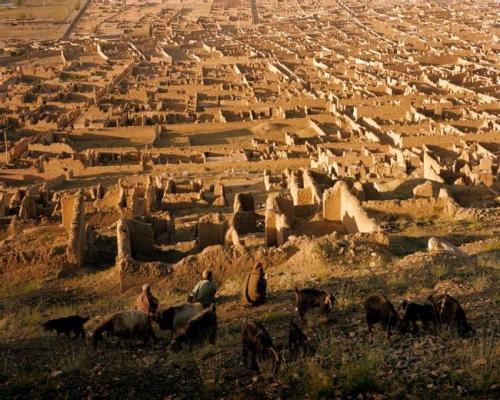
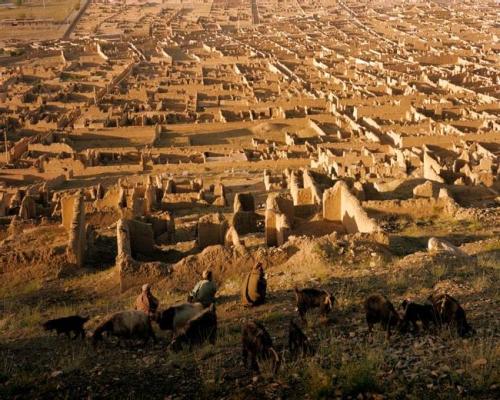
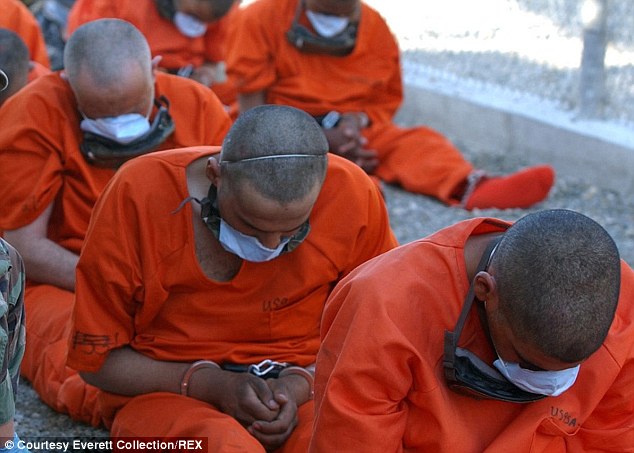
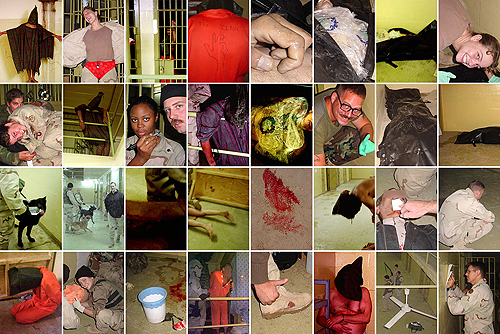
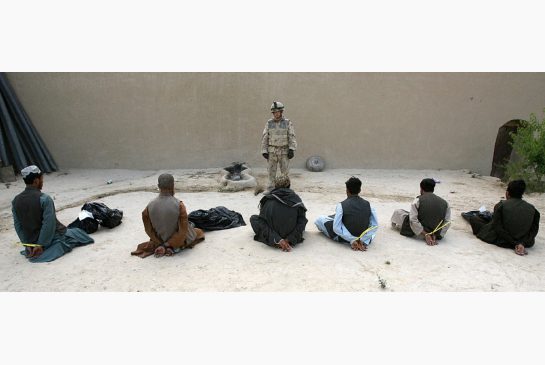

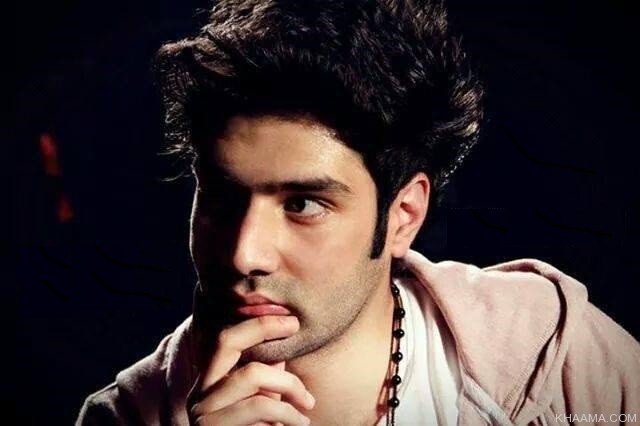

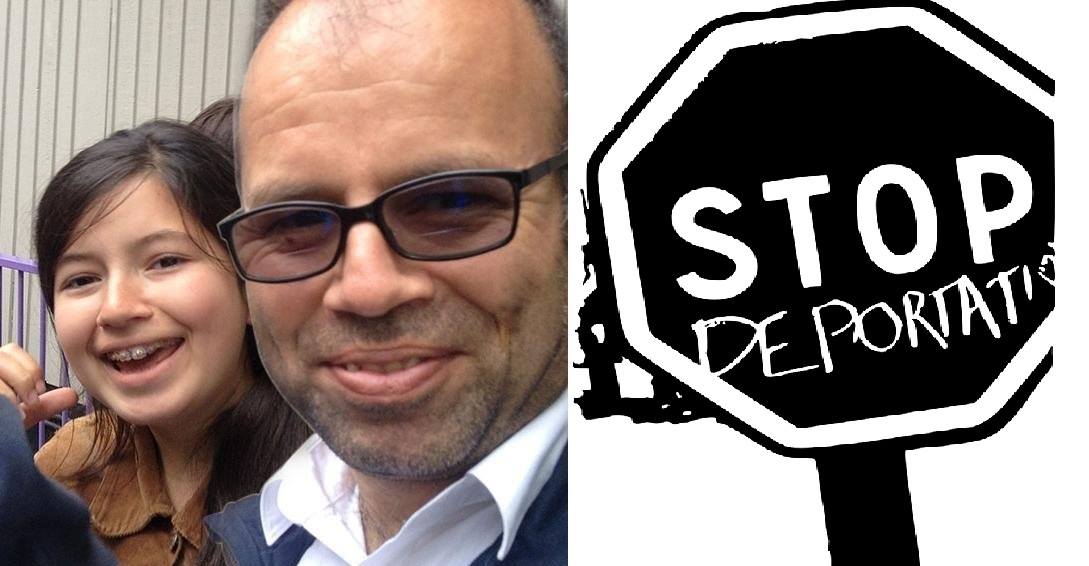


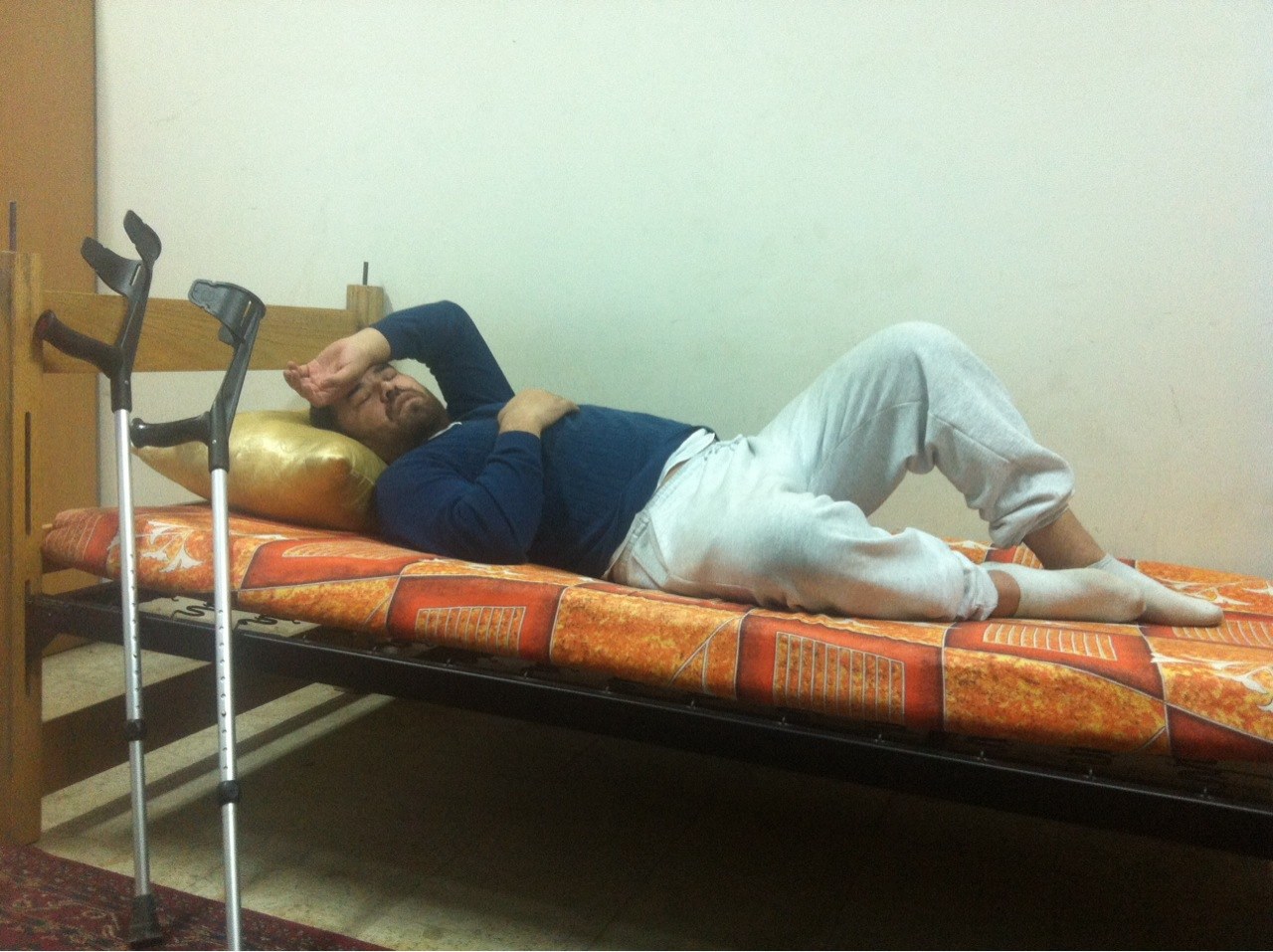

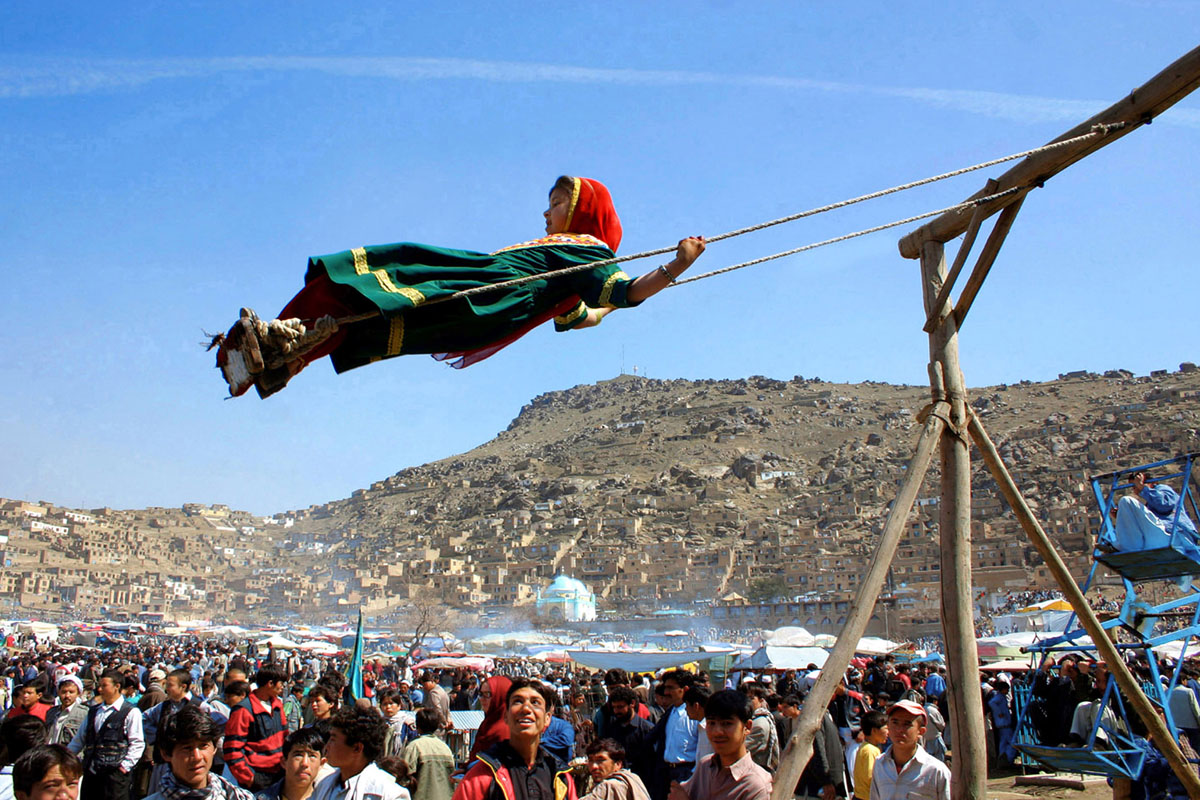
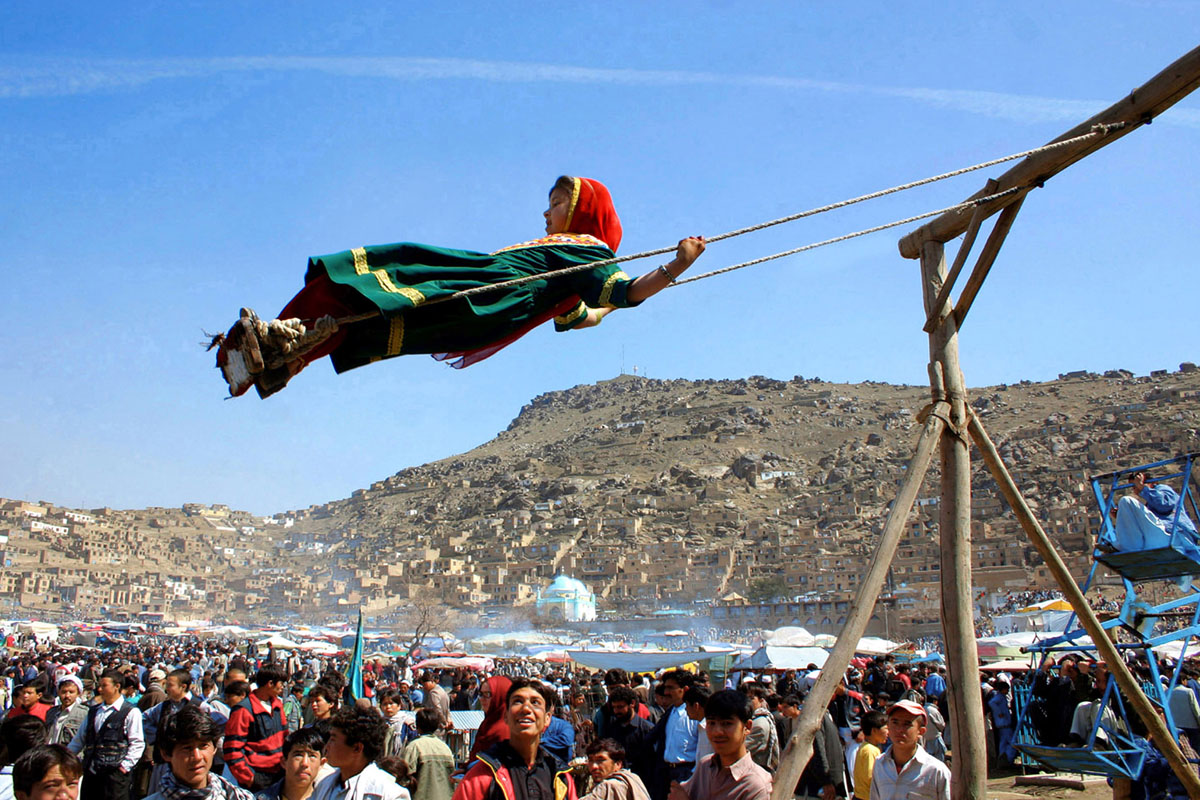


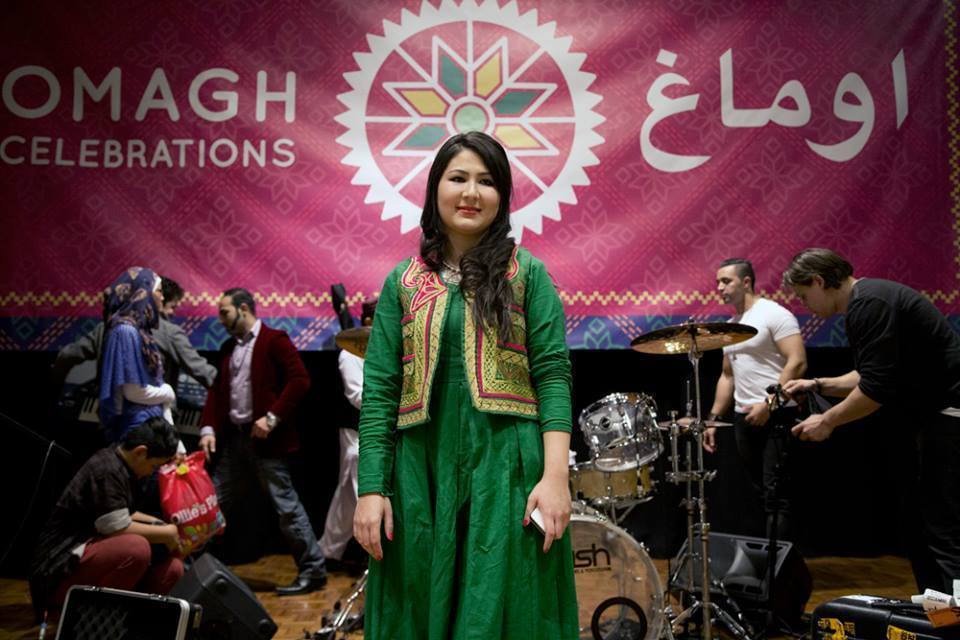
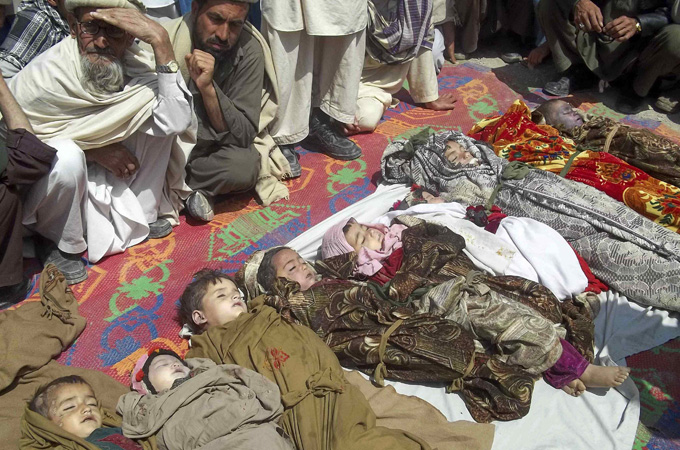
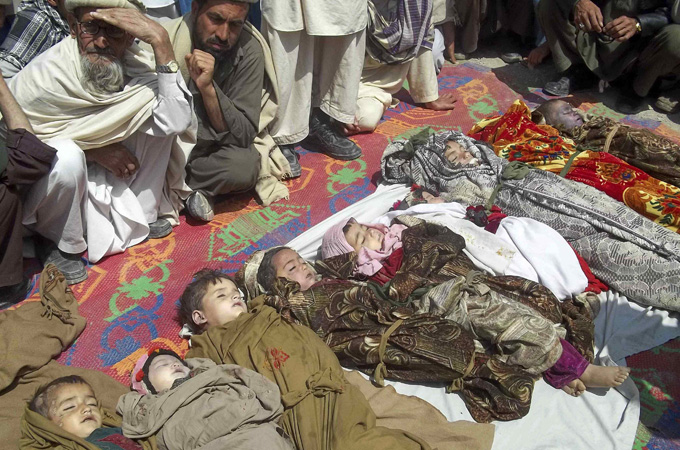
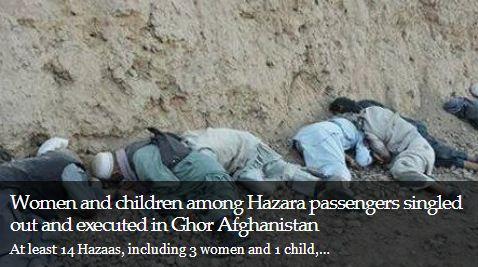


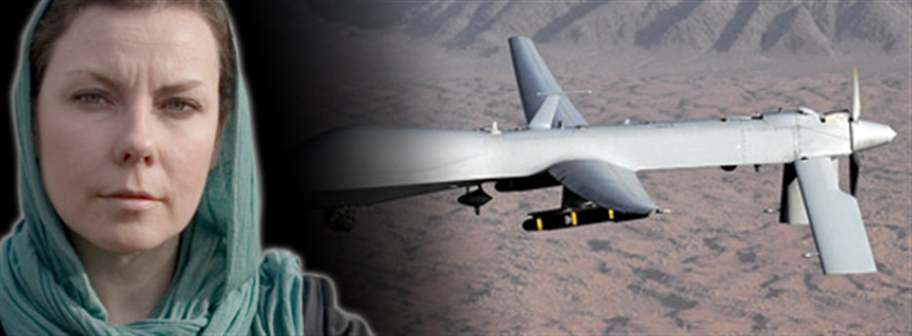


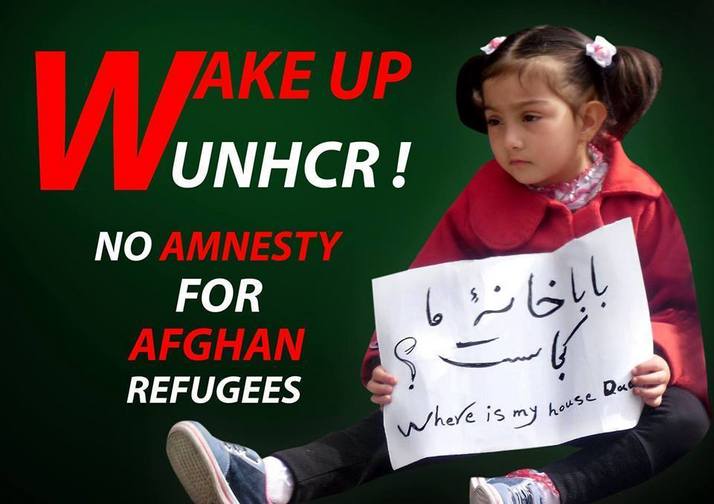

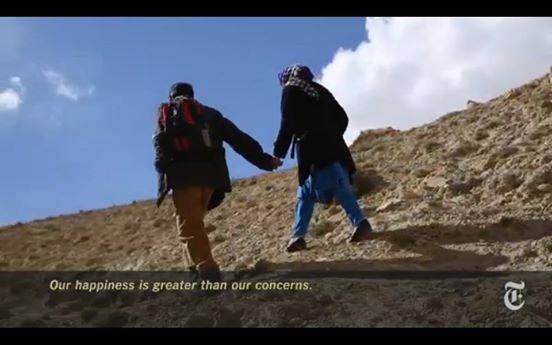
 For a while, they took refuge in Ghazni Province, a dangerous area with a large Hazara population.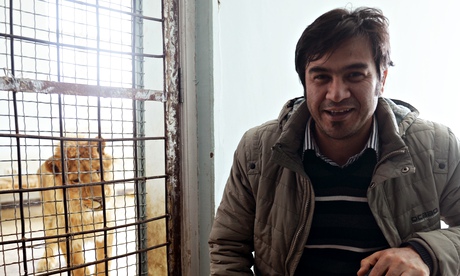
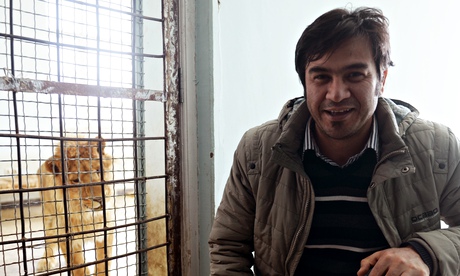
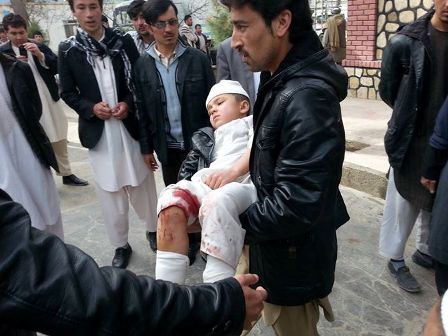
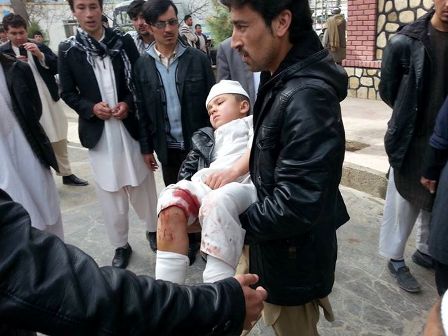


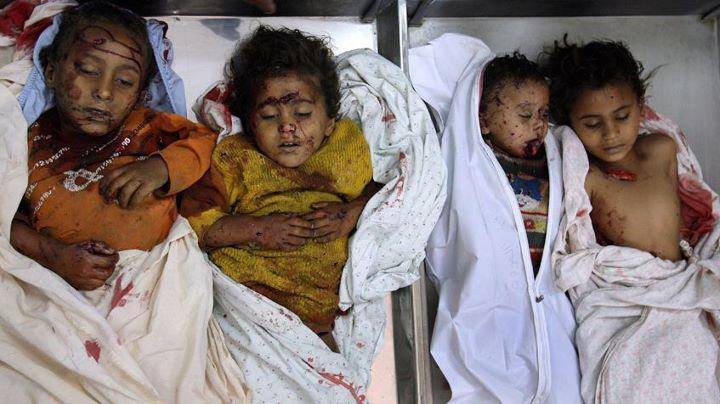
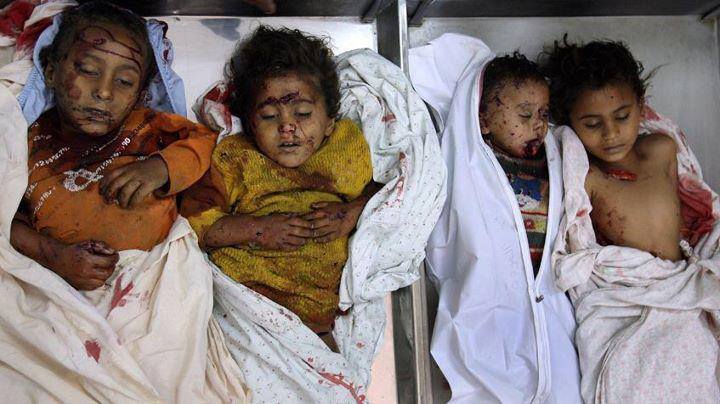
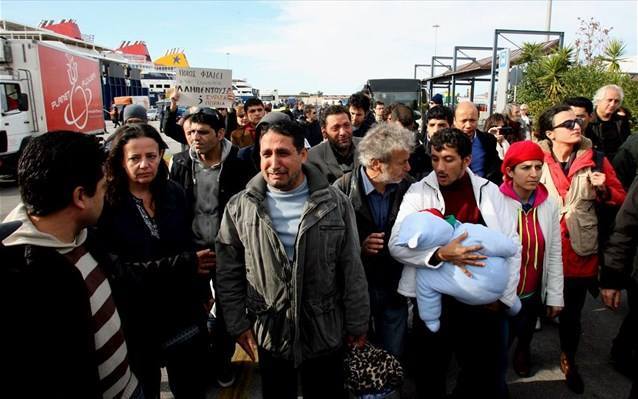
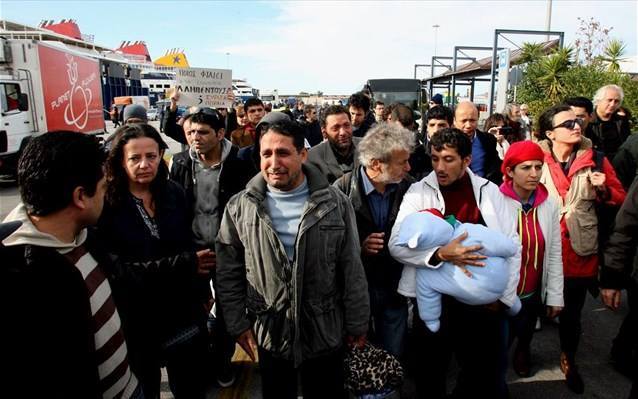
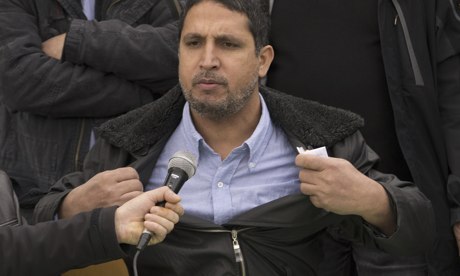

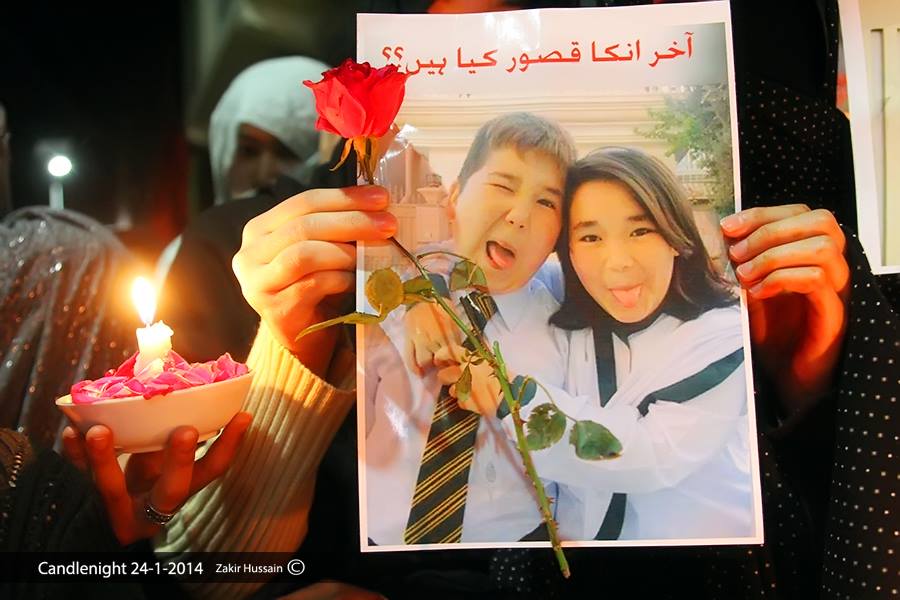
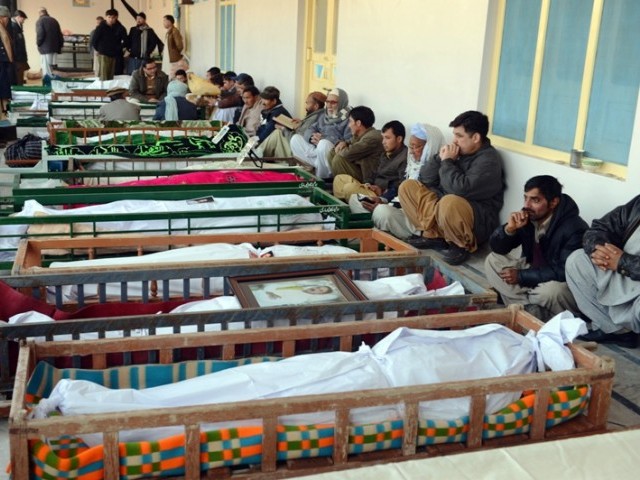

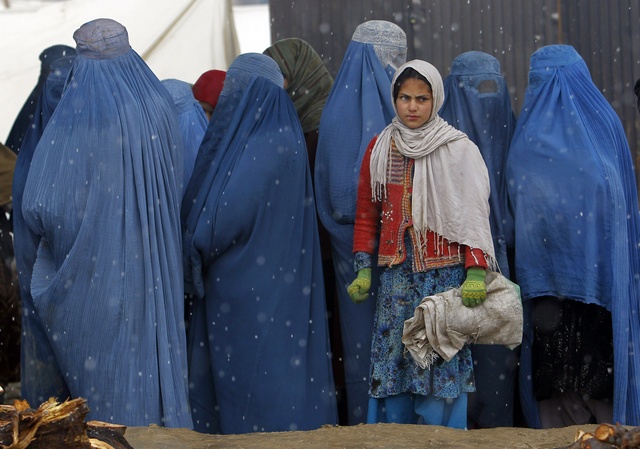

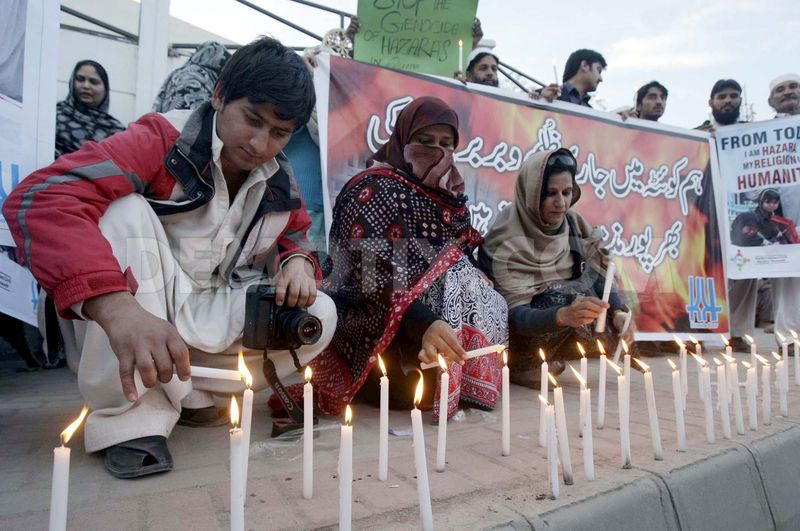
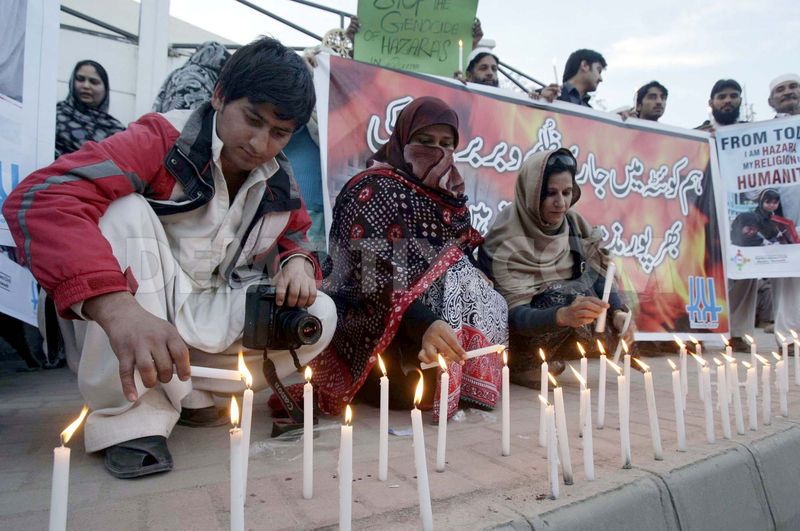

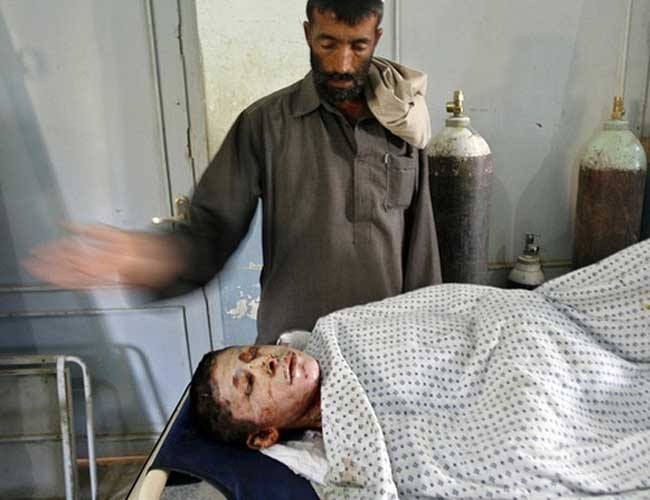

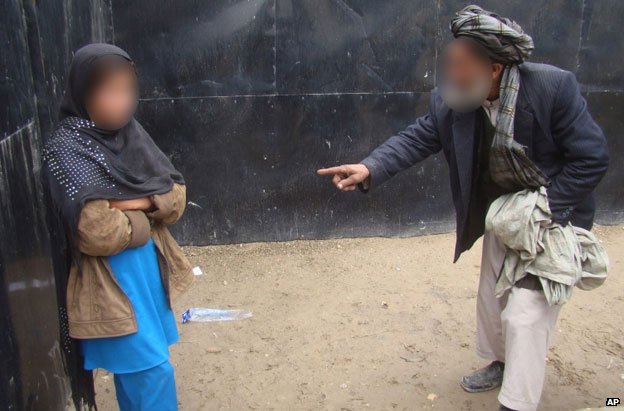
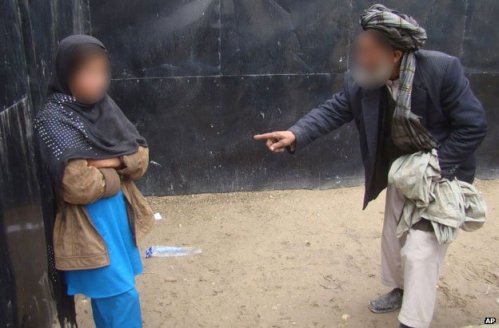

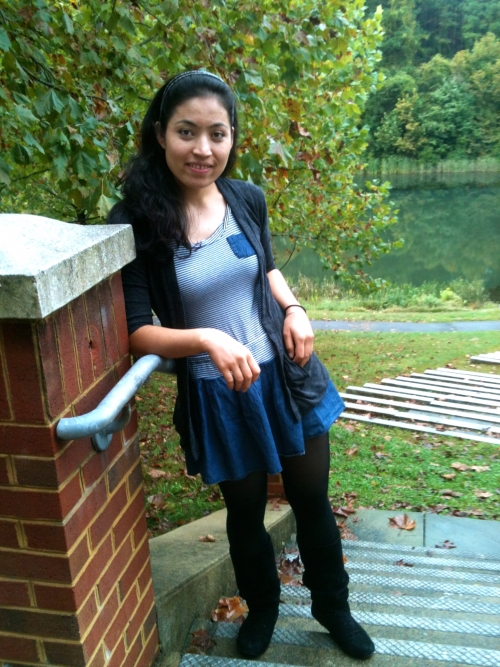


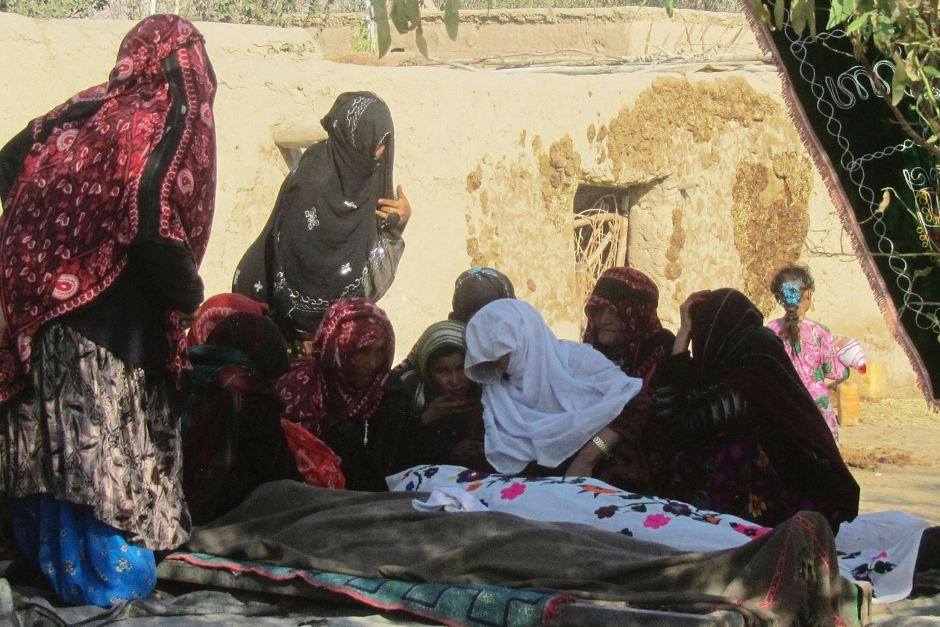

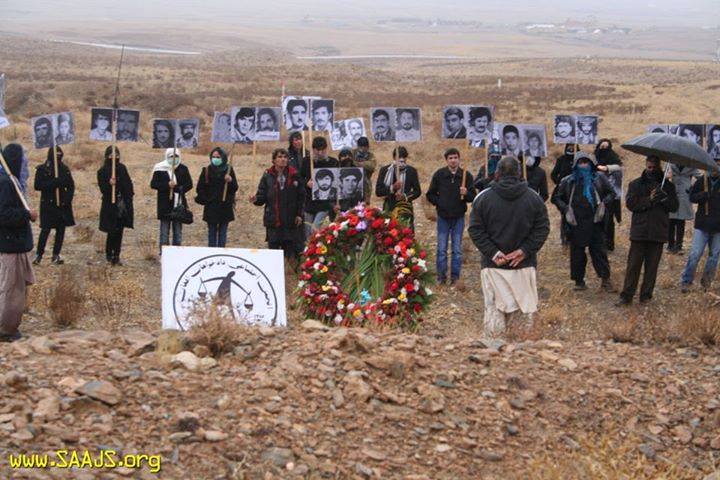
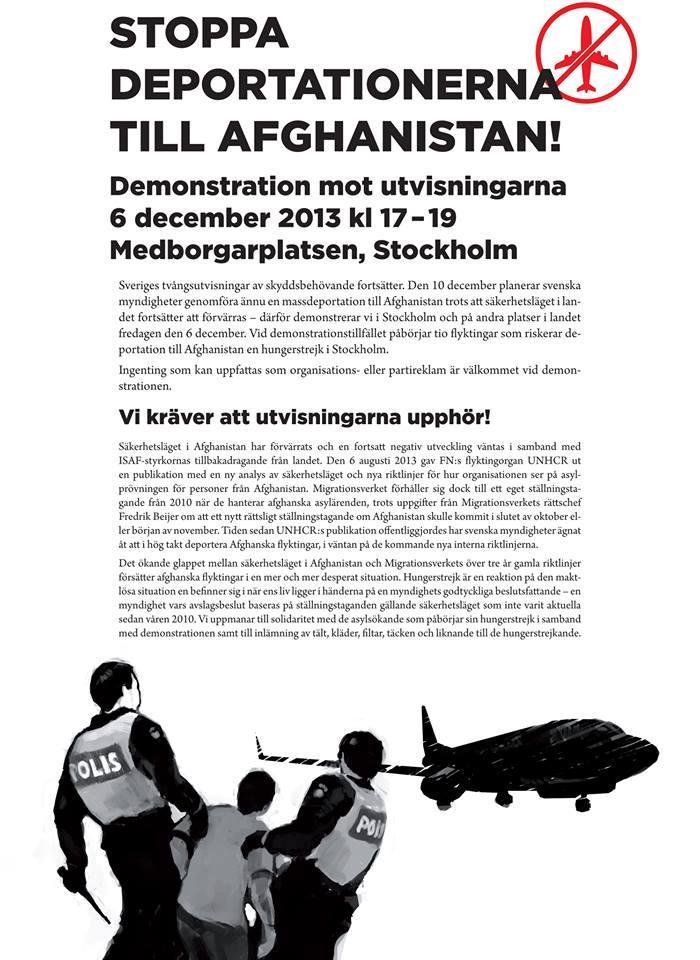

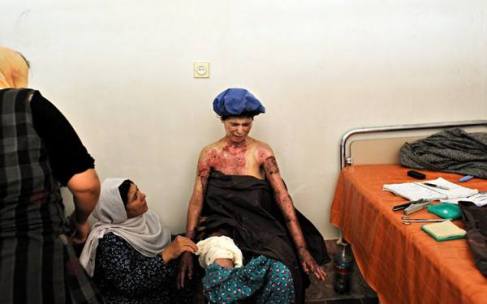
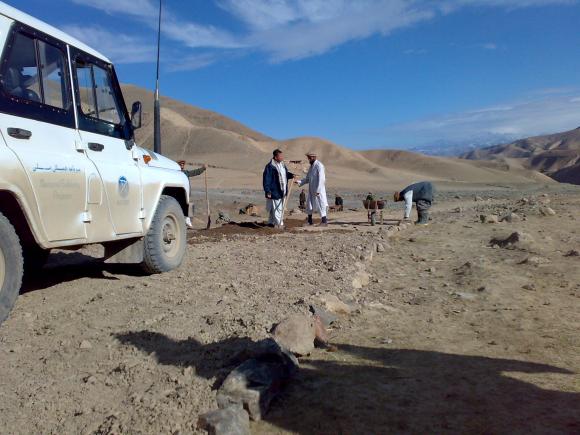

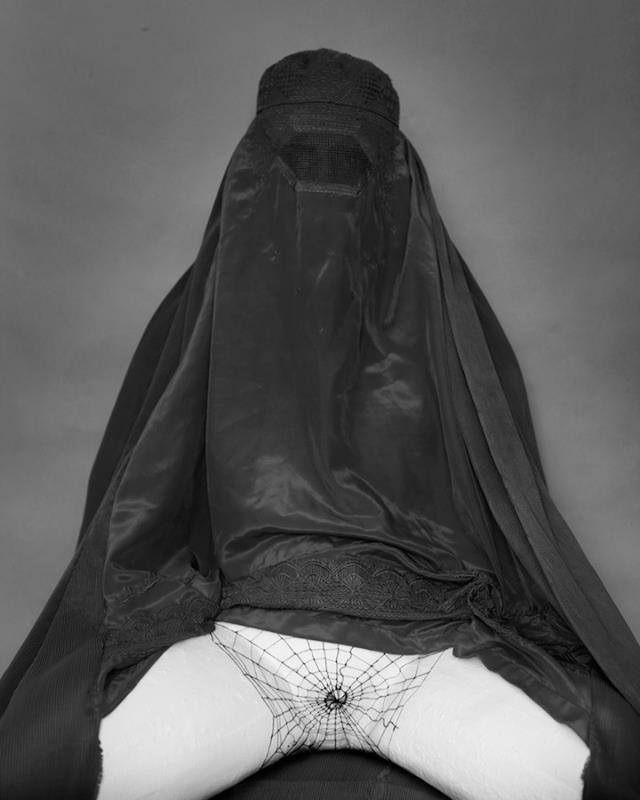
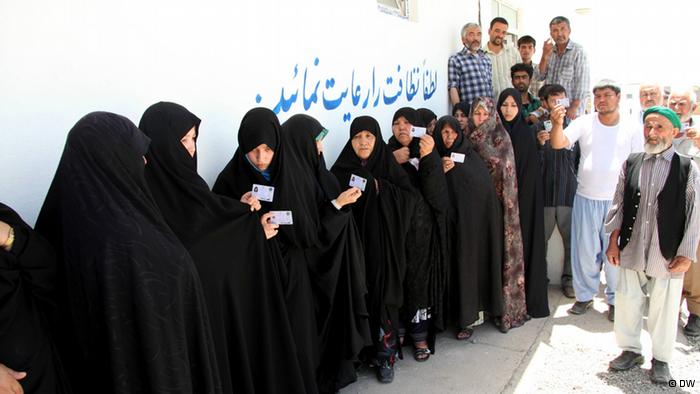
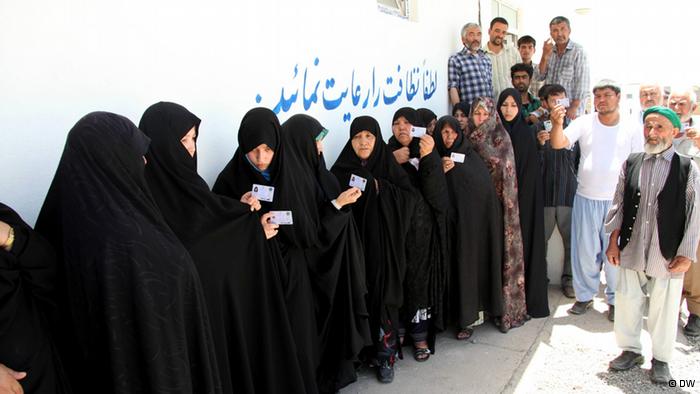
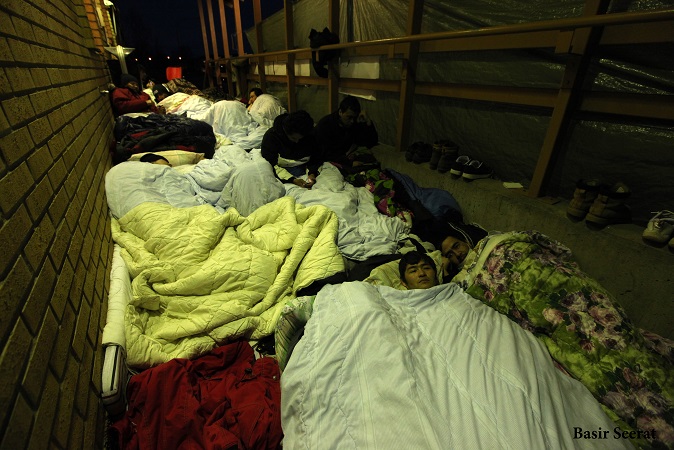
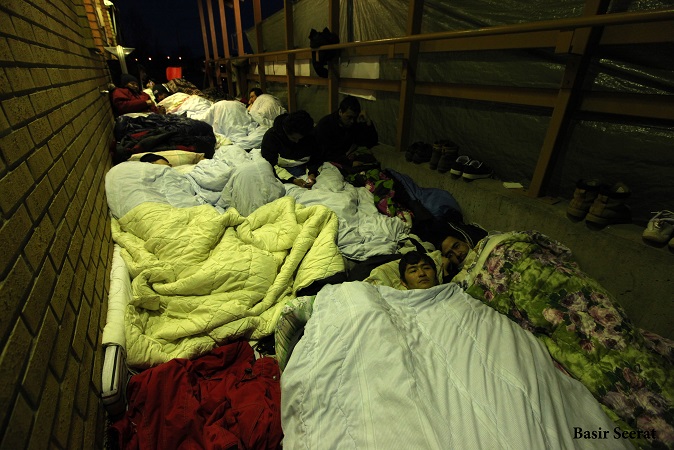




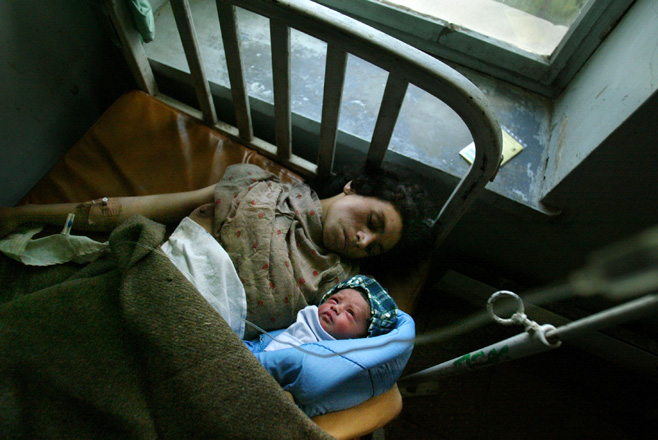
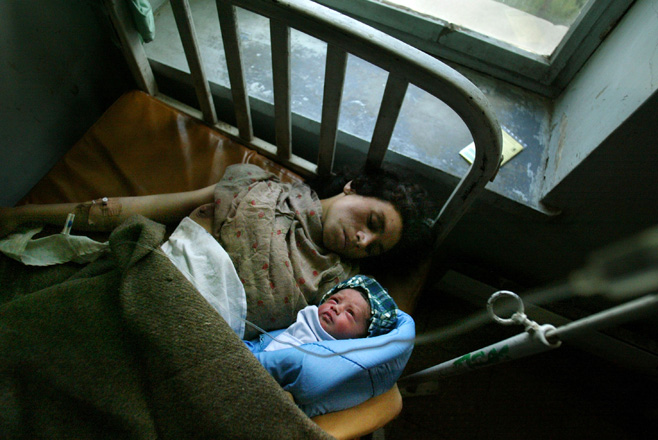

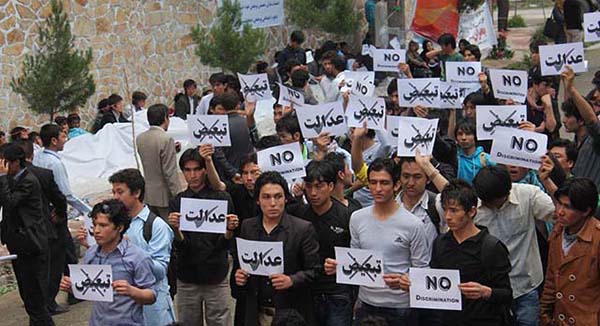
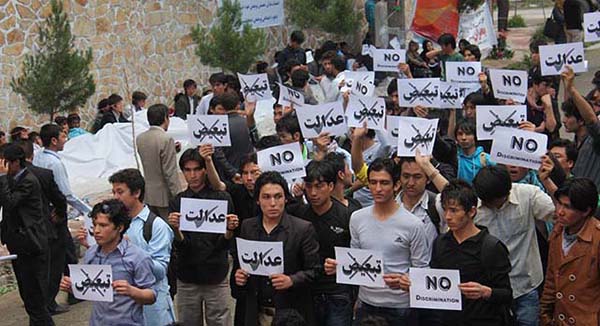

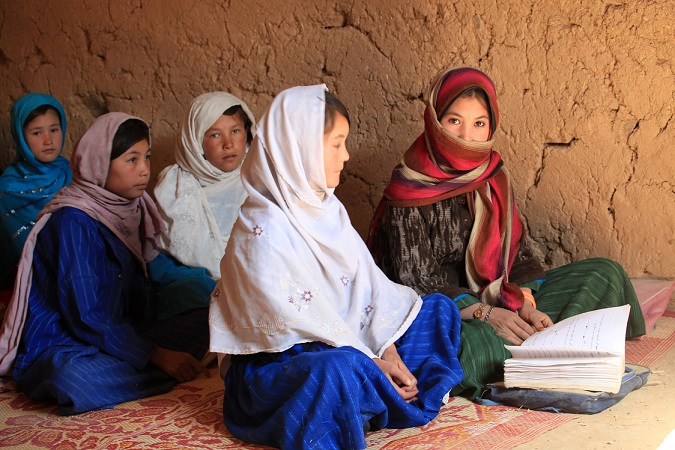
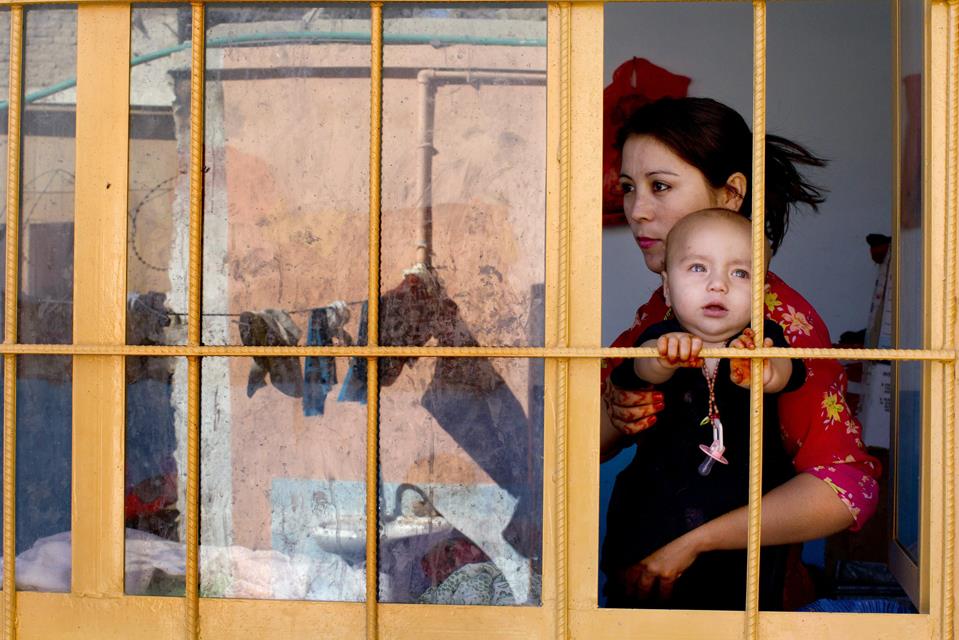
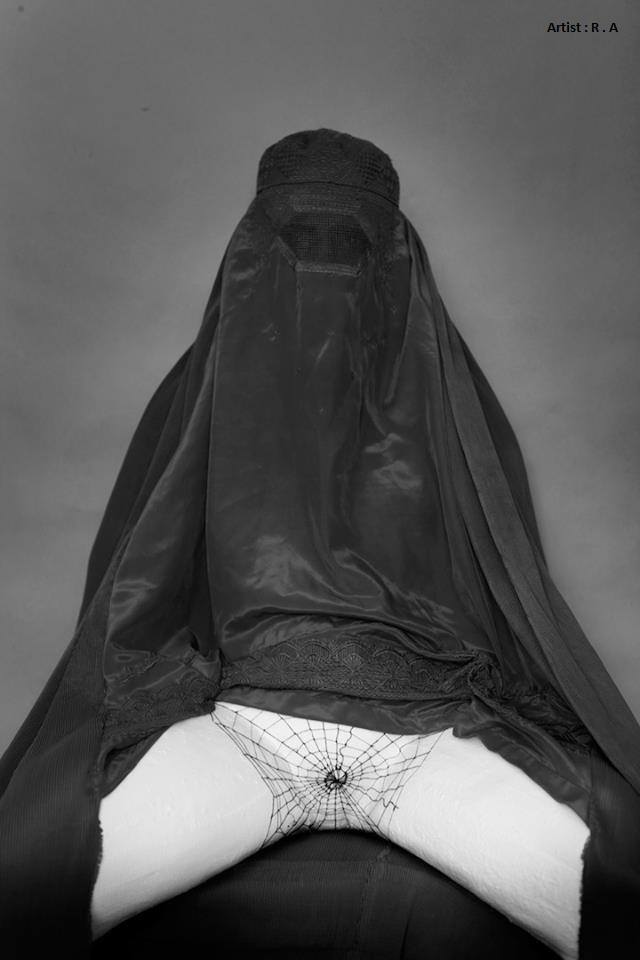


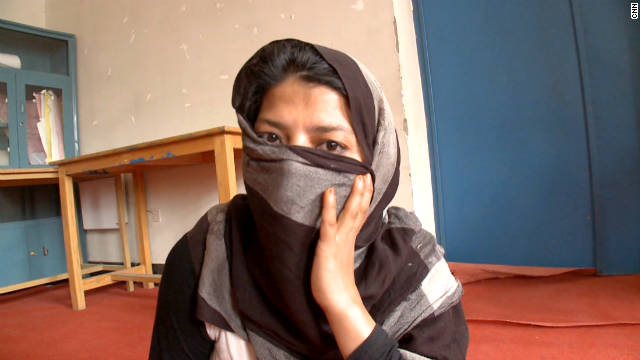
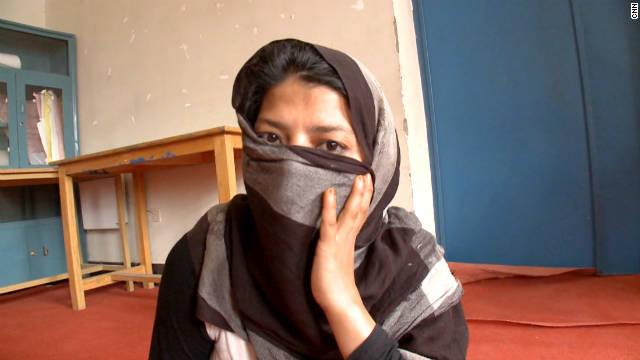
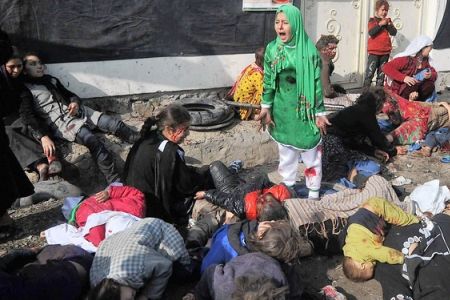
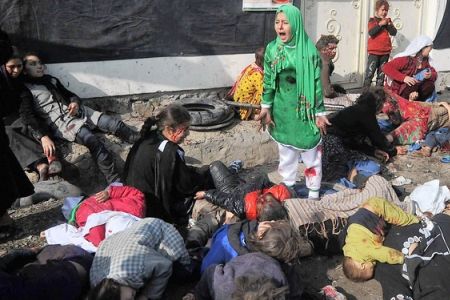

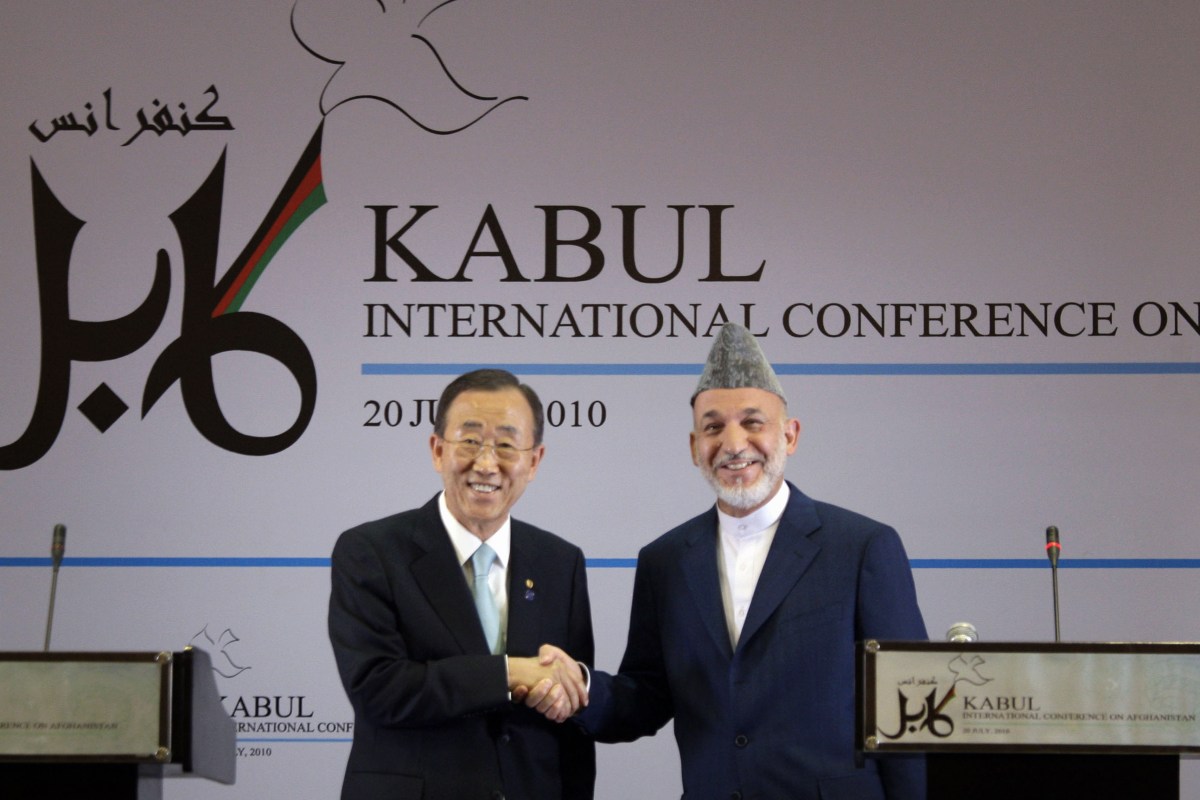
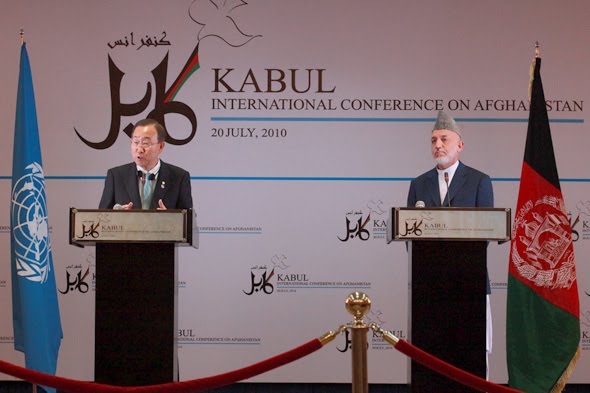

 Afghan Human Rights Home